JAKARTA — For many prospective students, university begins with an entrance examination, choosing a study program, and the hope of being accepted into their dream institution. However, for many other Indonesians, the journey toward higher education often begins with a much simpler question: can they still pursue a university degree while working, living far from urban centers, facing financial limitations, or being unable to leave their families?
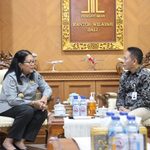
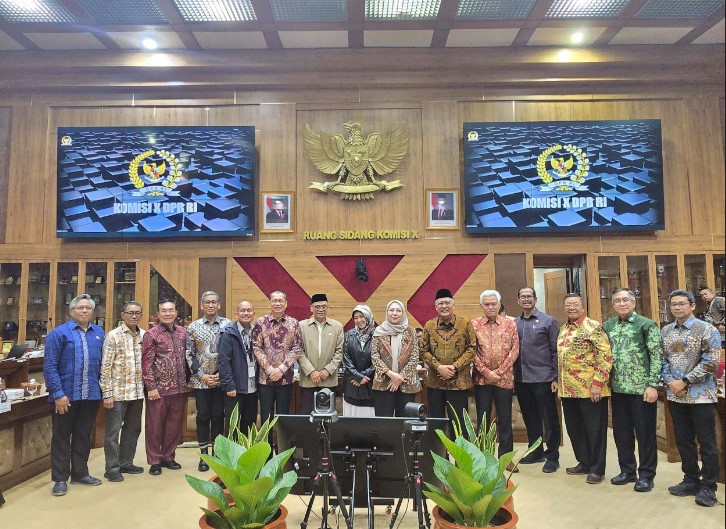
This question is why discussions surrounding the New Student Admission System (Seleksi Penerimaan Mahasiswa Baru – SPMB) extend beyond the technical aspects of admissions. During Rapat Dengar Pendapat (RDP) of Working Committee of Komisi X DPR RI on SPMB with rectors of several public universities at the DPR RI Building in Jakarta on Wednesday (June 24, 2026), Universitas Terbuka (UT) presented the perspective that access to higher education must be widely accessible, made more flexible, and remain of high quality.
Opening the meeting, Deputy Chair of Komisi X DPR RI, Himmatul Aliyah, emphasized that the SPMB serves as the primary gateway to higher education for the community. Therefore, its implementation must uphold the principles of fairness, transparency, accountability, and inclusiveness.
“The SPMB must provide equal opportunities for prospective students from various economic, social, and regional backgrounds,” Himmatul stated.
According to Himmatul, regular evaluations are necessary to ensure that the admission system remains aligned with the goals of expanding access and improving its national quality of higher education. The forum also provided universities with an opportunity to contribute input regarding the evaluation of the 2024–2025 admission system, policy recommendations for the 2027 admissions cycle, and discussions on the RUU Sistem Pendidikan Nasional.
During his presentation, UT Rector Prof. Dr. Ali Muktiyanto, S.E., M.Si., emphasized that UT’s participation in the forum also served as an opportunity to reaffirm its role within Indonesia’s higher education system. He explained that UT has, from the outset, been mandated by the government to provide open and distance higher education.
“From the very beginning, Universitas Terbuka has been mandated by the government to provide open and distance education. The key word is ‘open’—open to everyone,” Prof. Ali said.
This mandate has been embedded in UT since its establishment in 1984 as a public university dedicated to expanding access to higher education throughout Indonesia. Through its open and distance learning system, UT enables people to pursue higher education without leaving their jobs, families, hometowns, or social responsibilities. Under this model, UT does not simply wait for students to come to campus—it brings higher education to wherever students are.
Prof. Ali explained that UT’s openness is reflected in four aspects: time, location, instructional methods, and access. Students can study from anywhere, learn at their own pace, and pursue higher education according to their individual circumstances. However, he stressed that openness does not mean compromising academic quality.
“Admission is open, but graduation must meet the same academic standards,” he said.
These standards are maintained through an independent, structured, and guided learning system. UT provides printed and digital learning materials, synchronous and asynchronous tutorials, learning technologies, and continuously evolving assessment systems. Prof. Ali emphasized that learning quality must be consistent regardless of where students are located.
“An A grade earned by a UT student in Biak must be equivalent to an A grade earned by a UT student taking the same course and study program in Jeddah,” he said.
Today, UT serves students across 516 cities/regencies throughout Indonesia. Globally, UT students are located in more than 56 countries and over 70 cities worldwide, with the majority being Indonesian migrant workers. This extensive reach demonstrates that open and distance higher education has become an important pathway for individuals who cannot participate in conventional campus-based education.
UT’s student profile also reflects diverse educational needs. Most students are already employed when they begin their studies, while fresh high school graduates accounted for only 4.11 percent of UT’s total student population in 2025. For many of these learners, pursuing higher education is not simply about earning a degree, but about improving their future while continuing to fulfill their existing responsibilities.
Although UT has increasingly adopted online examinations, the university continues to provide face-to-face examinations for students in Indonesia’s frontier, outermost, and disadvantaged (3T) regions, where internet access and digital infrastructure remain limited. In this way, expanding access extends beyond admissions to ensuring that academic services remain accessible properly throughout the learning process.
Support for UT’s role was also expressed by Prof. Dr. Wening Udasmoro, S.S., M.Hum., DEA, Vice Rector for Education and Teaching at Universitas Gadjah Mada (UGM). She described UT as playing a vital role in promoting lifelong learning in Indonesia.
“Lifelong learning education in Indonesia is represented by UT because it accepts undergraduate students of any age. UT deserves strong support, and it has contributed significantly to Indonesia’s Gross Enrollment Ratio in higher education, even though Indonesia still ranks below Vietnam and Malaysia,” she said.
Within the context of sustainable development, UT’s mission aligns with the goals of promoting quality education and reducing inequalities in access. Through this SPMB forum at DPR, UT conveyed a message that extends beyond university admissions only: the future of higher education in Indonesia will not be determined solely by who are able to go to university, but by how far the nation can ensure that higher education remains possible for everyone, everywhere, and under any circumstances.
Tags: #UniversitasTerbuka #SPMB2026 #HigherEducation #FlexibleLearning #EducationForAll #KomisiXDPRRI #SDG4 #SDG10 #RDP