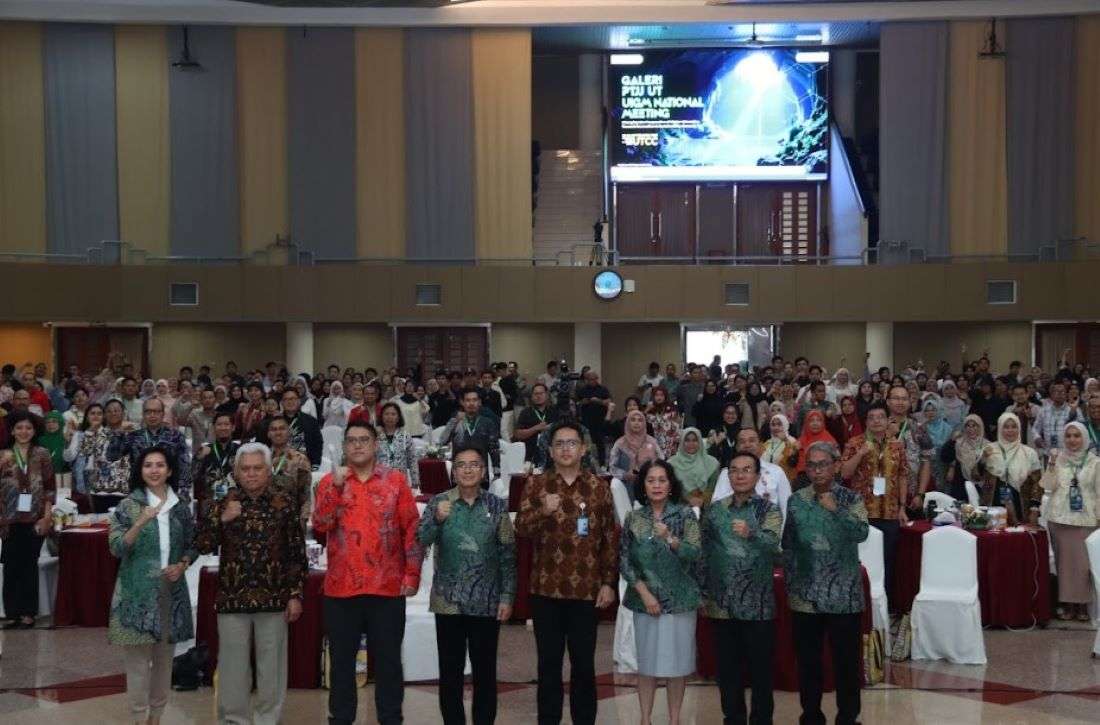

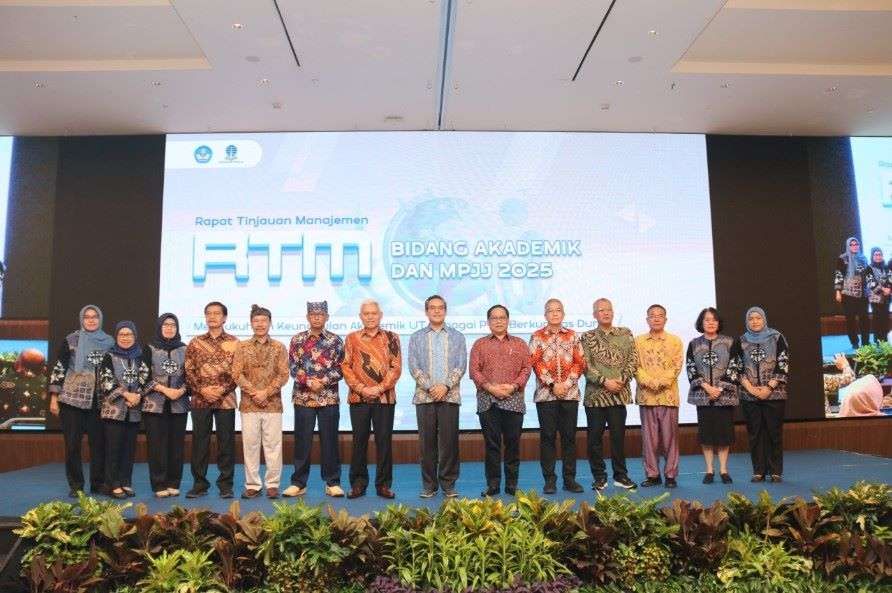
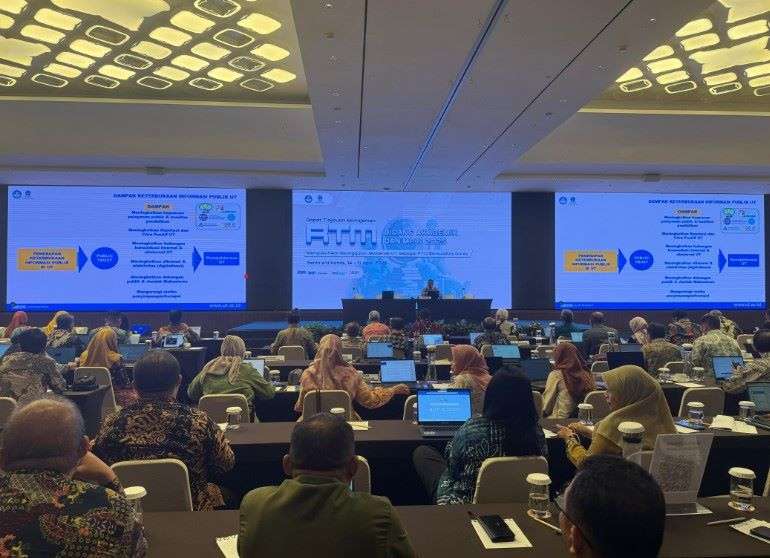
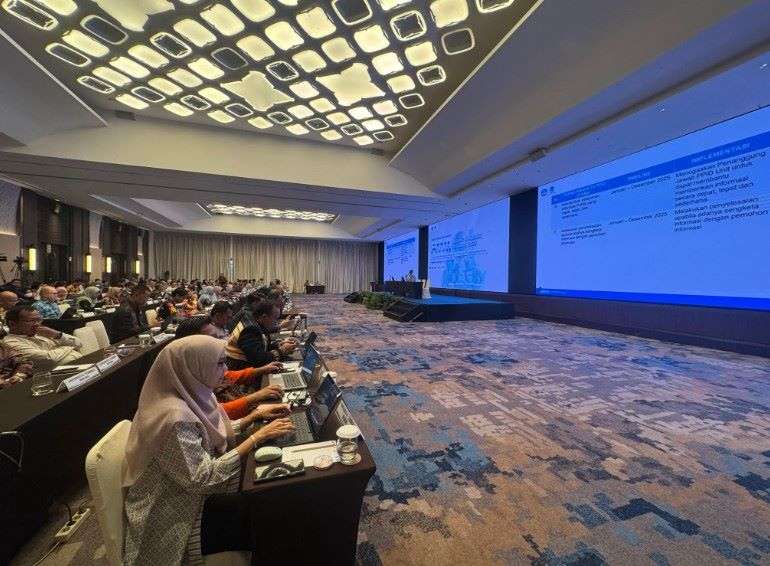
Universitas Terbuka (UT) once again held a face-to-face Management Review Meeting (RTM) for Academics and Open and Distance Learning Management (MPJJ) from April 14–17, 2025, in Bogor, with the theme “Strengthening UT’s Academic Excellence as a World-Class ODL Institution.” This year’s RTM served as a strategic momentum for UT to unite its steps in responding to the challenges of technology-based higher education in the era of disruption.
This annual activity was attended by 225 participants from the entire leadership ranks of the university, faculties, Postgraduate School, UT Regional Offices, centers, and expert staff. More than just a platform for evaluation and reflection, the 2025 RTM was designed as an integrative forum between academics and open and distance learning management, which in previous years were conducted separately.
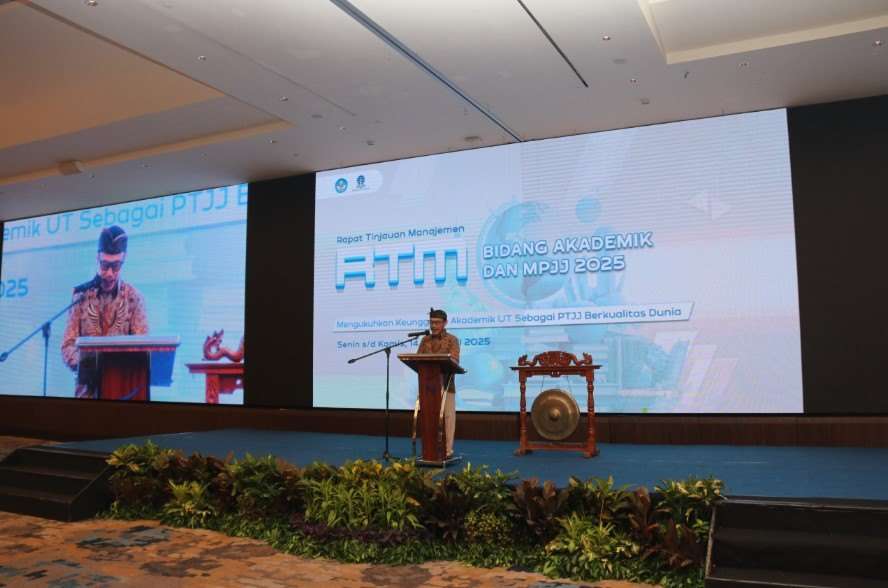
The Head of the 2025 RTM Organizing Committee, Prof. Dr. Mohammad Imam Farisi, M.Pd., stated that the implementation of this RTM is the “Control” stage in the PPEPP (Establishment, Implementation, Evaluation, Control, and Improvement) cycle within the higher education quality assurance system at UT. “This RTM is an important forum for UT management to review the performance of the quality management system and the institution’s service performance, and to ensure its continuity, suitability, adequacy, effectiveness, and alignment with the direction of UT’s strategic plan, both in academics and open and distance learning management,” explained Prof. Imam.
He expressed his hope that this RTM would generate more comprehensive and effective recommendations in the form of Work Programs and Policies in the fields of academics and MPJJ, as well as their follow-up. “Furthermore, these recommendations are expected to reduce risks, improve performance, and provide public recognition of UT’s academic excellence as a world-class ODL institution,” he concluded.
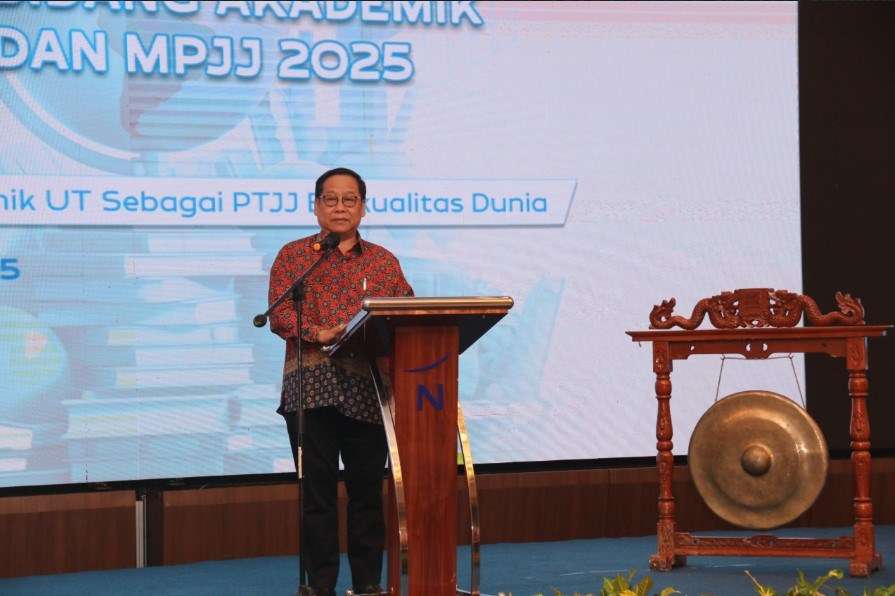
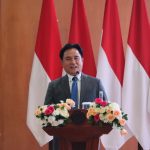
Meanwhile, the Rector of UT, Dr. Mohamad Yunus, S.S., M.A., in his remarks conveyed that this RTM is a very important momentum. This is because the RTM theme carried this year serves as a reminder of the importance of balancing maintaining quality and efforts to continuously improve UT’s competitiveness at the global level in accordance with the vision it wants to achieve.
Mohamad Yunus also emphasized UT’s success in achieving various international recognitions during 2024, including accreditation from the Asian Association of Open Universities (AAOU), Higher Education Accreditation (APT) with an A rating, and ISO 27001:2022 certification for Information Security Management Systems. “Not only that, 4 (four) UT undergraduate/S1 study programs (Development Economics, Accounting, Management, and Law) also achieved excellent accreditation at the national and international levels,” revealed Dr. Mohamad Yunus.
Speaking about UT’s recognition and achievements, Dr. Mohamad Yunus also reminded that UT is currently facing complex challenges that must be addressed together. “In 2025, global challenges are increasingly complex, and we must be ready to adapt to technological developments, industry demands, and the ever-changing needs of society. Therefore, we need to strengthen UT’s academic excellence as an ODL institution that is not only superior at the national level but also able to compete globally,” said the UT Rector.
In line with this, UT has moved quickly and transformed to adapt and respond to these challenges. This is evidenced by the fact that in this semester, all study programs at UT have begun implementing the Outcome-Based Education (OBE) curriculum, which emphasizes measurable learning outcomes relevant to the needs of the world of work. “The implementation of OBE is a concrete step to address global challenges and strengthen the education system at UT,” added Dr. Mohamad Yunus.
During the four days of the RTM, participants discussed various strategic issues, including the follow-up status of the 2024 RTM, policy directions (Rectorate, SAU, & MWA), measurement/survey results, quality analysis and/or assessment, performance and effectiveness of UT’s internal management in 2024, the implementation of the new curriculum, and the development of research and community service. Discussion sessions also involved presentations from the Rector, Vice Rectors, Deans, UT Regional Directors, and policymakers such as the Chairman of the Board of Trustees (MWA) and the University Academic Senate (SAU).
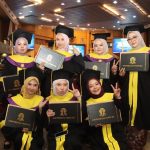
The 2025 RTM also served as an appreciation event for faculties and UT Regional Offices that demonstrated the best performance in quality achievements. Certificates of appreciation were directly presented by the Rector and Vice Rectors to the best units based on the results of the 2024 Internal Quality Audit (AMI) for Academics and MPJJ.
The activity concluded with the presentation of RTM recommendations by the Head of the Quality Assurance Office (KPM), as well as closing remarks from UT leadership. “Strong synergy and collaboration from the entire UT academic community are the foundation for UT to remain the market leader in distance higher education in Indonesia, while also expanding its influence globally,” concluded the Rector. Through this RTM, UT reaffirmed its commitment to continue innovating, maintaining quality, and expanding access to quality higher education for all levels of society, in line with the principles of sustainability and inclusivity in education.