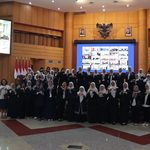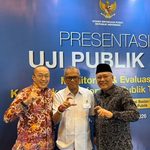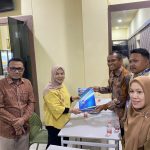

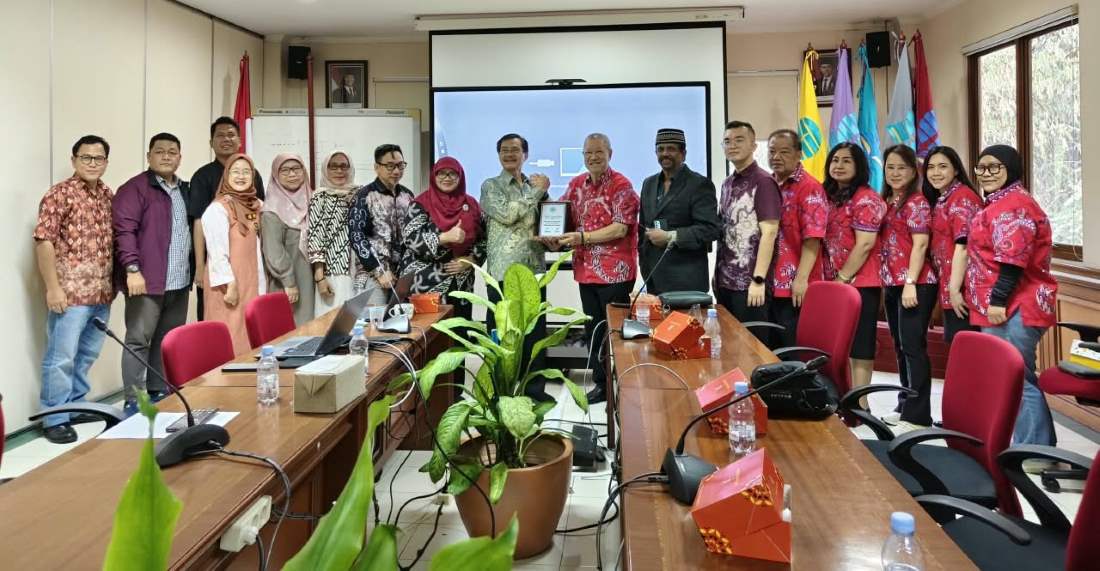
TANGERANG SELATAN — Student exchanges, scholarship opportunities, vocational education development, and internship programs are among the potential areas of cooperation being explored by Universitas Terbuka (UT) and Paguyuban Sosial Marga Tionghoa Indonesia – PSMTI of Provinsi Banten. The meeting, held at UT Pondok Cabe, Tangerang Selatan, on Thursday (September 24, 2026), marked an initial step toward connecting education, cultural, and business networks.
PSMTI Banten delegation was received by UT Director of the Graduate School, Prof. Dr. Maman Rumanta, M.Si., along with several UT lecturers. During the meeting, both parties discussed various potential areas of collaboration that could be developed to provide direct benefits to students and the community.
Chairman of PSMTI Banten, S. Suryadi H, expressed hope that the exploration could soon be realized through concrete cooperation marked by the signing of a Memorandum of Agreement (MoA).
“We hope that this cooperation can soon be realized through the signing of an MoA, so that the cooperation programs can be implemented immediately and provide benefits to the community, particularly in the fields of education and culture,” S. Suryadi H said in an official statement.
Expanding International Education Networks
One of the opportunities discussed was the development of academic cooperation with universities in China, including Capital Normal University (CNU) in Beijing. The cooperation could potentially include student exchanges, academic discussions, and scholarship opportunities for Indonesian students who wish to pursue their education in China.
The strengthening of Mandarin Language and Chinese Literature programs was also part of the discussion. This collaboration is expected to provide students with opportunities to broaden their academic perspectives while gaining a deeper understanding of the language and culture.
Efforts to expand access to and opportunities for learning are in line with the spirit of SDG 4 on Quality Education, particularly in creating more inclusive and diverse learning opportunities.
PSMTI Encourages Wider Access to Higher Education through UT
In addition to international networks, PSMTI Banten sees potential for collaboration in expanding public access to higher education through UT’s Distance Learning (PJJ) system.
The flexibility of Distance Learning allows people who work, live far from higher education institutions, have family responsibilities, or face limitations in attending face-to-face lectures to continue their education.
“With relatively affordable tuition fees of only IDR 1.5 million per semester, UT can provide wider opportunities for people who may face economic limitations but still want to pursue higher education from anywhere because the system is Distance Learning,” he said.
PSMTI Banten hopes to help disseminate information about UT to people who need it so that more prospective students become aware of flexible higher education alternatives.
Bridging Vocational Students with the Industrial Sector
The potential cooperation is also directed toward vocational education and workforce needs. UT’s Vocational School, officially established on September 15, 2025, was developed to strengthen applied education that is relevant to the needs of the Business, Industrial, and Working Sectors (DUDIKA).
The six vocational study areas being developed include Health, Archival Studies, Information Technology, Digital Business Accounting, Logistics Management, and Electric Vehicle (EV).
The central PSMTI organization and PSMTI branches in various regions have networks of companies that could potentially become partners in providing students with direct learning opportunities, including through internship programs.
“For the Vocational School, we hope that PSMTI Provinsi Banten can help bridge male and female students to obtain internship opportunities at companies that have networks with PSMTI. In this way, the education they receive can become increasingly connected to the needs of the workforce,” he said.
The collaboration is expected to connect the competencies students acquire during their studies with professional experience in the industrial sector. For students, internship programs provide opportunities to develop their skills while gaining direct insight into the work environment.
Awaiting Concrete Steps for Cooperation
The discussions during the meeting highlighted several areas of collaboration that UT and PSMTI Banten could develop, ranging from international education and culture to expanding access to education, vocational education, and strengthening relationships with the business sector.
This cross-sector collaboration is also in line with the spirit of SDG 17 on Partnerships for the Goals. Higher education institutions, community organizations, overseas educational institutions, and businesses can complement one another in expanding the benefits of education and developing the capacity of the younger generation.
The various ideas discussed now await follow-up to be translated into concrete cooperation programs. The signing of an MoA is expected to serve as an entry point for implementing programs that do not stop as formal documents but genuinely provide benefits to students and the community.