
JAKARTA — Public trust in a university is built not only on the quality of education it offers but also on the transparency of its institutional governance. Amid growing public demands for broader access to information, Universitas Terbuka (UT) continues to strengthen its commitment to transparency as part of its efforts to build public trust while providing accountable higher education services.
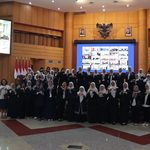
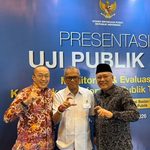
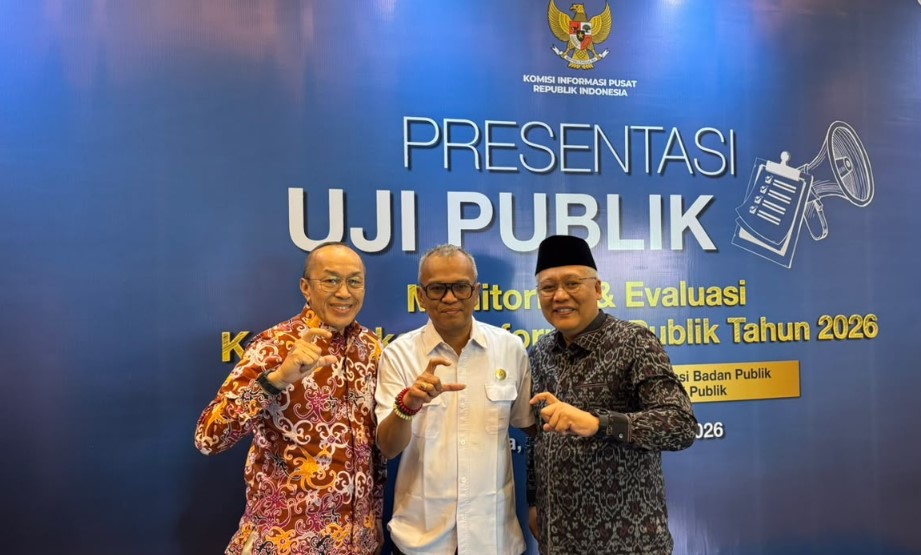
This commitment was reaffirmed by UT Rector Prof. Dr. Ali Muktiyanto, S.E., M.Si., through a presentation at the 2026 Public Information Disclosure Monitoring and Evaluation Public Assessment, held at Grand Mercure Jakarta Kemayoran on Tuesday (November 12, 2026). Carrying the theme “Strategies and Policies for Public Information Disclosure by Public Institutions and Their Impact on Public Participation,” the event provided a platform for public institutions to present their strategies and policies for achieving information transparency that has a meaningful impact on society.
In his presentation, Prof. Ali Muktiyanto emphasized that one of the most significant outcomes of information disclosure is the growth of public trust. According to him, transparency plays an important role in introducing and demonstrating the quality of UT’s educational management to the public.
Prof. Ali Muktiyanto revealed that UT had previously faced doubts from some members of the public regarding the quality of its education. However, through its consistent efforts to maintain quality and contribute to expanding access to higher education, UT has increasingly become recognized as an institution capable of accelerating the development of a highly educated human resource base, not only in Indonesia but also among Indonesian citizens living in various parts of the world.
“First and foremost, it is about building public trust in UT. In the past, some people questioned what UT was like. Today, the public knows how UT maintains quality and accelerates the development of highly educated human resources in the country, as well as among our citizens around the world,” he said.
Beyond simply providing information, transparency creates opportunities for the public to gain a closer understanding of an institution’s policies, strategies, and performance. Thus, public trust is built not only through what a university communicates but also through its willingness to be accountable to the public for every policy and service it provides.
UT’s commitment received appreciation from the Chairperson of the Central Information Commission of the Republic of Indonesia, Fb. Fx. Handoko Agung Saputro, S.Sos. He congratulated UT as one of the public universities participating in the Public Assessment by directly presenting its public information disclosure policies and strategies.
The UT Rector’s direct participation in the event was also considered a clear demonstration of the leadership’s commitment to fostering a culture of transparency within the university. Furthermore, UT’s extensive service coverage across Indonesia was seen as offering significant potential to promote the spirit of information disclosure among the public.
“We hope that UT will help sow and nurture the seeds of information disclosure. UT’s reach is not limited to certain regions but extends throughout Indonesia. Therefore, through the transparency that UT continues to develop, we hope it will become a pioneering campus for public information disclosure,” the Information Commission Commissioner stated.
This expectation represents both a challenge and an opportunity for UT to continue strengthening transparent, open, and accountable institutional governance. As a university with extensive service coverage, UT’s information disclosure practices are expected to benefit not only the university community but also serve as an inspiration for Indonesia’s higher education ecosystem.
The UT Rector also reaffirmed the institution’s commitment to maintaining public information transparency by following the guidance, advice, and direction of the Information Commission.
These efforts align with Sustainable Development Goal (SDG) 16 on Peace, Justice, and Strong Institutions, particularly in promoting transparent, accountable, and responsive institutions. UT’s commitment also supports SDG 4 on Quality Education by strengthening public trust in the provision of inclusive and widely accessible higher education.
For UT, information disclosure is not the final destination of a commitment but an ongoing process of building closer relationships with the public. When information is open, trust grows. And when trust is maintained, greater opportunities emerge for UT to expand learning opportunities and provide higher education for everyone, regardless of distance or time constraints.