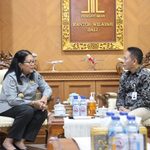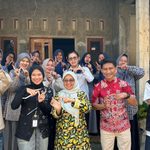


Tangerang Selatan, September 9, 2025 – The Directorate of BLU Financial Management, Ministry of Finance of the Republic of Indonesia, together with PT. Surveyor Indonesia (ID Survey), conducted a field survey as part of a Comparative Study of State Universities with Public Service Agency (PTN-BLU) status and State Universities with Legal Entity (PTN-BH) status. The goal of this study is to analyze the efforts of PTN-BLU and PTN-BH in improving the quality of higher education services in line with World Class University (WCU) ranking criteria. It is hoped that the study will provide recommendations to stakeholders on strategic steps to be taken and aspects to be improved so that state universities can be more flexible and optimal in enhancing the quality of their higher education services. The team from PT Surveyor Indonesia will conduct field surveys at 26 State Universities (PTN), both PTN-BH and PTN-BLU, for the purpose of compiling this study, from September 8 to November 7, 2025.
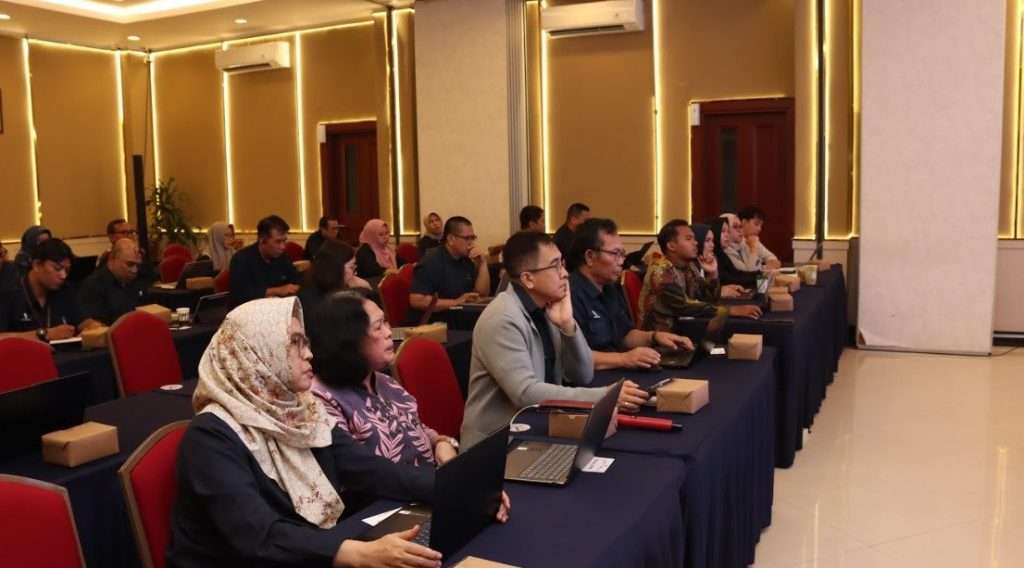
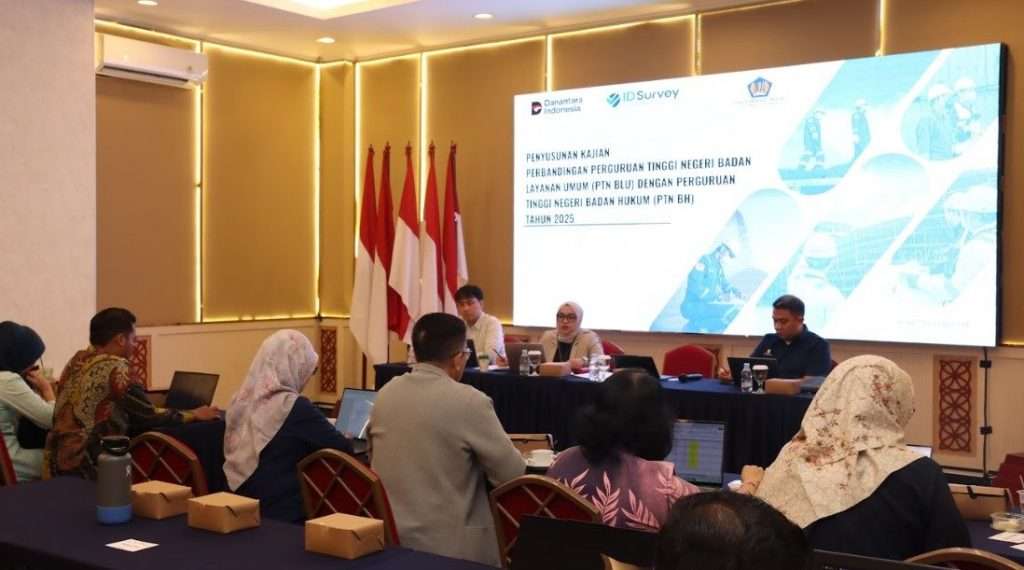
The event was attended by UT leaders, including the Acting Vice Rector for Finance, Resources, and General Affairs; the Acting Vice Rector for Research, Innovation, Cooperation, and Business; the Head of the Institute for Research and Community Service (LPPM); the Dean of the Faculty of Science and Technology (FST); and the Dean of the Faculty of Teacher Training and Education (FKIP), as well as heads of centers and directorate directors.
The event opened with a speech by the Acting Vice Rector for Finance, Resources, and General Affairs, Adrian Sutawijaya, S.E., M.Si., who represented the Rector. In his speech, he affirmed that UT’s transformation from PTN-BLU to PTN-BH is a significant milestone to strengthen UT’s role as a world-class distance education (PJJ) campus. Through the strategic policies that have been set, UT will continue to build its foundation, accelerate growth, and solidify its global competitiveness with the support of digital innovation, sound financial governance, and entrepreneurial development.
The main presentation was delivered by Hendrawan Bayu Wicaksono (Financial and Accounting Expert Staff at the Office of the Vice Rector for Finance, Resources, and General Affairs), who reviewed UT’s journey from PTN-BLU to PTN-BH, including the roadmap toward becoming a World Class University. Bayu also explained topics related to Good Corporate Governance, UT’s Long-Term Development Plan Roadmap, the accreditation of UT and its study programs, and UT’s programs related to the SDGs since becoming a PTN-BH. The Q&A session with UT leaders was intensive, with various topics ranging from the formation of a Project Management Office for the management of UT’s business units, revenue strategies, to research commercialization programs. The Head of UT LPPM, for example, explained that this year UT has successfully produced 20 simple patents that are ready to be commercialized to create new sources of income.
The Acting Vice Rector for Research, Innovation, Cooperation, and Business, Prof. Rahmat Budiman, M.Hum., Ph.D., added that UT had already instilled an entrepreneurial spirit through its study programs and the compulsory Entrepreneurship course. He also affirmed UT’s significant achievements in recent years. “From 2021 until now, thank God, UT’s revenue has increased significantly, in line with the extraordinarily high and rapid increase in student numbers, which is a result of effective marketing policies and implementation,” he said with great appreciation.
This activity also highlighted the advantages of the Open and Distance Higher Education (PTTJJ) system that is characteristic of UT. With more than 770,000 active students, 2.5 million alumni, 39 regional UT centers, and 1 overseas UT center, UT has made a significant contribution to increasing the national Gross Enrollment Ratio (GER) for higher education by 4% of the National GER. Flexibility, affordable tuition fees, and the support of a digital ecosystem through UT TV, UT Radio, MyUT apps, digital learning materials, and the use of AI technology make UT increasingly relevant in the era of technology-based education.
The momentum of this study also confirmed UT’s contribution to achieving the Sustainable Development Goals (SDGs). Through SDG 4 (Quality Education), UT opens access to higher education for all. SDG 8 (Decent Work and Economic Growth) is realized through strengthening entrepreneurship programs and the commercialization of research results. SDG 9 (Innovation and Infrastructure) is reflected in the strengthening of academic digitalization and innovative revenue strategies. Meanwhile, SDG 17 (Partnerships for the Goals) is present through UT’s collaboration with Surveyor Indonesia, the Ministry of Finance, and industry partners.
With a clear roadmap, tangible academic contributions, and the support of strategic partners, UT is optimistic about realizing its vision of becoming a World Class University and an impactful campus that brings real change to society, the nation, and the world. The event concluded with a visit by the Surveyor Team to several of UT’s operational units, such as Puslaba, P2BAM, and DSI. The Surveyor Team observed the activities at these three units, which are the comprehensive backbones of UT’s services to students.
The text you provided is a detailed report on the comparative study between UT (as a PTN-BH) and other universities. It highlights the significance of UT’s transformation and its contributions to national education and the SDGs.