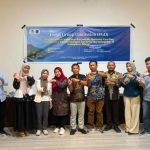

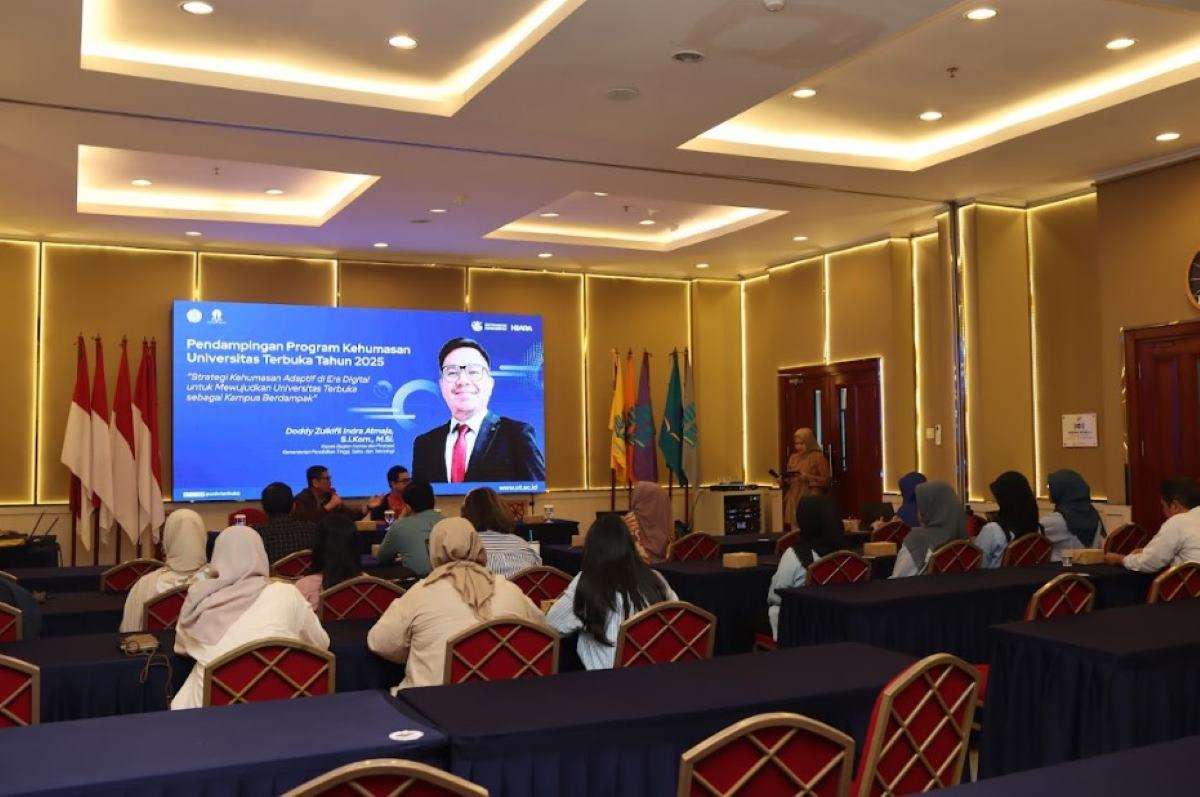
South Tangerang, August 20, 2025 — Universitas Terbuka (UT), through its Directorate of Public Relations and Marketing (DPKS), continues to strengthen its public relations governance and communication strategies by collaborating with the Directorate of Higher Education, Science, and Technology (Diktisaintek), Ministry of Higher Education, Science, and Technology. A workshop titled “Adaptive Public Relations Strategy in the Digital Era to Realize Universitas Terbuka as an Impactful University” was held at the Rasamala Room, Wisma II, UT Headquarters, Pondok Cabe, South Tangerang.
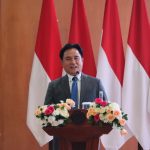
The workshop featured a speaker from Diktisaintek, Doddy Zukkifli Indra Atmaja, S.I.Kom., M.Si., Head of Public Relations and Protocol, Bureau of General Affairs, Public Relations, and Procurement Services at Kemendiktisaintek. Attendees included vice deans of student affairs, learning services, and cooperation from various faculties, academic advisor staff from the Vice Rector for Academic Affairs, staff from the Information Systems and Student Affairs division, marketing and public relations staff, and the entire UT Central PR team.


Ali Tarigan, S.E., Director of Marketing and Cooperation (DPKS) UT, emphasized that public relations holds a strategic position in shaping the institution’s image and reputation. “Strengthening public relations capacity is crucial because PR at universities is not merely about disseminating information, but also about shaping image, safeguarding reputation, and driving institutional branding,” he explained. “As a Digital, Open, and Sustainable Campus, Universitas Terbuka needs to optimize its public communication strategies to become more recognized, trusted, and acknowledged by the broader public—both nationally and internationally.”
In his opening remarks, the Director of DPKS stated that the role of PR has become more complex, especially with the government’s new mission of creating impactful universities. According to him, UT’s public relations team plays a crucial role in managing the university’s website and official social media channels with high-quality content to meet the demands of dynamic public communication.
“DPKS is committed to managing and enhancing publications, especially content related to impactful science and innovation. However, this cannot be done alone—it requires collaboration across all PR units at faculty and regional levels. I hope this shared commitment improves publication quality and builds a positive image in society,” he added.
As the keynote speaker, Doddy Zulkifli Indra Atmaja, S.I.Kom., M.Si., emphasized that public communication is a vital tool in fostering healthy relationships between institutions and the public. He introduced Lasswell’s Communication Formula (Who Says What to Whom, Through Which Channel, With What Effect) and stressed the importance of communication strategies that are adaptive, inclusive, and evidence-based.
Doddy highlighted PR’s strategic role in enhancing transparency and accountability, building image and reputation, empowering communities, and combating misinformation. He also emphasized the role of students as public communication agents through various social media platforms, podcasts, and official websites to strengthen the university’s image. “Effective public communication not only conveys information but also influences people’s attitudes and behaviors,” he asserted.
During the discussion session, Doddy presented material on public communication in the “Diktisaintek for Impact” era, emphasizing that communication strategies must highlight institutional strengths and distinguish them from others.
“PR professionals must understand audience needs, determine appropriate content, and avoid communication noise. Information is only successful if it not only reaches the audience but also influences their attitude and behavior,” he explained.
He also pointed out that the role of public relations does not always have to be formalized—anyone who supports information services can serve as part of the PR function.
“The role of PR is to shape, maintain, and enhance the institution’s positive reputation. PR must also be ready to provide solutions, support leadership, and uphold public information transparency,” he emphasized.
Doddy introduced the Diktisaintek Public Relations Award (AHD) 2025, themed “Diktisaintek for Impact”, as a moment to improve the quality of publications, social media management, and PR unit performance across public and private universities and regional higher education service institutions (LLDikti). This competition aims to encourage university PR teams, including UT, to deliver creative, credible, and globally competitive content.
Through this workshop, UT reaffirms its contribution to supporting the Sustainable Development Goals (SDGs), particularly:
- SDG 4 (Quality Education) — by ensuring open and transparent access to academic information,
- SDG 8 (Decent Work and Economic Growth) — through PR capacity building and service digitalization,
- SDG 11 (Sustainable Cities and Communities) — by promoting digital literacy and healthy public communication,
- SDG 17 (Partnerships for the Goals) — through close collaboration with Diktisaintek and other strategic partners.
This workshop marks a pivotal moment in strengthening UT’s adaptive PR capacity in the digital era, aligned with the spirit of being an Impactful Campus—not only educating but also making real contributions to society, the nation, and the world toward Indonesia Emas 2045.