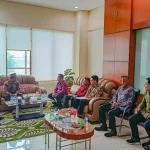

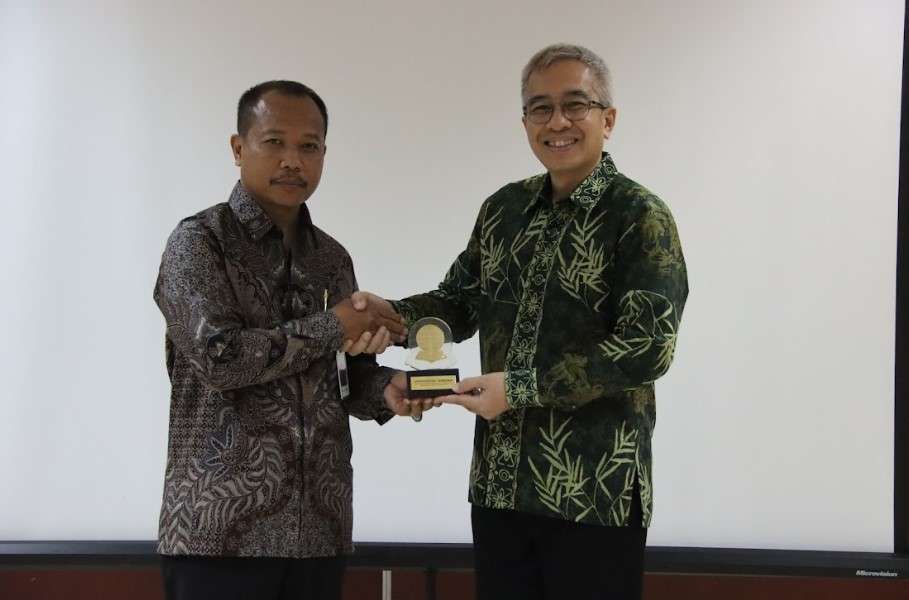
Tangerang Selatan, May 22, 2025 — Universitas Terbuka (UT) once again took center stage in Indonesia’s digital education transformation. This time, UT hosted a benchmarking visit from the Financial Education and Training Agency (BPPK) of the Ministry of Finance (Kemenkeu) on Thursday, May 22, 2025, held in the Cemara Room, 2nd Floor, UT Multipurpose Building.
Welcoming Remarks
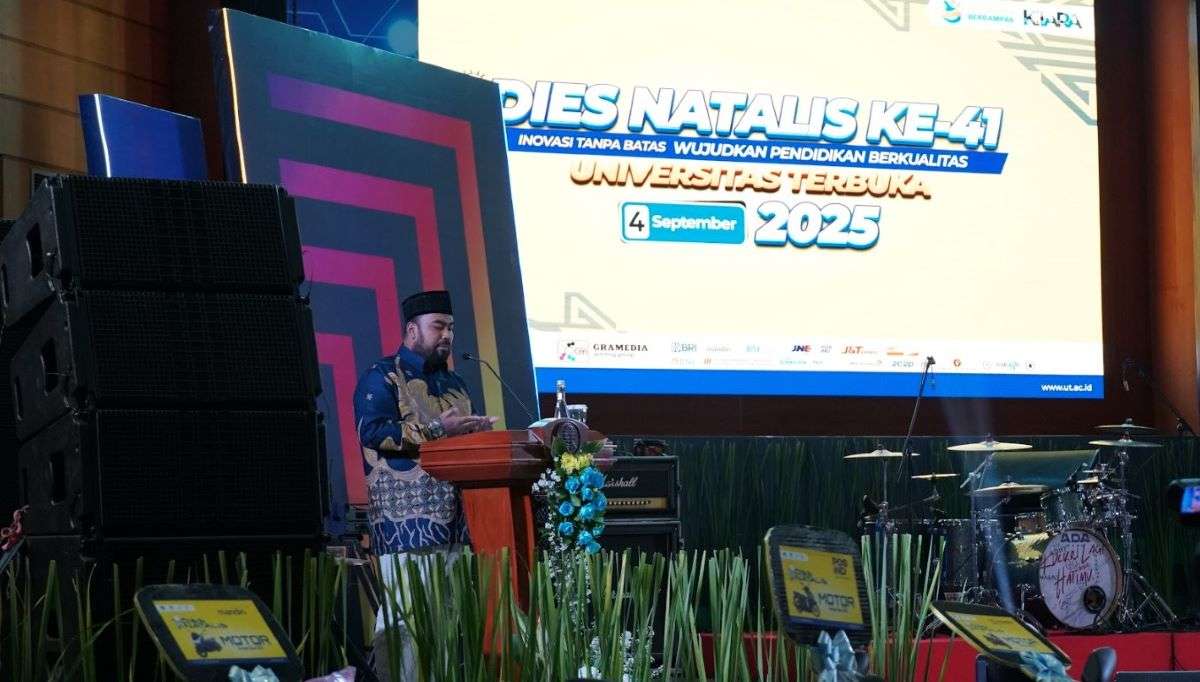
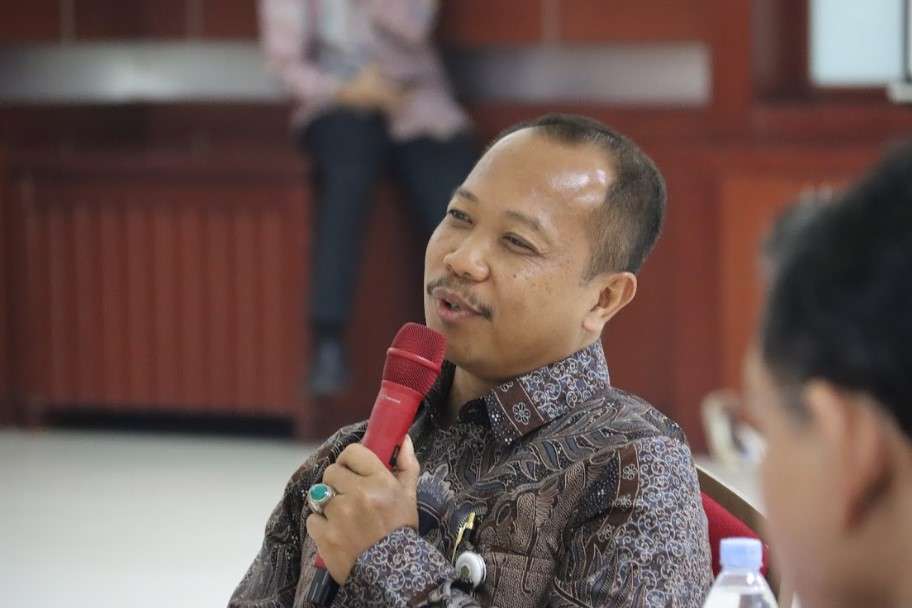
The event began with a presentation of UT’s profile and welcoming remarks from the Acting Vice Rector for Research, Innovation, Cooperation, and Business at UT, Rahmat Budiman, S.S., M.Hum., Ph.D., and the Head of BPPK Kemenkeu, Andin Hadiyanto, S.E., M.A., Ph.D. In his address, Rahmat Budiman, Ph.D., expressed appreciation for BPPK Kemenkeu’s interest in the PTTJJ system developed by UT. “Thank you for the presence of the BPPK Kemenkeu delegation. UT is pleased to provide insights into the implementation of the distance education system, which serves as a strategic solution for expanding access to quality education throughout Indonesia in this digital era,” he stated.
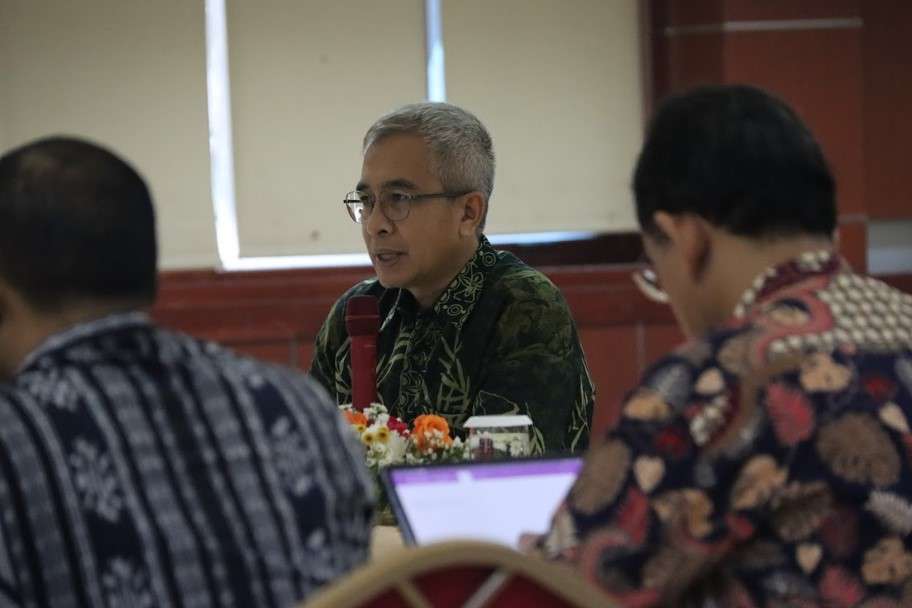
Andin Hadiyanto, Ph.D., further emphasized that the purpose of this visit was to gain new insights from UT as a pioneer of open and distance learning systems, making it a worthy model for benchmarking digital-based learning development.
Insights into UT’s Distance Learning System
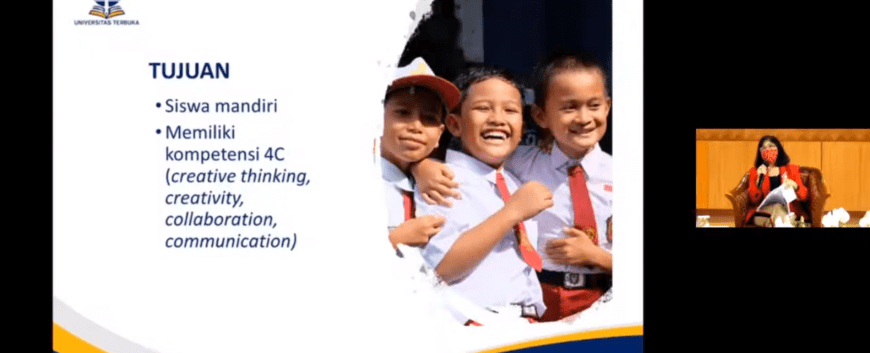
In the main discussion session, Prof. Aminudin Zuhairi, Ph.D., a Professor at UT, presented the philosophy and practices of Distance Learning (PJJ) that UT has developed over more than 40 years. He emphasized the principles of inclusivity, flexibility, and lifelong learning as the foundation of UT’s success in reaching millions of students across the archipelago and abroad.
Meanwhile, Dimas Agung Prasetyo, S.Kom., M.Sc., Head of UT’s Learning Management Center (PBB), explained how UT develops a robust, user-oriented, and scalable Learning Management System (LMS) to ensure an adaptive and responsive learning process. Dimas also detailed how academic and technical teams at UT integrate technologies such as AI, chatbots, and learning analytics to support the teaching and learning process.
Collaboration and Future Prospects
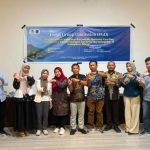
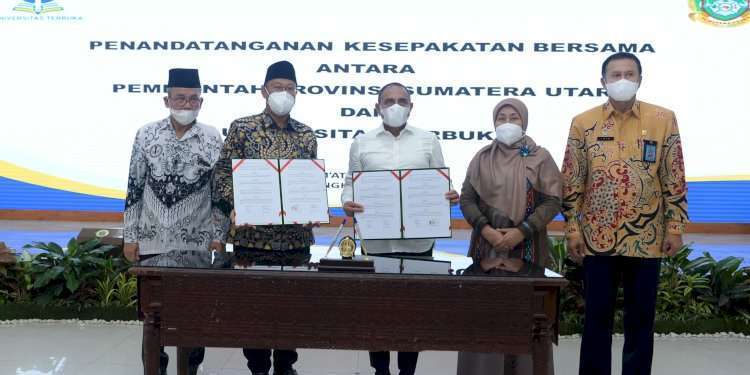
The discussion session concluded with an exchange of souvenirs and a group photo, marking the commitment to cooperation and synergy between the two institutions in advancing digital-based education. The activities continued with a visit to UT’s Multimedia Teaching Materials Production Center (P2BAM), the birthplace of various digital learning content in multiple formats, including videos, audio, interactive modules, and educational animations.
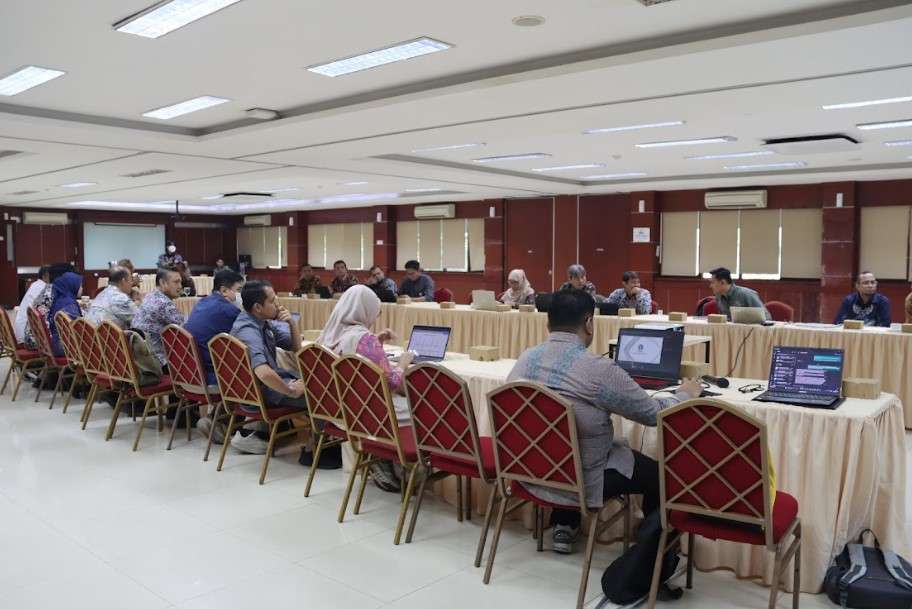
This benchmarking visit serves as a strategic step for BPPK Kemenkeu to enrich its perspectives and best practices in digital learning management, and it opens up opportunities for sustained collaboration with UT, a pioneer in open distance education in Indonesia.