
Tangerang Selatan, 5/1/2024 – Universitas Terbuka (UT) continues to show serious commitment to supporting the attainment of sustainable development Goals (SDGs) in Indonesia. Through various efforts and initiatives, UT has played a significant role in creating a sustainable society and contributing to national development goals, one of which is the UT Green University Program (UTGU). Universitas Terbuka (UT) proves its active role in achieving the Sustainable Development Goals (SDGs) in Indonesia through the UT Green University Program. With a commitment to sustainable practices, UT has become a role model for other educational institutions in implementing environmentally friendly campus operations and management.
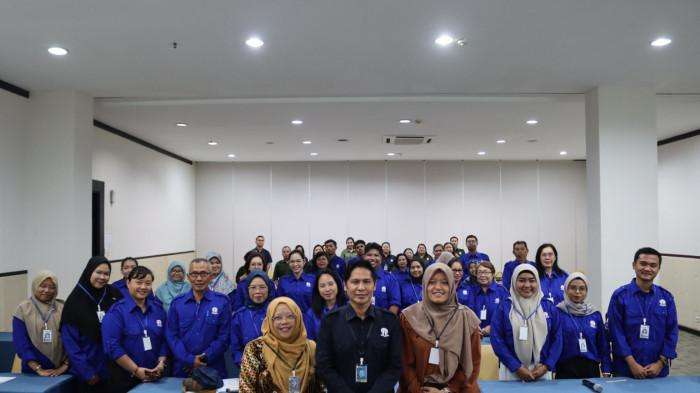
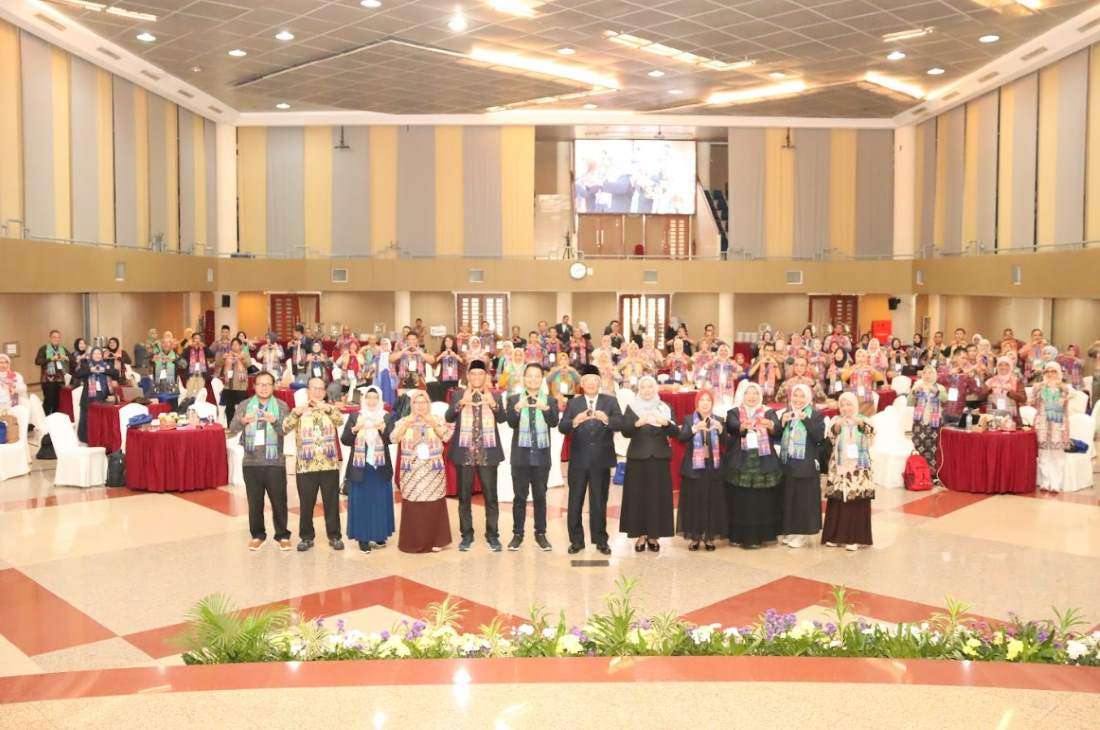
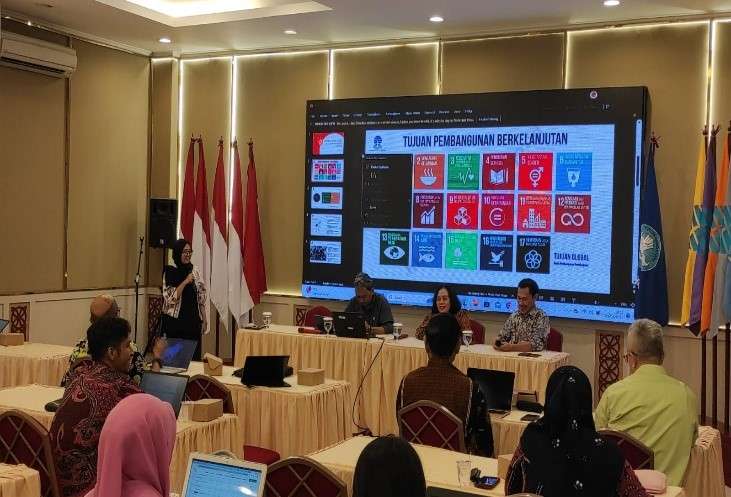
On Friday, January 5, 2024, a sharing and discussion event on UTGU and the achievement of UT’s Sustainable Development Goals (SDGs) took place. The event was attended by the Vice Rector for Research, Innovation, Collaboration, and Business of UT, UT Secretary of the Board of Trustees, the Chair and Secretary of UT LPPM, the Head of UT Community Service Center, the Head of UT Research and Science Center, the Research and Innovation Center of PTJJ UT, and the entire UTGU team. The purpose of this activity was to enhance the integration of UTGU’s role and expand its coverage of various SDGs indicators in the future.
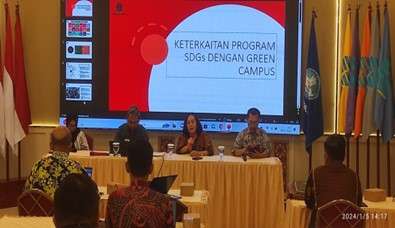
Through the UTGU program, UT actively engages in environmental protection, resource management, and climate change mitigation efforts. One of the concrete step taken by UT is the development of effective and sustainable waste management policies and practices. UT ensures that waste management in the Central and Regional UT offices adheres to strict environmental standards and adopts recycling principles and safe disposal methods.
Moreover, UTGU prioritizes green energy awareness by developing energy-saving initiatives. The Central UT office is equipped with the latest technology that is efficient in energy use, such as using energy-efficient lighting systems and solar panels to utilize solar energy. This helps reduce the university carbon footprint and promotes the use of renewable energy. Additionally, UT features extensive green open spaces on campus to create a comfortable environment for students and staff while promoting awareness of nature and its sustainability. UT also encourages active student participation in tree planting and environmental restoration activities as part of the UTGU program.
Through UTGU’s role, UT plays a crucial part in achieving several SDGs and provides a concrete example that educational institutions can be agents of change in achieving sustainable development goals.
The achieved SDGs by UT include: SDGs 4, where UT supports quality education through open and distance education that can be accessed by anyone and anywhere. Then SDGs 3, namely supporting good health and prosperity through Community Service Activities (PkM) directed at the health sector, including assistance with Posyandu, prevention of dengue fever and others. SDGs 5 Gender equality where the number of UT students is dominated by female students. In 2020, female students reached 65.065% of the total 311,028 students. SDGs 6 Clean water and sanitation, the Central UT office has an artificial lake covering an area of 2.5 Ha which functions as water conservation and implements eco drainage, which is environmentally friendly drainage (unconventional drainage). SDGs 8 decent work and economic growth is proven through a performance-based employee remuneration system and UT improving its human resource competency on an ongoing basis. Furthermore, SDGs 10 reduces inequality, it is to increase equity and higher education APK, UT increases its services and outreach to all levels of society, including students with disabilities. SDGs 11 Sustainable Cities and Communities, one of the UT Library supports can be accessed and utilized by the entire UT academic community or public in general. SDGs 13 Handling climate change is related to waste management, reforestation, and green energy. SDGs 12 Responsible consumption and production, UT has implemented these SDGs by reducing the use of paper and plastic in operational activities. SDGs 15 protects land ecosystems, UT Lakes were created and functioned to store infiltration water to avoid drought during the dry season and also floods during the rainy season.
Annually, UTGU participates in the international event, namely UI Green Metric, which is a prestigious event to show the commitment, action, and contribution of worldwide universities towards the achievement of sustainable development indicators that have been carried out. In 2022, UT ranked 53rd out of 153 universities in Indonesia that focus on green and sustainable development, then an international ranking of 583rd out of 1183 global universities. In 2023, UT achieved a significant milestone, since its rising to the 46th position nationally and 513th internationally. They are not just a number, these rankings reflect UT’s tangible commitment to environmental preservation and indeed the SDGs. Congratulations, UT! (HE).