
In an effort to maintain academic authority and produce quality education, Universitas Terbuka (UT) has continued to make improvements and enhancements to the international-scale implementation of Open Distance Higher Education Institutions (ODHEI)) standards since 2005. In this regard, UT regularly and continuously seeks to improve the quality of education services to become a leading provider of Distance Education (DE).
One of the important steps taken by UT to improve and ensure the quality of education services is to invite quality reviewers from the International Council for Open and Distance Education (ICDE). This year, UT has conducted a quality review for the fifth time by ICDE after previously conducted in 2005, 2010, 2016 and 2019.
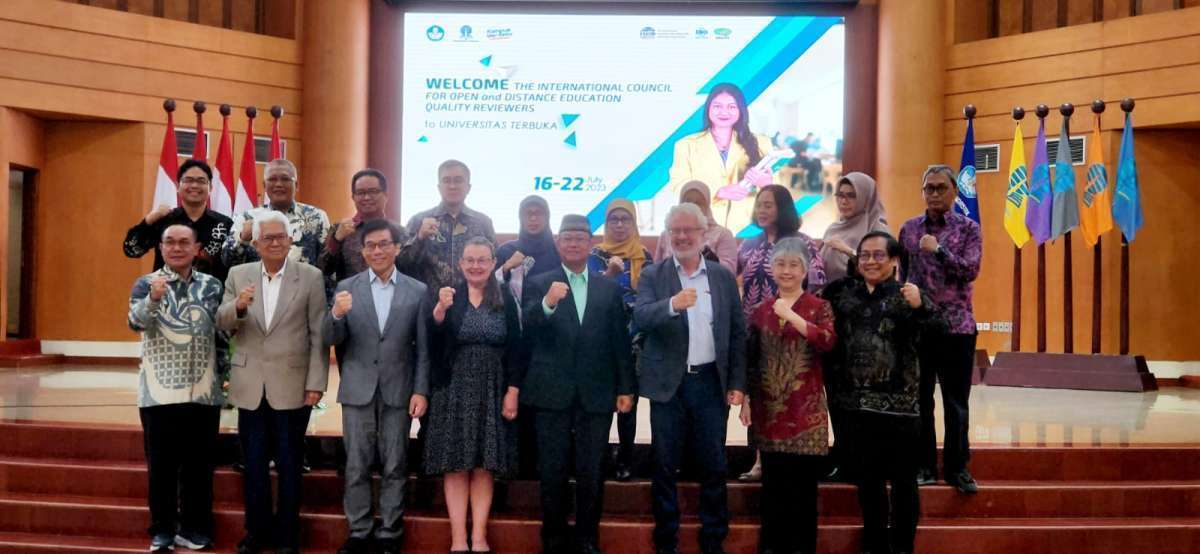
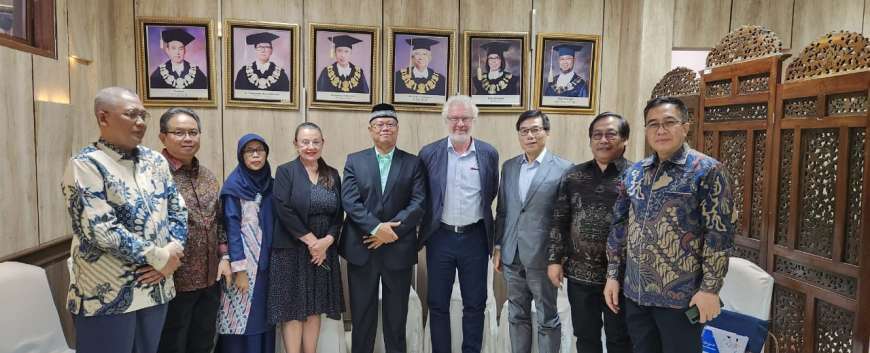
The reviewer team from ICDE this year consists of Prof. Ebba Ossiannilsson (Chair of the ICDE OER Advocacy Committee and ICDE OER Ambassador for Global Advocacy, Sweden), Prof. Morten Flate Paulsen (The Norwegian of Science and Technology and Former ICDE Secretary General), and Prof. Kam Cheong Li (Dean of School of Open Learning at Hong Kong Metropolitan University). The quality reviewers from ICDE will ensure that all business processes for implementing UT distance education, starting from the recruitment process, development of teaching materials, learning services, and assessments to the management system of ODHEI at UT in compliance with international standards.
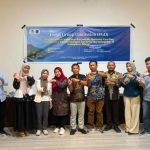
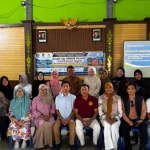
ICDE emphasises the importance of higher education quality assurance in the ODHEI system. The quality review conducted by ICDE aims to improve and support the quality of open and distance education institutions. The quality review process carried out by ICDE at UT involves various parties, including UT leaders (rectorate, faculty/postgraduate schools, study programs, and heads of other units) at the UT head office (HO) and regional offices (RO) and involving students, alumni, and tutors. The review was carried out for five days at the UT HO ad ROs in Jambi, Bandung, and Malang, from July 17 until 21, 2023.
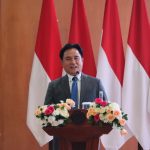
In opening the event, Prof. Ojat Darojat, M.Bus., Ph.D., Rector of UT, conveyed the 2023 ICDE Quality Review Visitation theme, “Transforming for Greater Autonomy in the New Indonesia’s Distance Higher Education Competitive Environment.” “This year is the fifth ICDE review activity after 2005, 2010, 2016, and 2019. This indicates that the UT always makes quality assurance of institutional education in line with the best standards agreed upon by the international distance education consortium,” said the Rector.
Prof. Ojat added that after UT became a Legal Entity of HEI, there were big challenges faced as a distance public university in Indonesia. UT is determined to continue improving service quality and increasing student participation in the learning process. In addition, UT is also trusted by the government to increase the number of 1 million students as a step to increase the gross enrolment rate for Indonesian higher education in various corners of the country. UT is also believed to be the chairman of the Indonesia Cyber Education (ICE) Institute consortium as a digital marketplace for quality online courses provided by well-known public and private university partners in Indonesia. With the strong collaboration between UT and ICDE, it is hoped that open distance education services will progress further and greatly benefit the community.
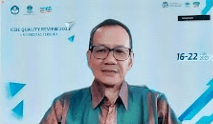
The initial remarks were delivered by Prof. Ir. Nizam, M.Sc., DIC., Ph.D., Director General of Higher Education, Research and Technology via Zoom. He emphasized that UT is currently a Legal Entity of HEI, that is, it has autonomy in managing education services and finances, so it is very important for UT to get input from reviewers for implementing the ODL campus with the Legal Entity of HEI status. The Ministry of Education and Culture, Research, and Technology always support international recognition and input from the International Distance Education Consortium to improve the quality and service of its education. The Ministry of Education and Culture applies aspects of Quality Assurance for Education to be able to improve the quality of knowledge of all students so that they can become graduates who can make a positive contribution to society, as well as solutions to various problems that this nation has. Prof. Nizam also greatly appreciates all the efforts made by UT so that it can become an ODL campus with the vision of becoming the pioneer of the best ODL campus on a world scale. Regarding the increase in the gross enrolment rate for higher education, Prof. Nizam conveyed this in line with Prof. Ojat’s review. “Access to ODHEI courses, like what UT does, opens up opportunities for the community, especially the younger generation who experience geographical barriers, to be able to study in a quality manner,” said Prof. Nizam.
Prof. Ebba Ossiannilsson, in her speech, greatly appreciated the invitation from UT to the ICDE Quality Reviewers activity in 2023, where she has served as a reviewer five times, and from each visit, she has really enjoyed the beauty of UT campus with natural nuances and environmental parks on campus. Based on the experience of the previous ICDE Quality Review, the impression was that all lecturers, staff, managers, and administrators working at UT had implemented the ODL campus principles and deeply animated them, starting “from the hands, heart, to the head.” Prof. Ebba looks forward to collaborating with UT to work together to improve the quality of educational services and management of ODHEI so that they can gain international recognition and reach students from abroad.
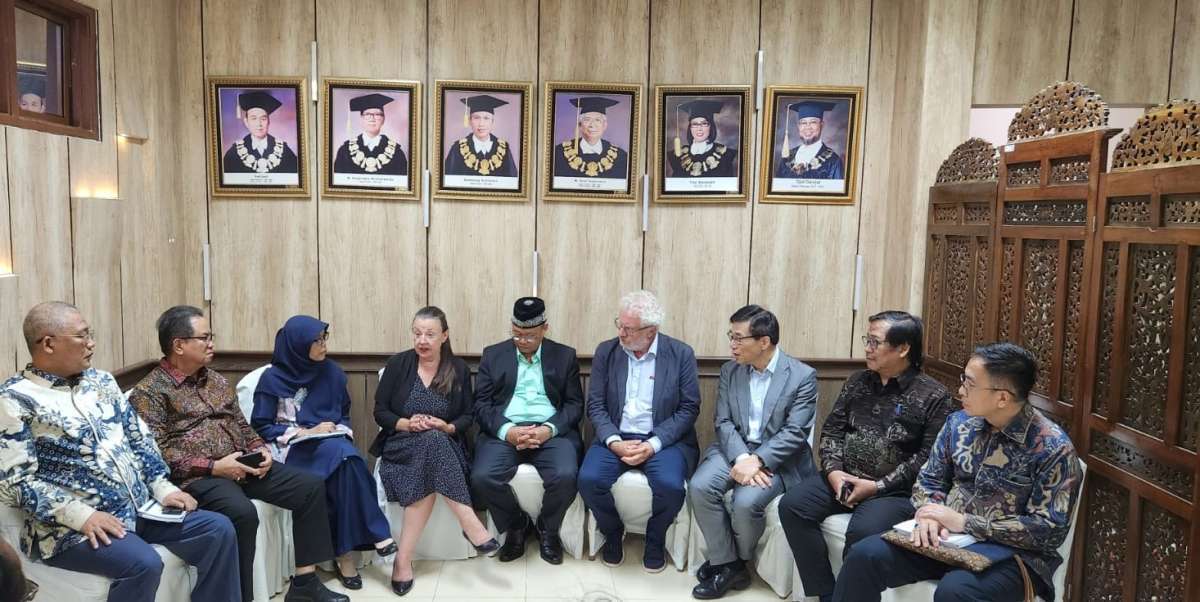
Prof. Morten Flate Paulsen and Prof. Kam Cheong Li also expressed their gratitude for the trust given to ICDE to be able to review various services at UT. When meeting with the media team, Prof. Morten said that after the Covid-19 pandemic, ODHEI faced challenges because conventional universities also used digital technology. “The characteristic of UT compared to conventional HEI is that UT is open to everyone to study, including workers, housewives, and groups with disabilities who cannot possibly study at conventional HEI; they can study at UT, and by ODHEI, they can be served,” explained Prof. Morten.
While Prof. Kam Cheong Li conveyed this to the media from another aspect, he appreciated UT’s commitment to showing international quality. “As one of the open universities in Asia, UT’s service quality continues to improve,” said Prof. Kam Cheong Li. This aligns with Prof. Ojat’s final presentation when closing the presentation related to UT’s efforts to ensure the quality of the ODHEI implementation process. “Quality is the most important pillar of UT and will continue to be maintained in the future,” said the Rector.
With the review conducted by international institutions such as ICDE, UT strives to improve its quality to become a world-class open-distance education institution. This is a manifestation of UT’s commitment to maintaining stronger academic authority. UT as a provider of ODHEI, really provides access to quality lectures for all Indonesian people because the learning system at UT is flexible for everyone. Various inputs and suggestions from reviewers on the ICDE quality review activities are expected to improve the quality of learning services for all UT students wherever they are.