
TANGERANG – In a single kindergarten classroom, no two children truly learn in exactly the same way. Some quickly understand numbers, others need more time, while some demonstrate their potential in different ways. Amid this diversity, teachers must continue teaching, observing children’s development, and recording every stage of the learning process.
This challenge prompted researchers at Universitas Terbuka (UT) to develop KIARA-PAUD, an adaptive learning ecosystem powered by artificial intelligence (AI) and designed as a teacher’s assistant. The innovation helps map the learning needs of children aged 4–6 in real time, without taking over teachers’ decisions in the classroom.
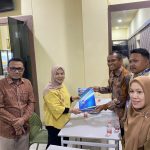
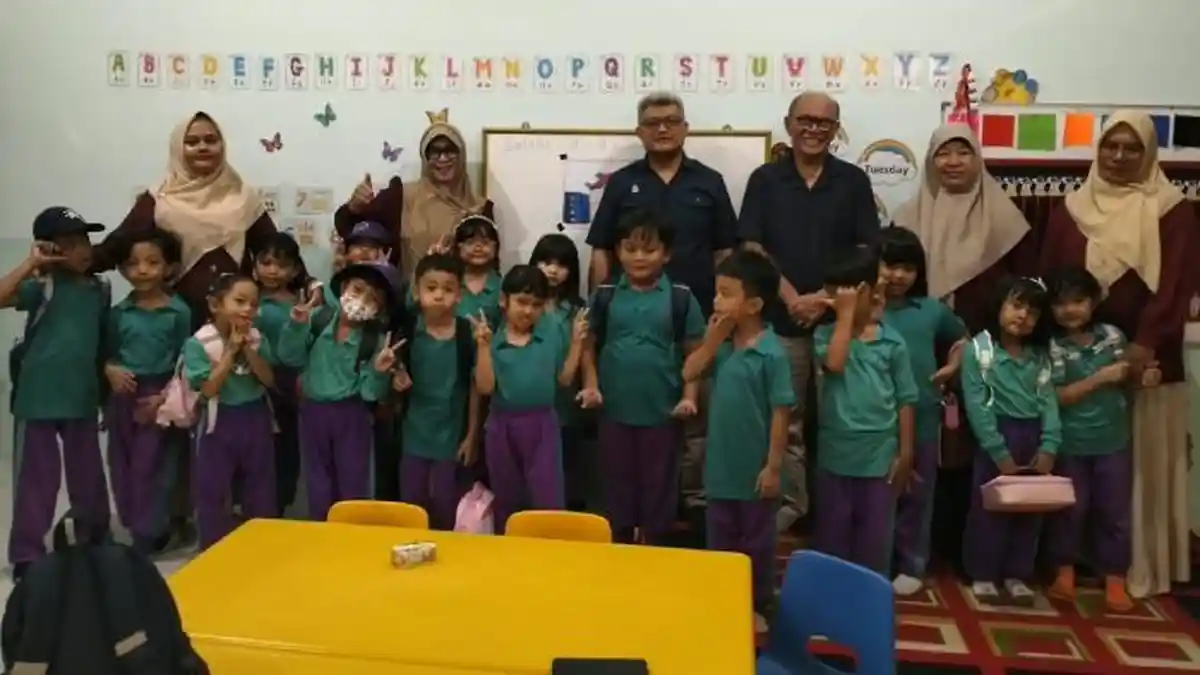
The KIARA-PAUD trial was conducted with TK Puteri Sakinah, Cikokol, Kota Tangerang, on Tuesday (September 29, 2026). The research team, led by Yus Alvar Saabighoot, M.Pd., first observed the learning process directly before conducting a diagnostic assessment simulation. The research was supervised by UT Professor Prof. Dr. Maximus Gorky Sembiring, M.Sc.
This approach was not without reason. The team wanted to ensure that the technology was developed based on real needs in the classroom. Therefore, the learning rhythm, how teachers divided their attention, and how they supported children with different characteristics were all important aspects of the observation process.
In its development, KIARA processes various traces of children’s activities, ranging from interactions and task completion time to the frequency of repeated attempts and teacher observation notes. The data is then mapped through a Knowledge Graph, which reconstructs the early childhood education curriculum into a network of competencies.
Next, Deep Learning technology through a Graph Neural Network (GNN) and Long Short-Term Memory (LSTM) is used to continuously read children’s learning patterns and development. The analysis is then translated into recommendations for activities and teaching modules that teachers can use.
As a result, teachers no longer need to constantly fill out manual rubrics to record children’s development. Activities such as the accuracy of matching numbers and objects, thinking duration, and the accuracy of work sequences can be recorded and processed into information on the teacher dashboard.
However, technological sophistication is not the center of KIARA. Instead, humans remain the decision-makers. Teachers can accept, modify, postpone, or even reject recommendations provided by the system.
“Until now, early childhood education teachers have been forced to choose between filling out rubrics and being fully present for the children. We designed KIARA so that teachers no longer have to choose. The machine reads patterns, while teachers read children’s hearts. Today, we learned a great deal from the teachers at TK Puteri Sakinah, and their feedback will shape KIARA in the future,” Yus said.
The idea stems from the reality that every child has different needs, while a uniform curriculum has the potential to overlook the Zone of Proximal Development (ZPD), namely the level of challenge appropriate for encouraging children’s optimal development. Gorky emphasized that learner diversity must serve as the foundation for designing learning.
“Children are diverse, and that diversity is a reality that must be respected, not standardized. The curriculum must be able to accommodate this diversity. Teachers should be capable of teaching within an educational context that reflects children’s diversity, rather than according to the teacher’s preferences,” he said.
For TK Puteri Sakinah, participation in this research also provided an opportunity to ensure that the technology remains focused on children’s needs. Head of TK Puteri Sakinah Yuliati, S.Pd., Aud., said that KIARA could strengthen teachers’ role in understanding students’ growth and development.
“We believe that every child has their own path to growth. We are pleased to be involved from the beginning and to see that this technology is designed to strengthen the role of teachers, not replace them,” Yuliati said.
The teachers’ feedback will subsequently become part of KIARA’s refinement through a Design-Based Research (DBR) approach. In addition to assisting teachers, the ecosystem also provides parenting guidance for parents and an analytical dashboard for researchers to identify research gaps and develop future innovations.
KIARA is currently targeted to reach Technology Readiness Level (TRL) 6. The trial at TK Puteri Sakinah serves as an important foundation for the research team to take KIARA into its next stage of development. Various inputs from teachers will become part of the refinement process before the technology is integrated with the national early childhood education platform and disseminated more widely. From the classroom, UT continues to encourage innovations that can strengthen the early childhood education ecosystem while supporting the availability of quality education.