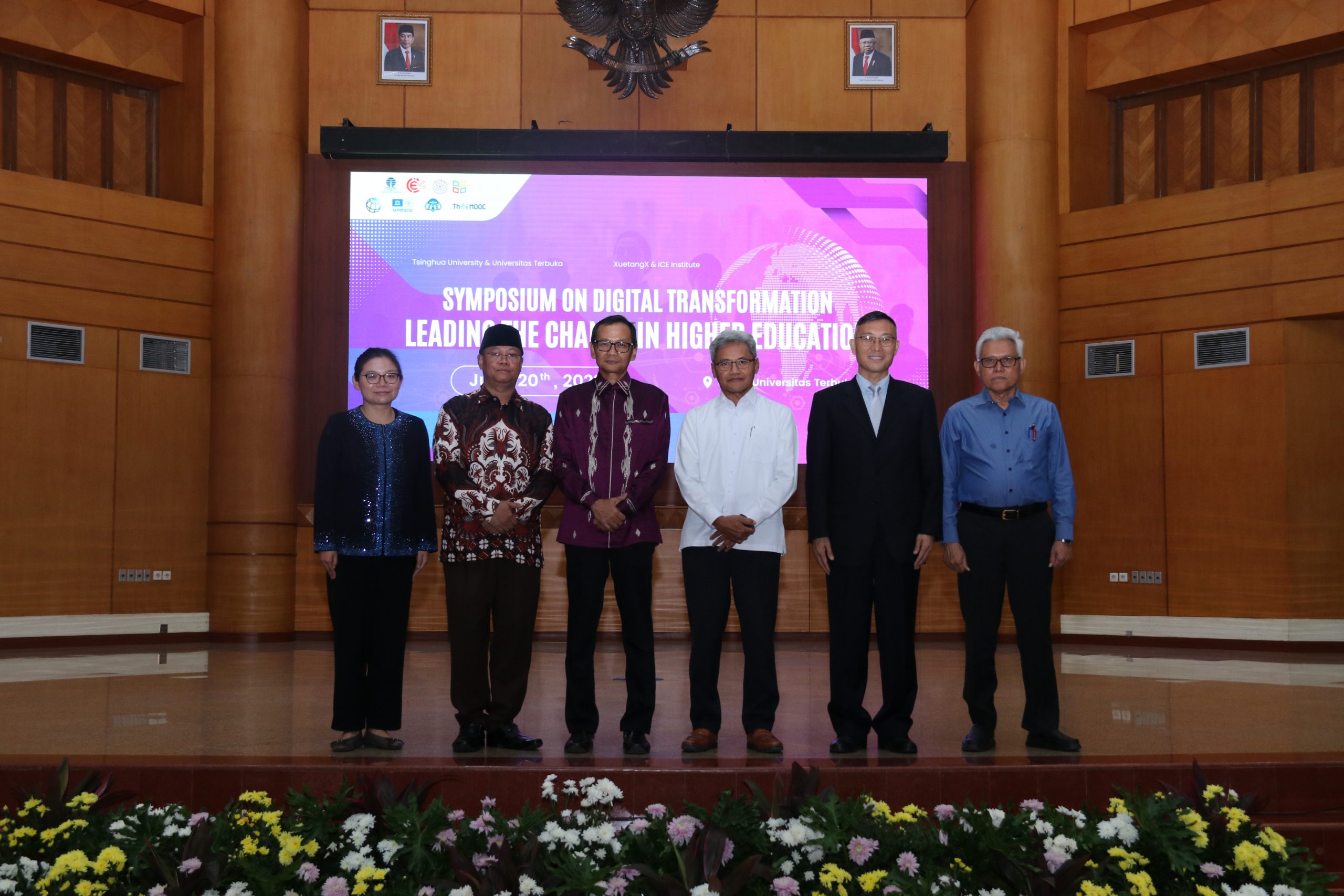

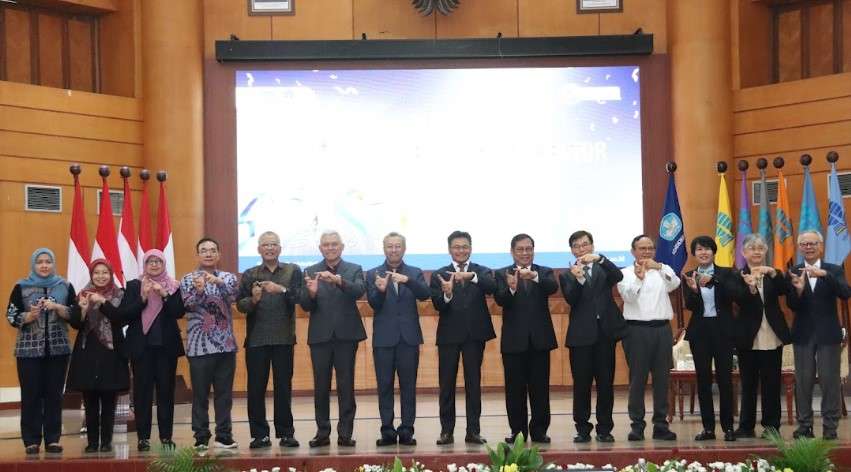
Tangerang Selatan, June 12, 2025 – Universitas Terbuka (UT) is entering a critical “Finding a Star” phase in determining its new leadership. Following the announcement of the screening process for Prospective Rector Candidates on May 26, 2025, the selection process for UT’s Prospective Rector (Bacarek) for the 2025-2030 period is now underway, marking UT’s commitment to continuously enhance quality and relevance in the education sector.
UT Bacarek Selection: Public Presentations
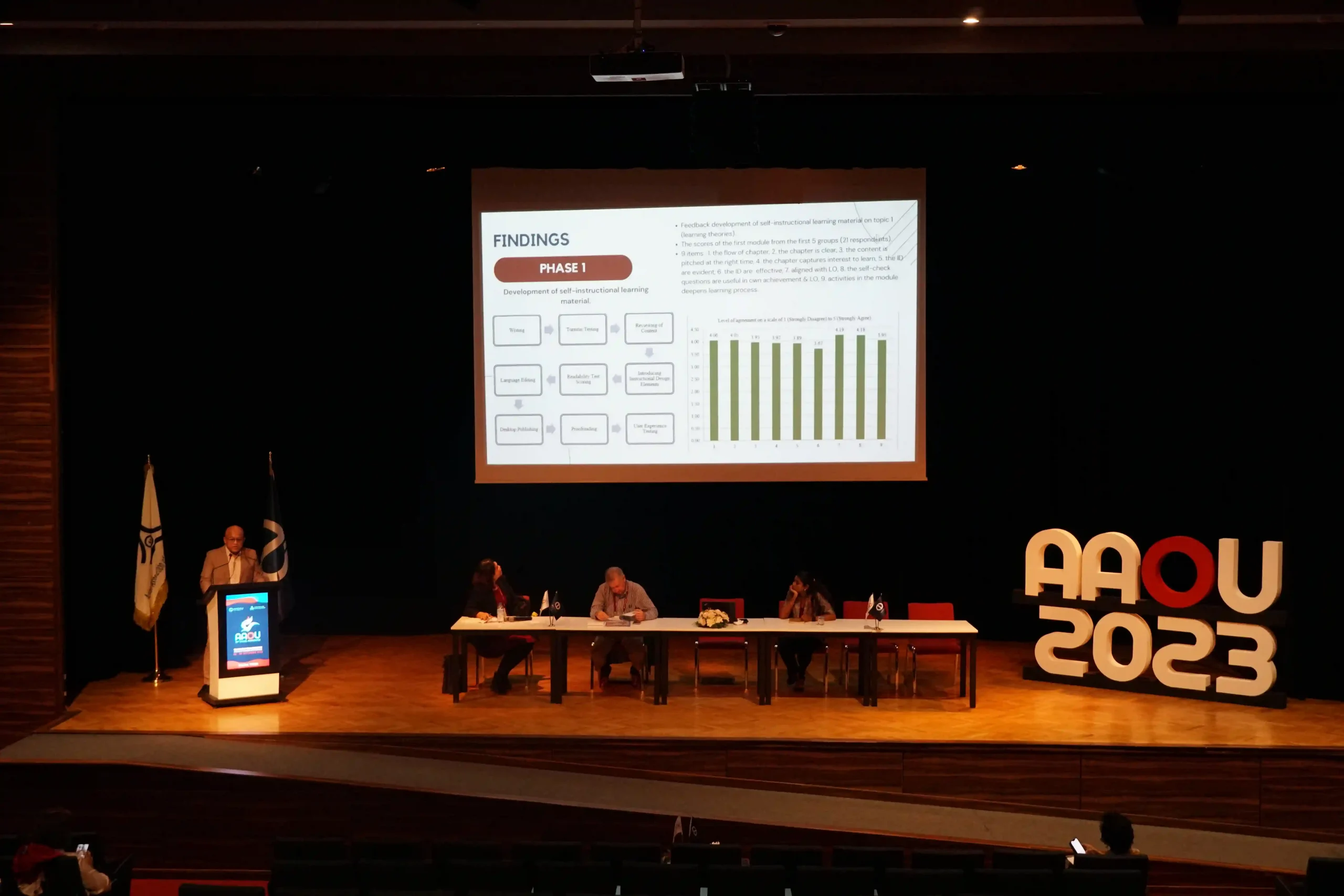
The series of selection processes for Universitas Terbuka’s Prospective Rector for the 2025-2030 period has entered a crucial stage. From June 11-13, 2025, the Universitas Terbuka Convention Center (UTCC) at UT Central Office, Pondok Cabe, South Tangerang, witnessed presentations and expositions of programs, visions, and ideas from nine Prospective Rector Candidates (Bacarek) who had passed the initial screening and document verification stages. The initial stage of selection was a fit and proper test conducted on June 3-4, 2025, by an independent institution, followed by the public presentation of the Prospective Rector Candidates for the 2025-2030 period. The entire series of public presentations was led by the Chair of the Universitas Terbuka (UT) Rector Election Committee (PPR) 2025-2030, Prof. Dr. Paulina Pannen, M.Ls., and broadcast live via the UT TV YouTube channel, ensuring transparency and accessibility for the entire academic community and the wider public.
Profile of Nine UT Bacareks: Distinguished Figures from Various Fields of Science
The nine Prospective Rector Candidates of UT who presented their programs before the panelists are (in alphabetical order): Prof. Dr. Ali Muktiyanto, S.E., M.Si. (Faculty of Economics and Business UT); Prof. Dr. Ernik Yuliana, S.Pt. M.T. (Faculty of Science and Technology UT); Prof. Dr. Etty Puji Lestari, S.E., M.Si. (Faculty of Economics and Business UT); Dr. Hendrian, S.E., M.Si. (Faculty of Economics and Business UT); Dr. Iqbal Miftakhul Mujtahid, S.IP., M.Si. (Faculty of Law, Social Sciences, Political Sciences UT); Dr. Meirani Harsasi, S.E., M.Si. (Faculty of Economics and Business UT); Rini Yayuk Priyati, S.E., M.Ec. Ph.D.; Prof. Dr. Tulus Suryanto, S.E., M.M., Akt. CA, CMA, CFA, PIA, ACPA.
UT’s Commitment to Quality and Sustainable Education
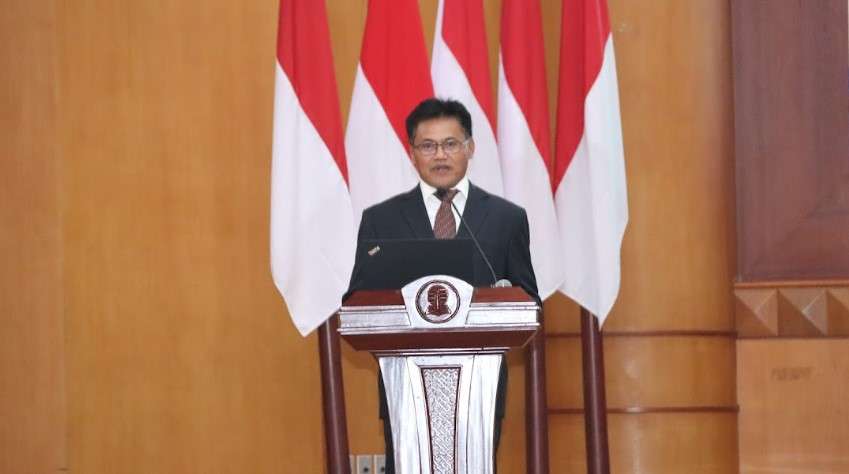
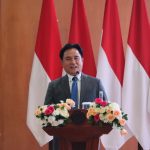
In his opening remarks for the official Bacarek UT presentation event, the Chairman of the Board of Trustees (MWA) UT, Prof. Ainun Naim, Ph.D., M.B.A., expressed appreciation for this strategic stage for UT and the Indonesian nation.
“Alhamdulillah, from June 11 to 13, we conducted the public presentation phase, one of several selection stages for the UT Rector, as an important and strategic process for UT and the Indonesian people, because UT’s vision is to provide quality higher education that reaches all segments of society,” said Prof. Ainun Naim.
He also highlighted UT’s strategic role as a pioneer of distance education in Indonesia, considering that the number of active UT students has reached 700 thousand from various parts of the country and abroad. Furthermore, Prof. Ainun asserted that the selection process for the UT Rector 2025-2030 has been designed to have high public accountability, as well as to accommodate aspirations from the entire community.
“For that, we invited panelists from various backgrounds, both from the business and industry sector (DUDI), state-owned enterprises (BUMN), community leaders, government elements, education figures, and international distance education experts,” added Prof. Ainun.
Direction of UT Development: Rector Candidates’ Strategic Vision
On the same occasion, Prof. Ainun expressed gratitude to the Chair of the Universitas Terbuka (UT) Rector Election Committee (PPR) 2025-2030, Prof. Dr. Paulina Pannen, MLs, and her team for establishing 8 important elements to consider the qualifications and competencies of the UT Bacareks:
- Vision and motivation to become Rector
- Opinions/views on the role of PJJ to support the achievement of Golden Indonesia by 2045
- Opinions/views for future UT human resource development
- Strategic Planning for UT Development as a PJJ institution
- Ideas for implementing the Tri Dharma of higher education at UT as a distance learning institution
- Ideas for UT’s business development as a PTNBH through partnerships to support resource development in providing PJJ to reach all levels of society
- Effective communication skills
- Orientation and attention to the development and welfare of UT human resources.
These points served as a guide for the UT Bacareks in formulating relevant and innovative work programs, in line with UT’s goal of continuously contributing to the advancement of Indonesian education and human resources. At the end of his opening remarks, Prof. Ainun also expressed hope that the nine rector candidates would deliver their best presentations, to be used as discussion material for the MWA for subsequent decisions.
Expert Panelists and Moderators in the UT Bacarek Presentation Process
The UT Bacarek Presentation Process for the 2025-2030 Period involved a number of credible expert panelists, both domestic and international. A total of 17 members of the Board of Trustees (MWA) and the academic community of Universitas Terbuka also reviewed the vision and ideas of the UT Bacareks, both online and offline. Several important MWA figures such as the Secretary-General of Kemdiktisaintek, Prof. Dr. Togar Simatupang representing Mendiktisaintek, General TNI (Ret.) Dr. (H.C) H. Moeldoko, S.OP., M.Si., and Dr. (H.C) Dahlan Iskan, followed the process online. Meanwhile, the Rector, Chairman of the University Academic Senate, Prof. Tjijik Srie Tjahjandarie, Prof. Ir, Tian Belawati, M.Ed., Ph.D., and other MWA members were present offline at UTCC, demonstrating full commitment to this selection process.
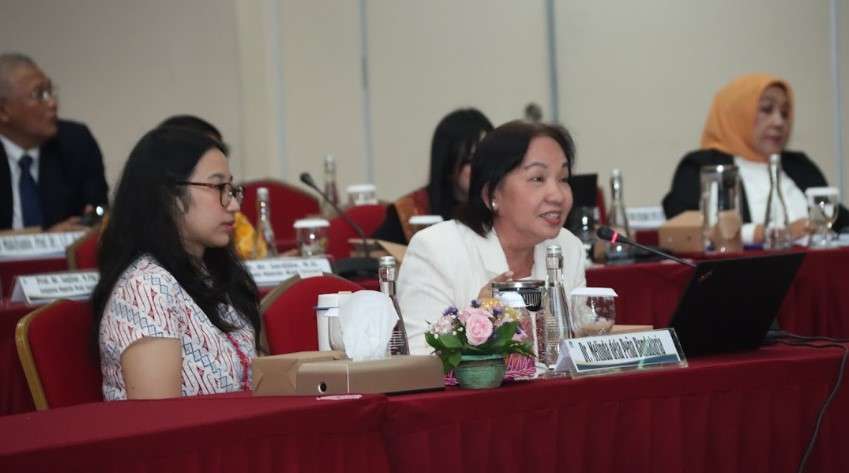
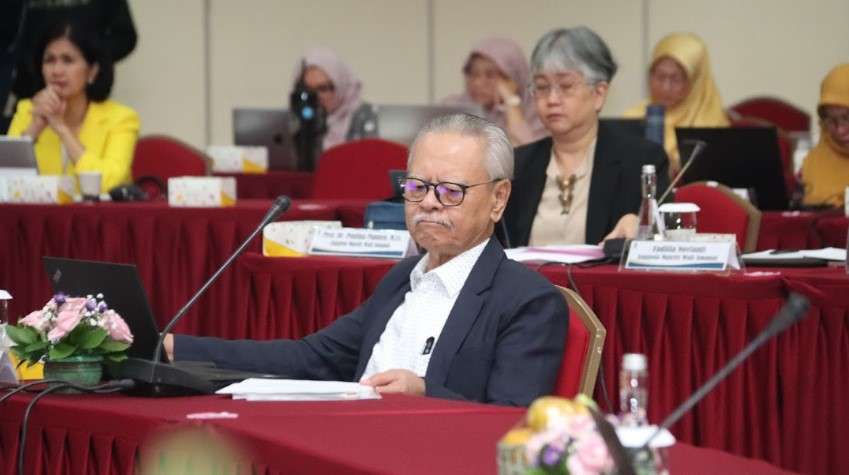
The panelists who reviewed the UT Bacarek presentations were:
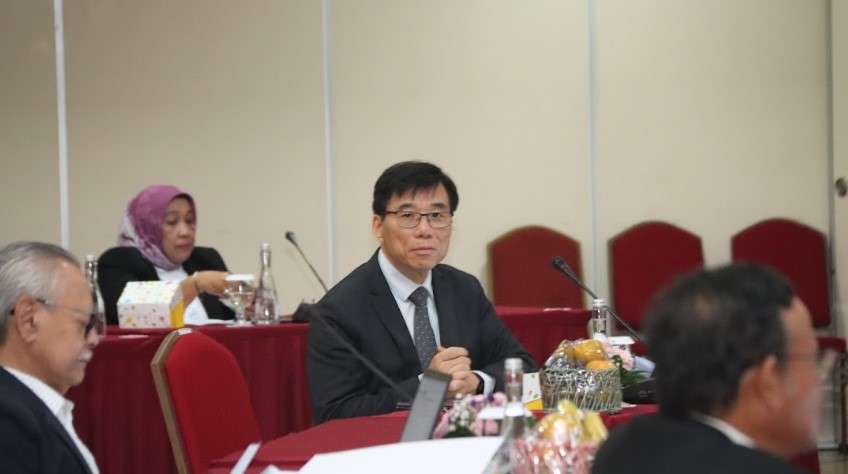
Day 1 (June 11, 2025):
- Prof. Kam Cheong Li (International PJJ Figure, from Hong Kong Metropolitan University)
- Erry Riyana Hardjapamekas (DUDI Figure, from PT Pasifik Satelit Nusantara/Indonesian Anti-Corruption Coalition)
- Prof. Dr. KH. Komaruddin Hidayat (Community Figure, Professor at the International Islamic University of Indonesia)
Day 2 (June 12, 2025):
- Dr. Melinda dela Pena Bandalaria (International PJJ Figure, from University of the Philippines Open University)
- Olivia Basrin, S.Sos., MPP (DUDI Figure, from Country Lead at Google Cloud Education)
- Prof. Dr. Ir. KH. Mohammad Nuh, DEA (Community Figure, Professor at Institut Teknologi Sepuluh November)
Day 3 (June 13, 2025):
- Prof. Emeritus Tan Sri Datuk Dr. Anuar Ali (International PJJ Figure, President/Vice Chancellor of Open University. Malaysia)
- Denni Puspa Purbasari, Ph.D. (DUDI Figure, Executive Director at PMO Prakerja)
- Prof. Mohamad Nasir, M.Si., Ph.D. (Community Figure, Professor at Universitas Diponegoro)
The presentation sessions were also supported by experienced moderators. Desi Anwar, a senior journalist and news producer, was the moderator on June 11, 2025. Meanwhile, on June 12-13, 2025, Tommy Tjokro, a news anchor and founder of the start-up Buddyku, took on the role of moderator. At the beginning of each session, the moderator introduced the Bacarek’s presentation by reading out each candidate’s CV.
Schedule and Order of UT Rector Candidate Presentations (June 11-13, 2025)
The UT Bacarek presentation process was systematically scheduled from June 11 to 13, 2025, providing equal opportunities for each candidate to present their programs and vision to the fullest. The UT Bacarek presentations on June 11-13, 2025, were attended by over 400 offline guests, including the Board of Trustees (MWA), Rector and Vice Rectors, SAU, Heads of Institutes, Deans and Directors of SPs, Directors of Directorates, Heads of Centers, Heads of Offices, Audit Committee (KA) MWA, Vice Deans/Vice Directors of SPs, Heads of Sub-directorates, Managers, Expert Staff, Heads of Study Programs, Representatives of lecturers, and other UT academic community members. Online attendees included regional UT leaders and all UT staff not present offline.
The order of UT Rector Candidate presentations was as follows:
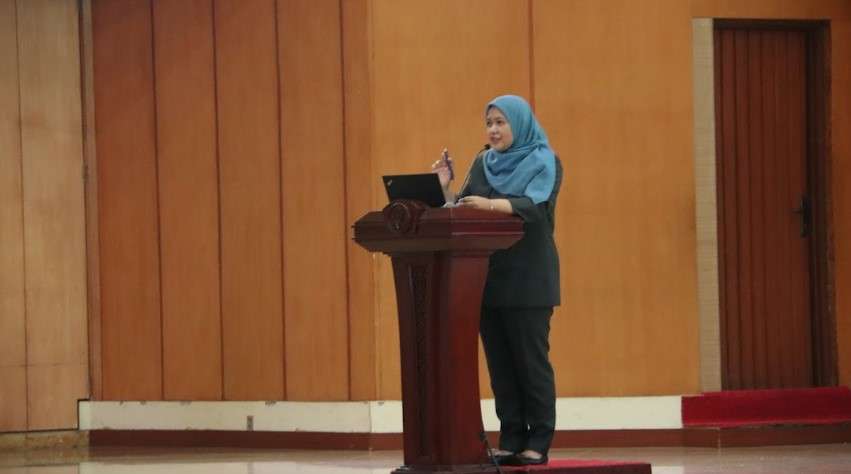
UT Bacareks presenting on June 11, 2025:

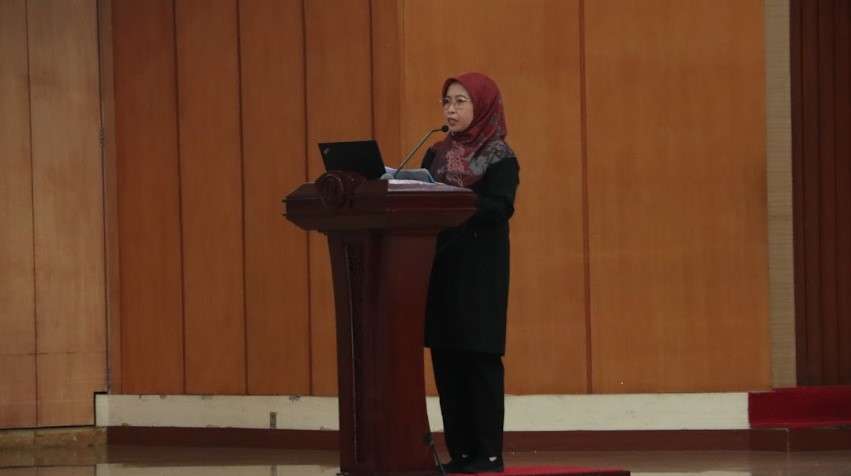
- Candidate No. 1 Prof. Dr. Etty Puji Lestari, S.E., M.Si. with the vision: “To become a leading university in providing quality, innovative distance higher education and providing access to higher education for the community.”
- Candidate No. 2 Prof. Dr. Ernik Yuliana, S.Pi., M.T. with the vision: “To make UT a quality open distance higher education institution at national and international levels.”
- Candidate No. 3 Dr. Meirani Harsasi, S.E., M.Si. with the vision: “To lead Universitas Terbuka to become an open and distance higher education institution that truly contributes to the nation’s progress.”
UT Bacareks presenting on June 12, 2025:
- Candidate No. 5 Prof. Udan Kusmawan, M.A., Ph.D. with the vision: “Realizing excellent academic and administrative governance through digital system integration, Tridharma internationalization, and strengthening strategic partnerships to accelerate UT’s transformation into a World-Class Distance Higher Education Institution.”
- Candidate No. 6 Prof. Dr. Ali Muktiyanto, S.E., M.Si. with the vision: “To solidify authority, strengthen the integrity, and reinforce UT’s academic reputation globally.”
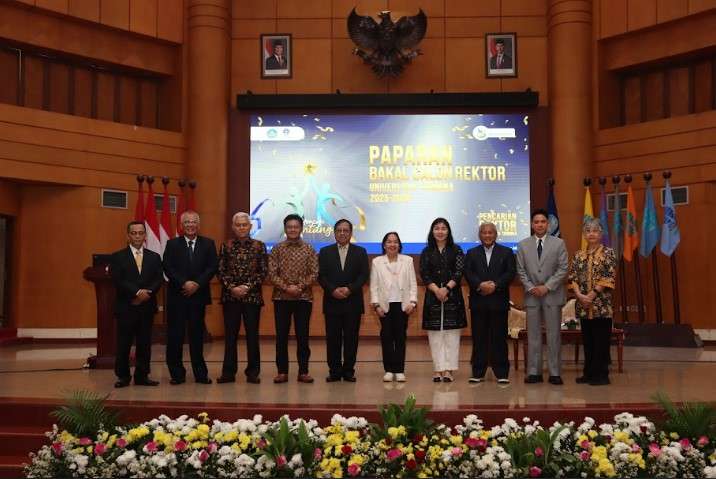
Meanwhile, UT Bacarek with Candidate No. 4 Prof. Dr. Tulus Suryanto, S.E., M.M., Akt., CA, CMA, CFA, PIA, ACPA., who was supposed to present on “Digital transformation and strengthening institutional capacity as keys to UT’s success in facing challenges and utilizing opportunities and networks in the international digital education era,” has submitted his resignation. Thus, the number of UT Bacareks is now 8, and the presentation process continued.
UT Bacareks presenting on June 13, 2025:
- Candidate No. 7 Rini Yayuk Priyati, S.E., M.Ec., Ph.D. with the vision: “Building Universitas Terbuka as a World-Class Future Distance Higher Education Institution.”
- Candidate No. 8 Dr. Hendrian, S.E., M.Si. with the vision: “To make UT an open and leading higher education institution excellent in service and innovative in funding, for quality distance education for all.”
- Candidate No. 9 Dr. Iqbal Miftahul Mujatahid, S.IP., M.Si. with the vision: “To become a World-Class Distance Higher Education Institution.”
Profile and Ideas of the UT Bacareks 2025-2030
Here is a summary of the visions and programs of the eight Prospective Rector Candidates based on their presentation order from June 11 to 13, 2025:
UT Bacarek Presentations Day 1 (June 11, 2025):
The first UT Bacarek, Prof. Etty Puji Lestari, presented a paper titled Improving Universitas Terbuka’s Competitiveness Through Technology Innovation Development. She explained, “In the continuously evolving digital era, UT needs to undergo a comprehensive transformation not only to be a provider of distance education but also a superior national digital education center that is adaptive to community needs.”
Prof. Etty concluded her presentation by summarizing, “Comprehensive transformation of UT is carried out through the development of education programs based on job market needs, utilization of the latest learning technology, strengthening strategic partnerships, and repositioning UT’s image as a modern digital campus, which are important steps that must be taken.”
Next, the second UT Bacarek, Prof. Ernik Yuliana, delivered a presentation titled Direction and Work Program of Universitas Terbuka 2025-2030 in the form of AKSI, which stands for Amanah (Trust), Kualitas (Quality), Sinergi (Synergy), and Integritas (Integrity) from a productive and quality UT academic community. She presented targeted work programs to make UT a quality open distance higher education institution at national and international levels in the following roadmap:
- 2025: UT gains public trust as a quality PTTJJ.
- 2026: Contributes to achieving a 40% higher education Gross Enrollment Rate (APK) and ranking among the top 1000 World Class Universities.
- 2027: UT increases APK to 50% and becomes a reference in PTTJJ research.
- 2028: UT becomes a reference for scientific and PTTJJ research.
- 2029-2030: UT becomes a world-class PTTJJ in academic and institutional fields.
Prof. Ernik explained, “For the AKSI (Trust, Quality, Synergy, Integrity) work program to be carried out well, it needs to be supported by synergy from trust, quality, integrity, communication, and collaboration as an effort to achieve high productivity and quality from the academic community.”
The third UT Bacarek, Dr. Meirani Harsasi, M.Si., presented on the theme Urgency and Strategy of UT’s Transformation as a PTTJJ in Contributing Tangibly to National Progress. She explained, “UT must undergo transformation based on the urgency of existing disparities in higher education access, the demands of the Industry 4.0 and Society 5.0 era, and the post-Covid-19 Pandemic impact.”
Dr. Meirani emphasized at the end of her presentation, “The transformation strategy that needs to be carried out is by developing curriculum and learning methodologies, strengthening technology infrastructure, improving the competence of lecturers and education staff, implementing an adaptive evaluation and accreditation system, and providing regulatory support and policy development, so that UT is able to face the challenges of advancing times.”
UT Bacarek Presentations Day 2 (June 12, 2025):

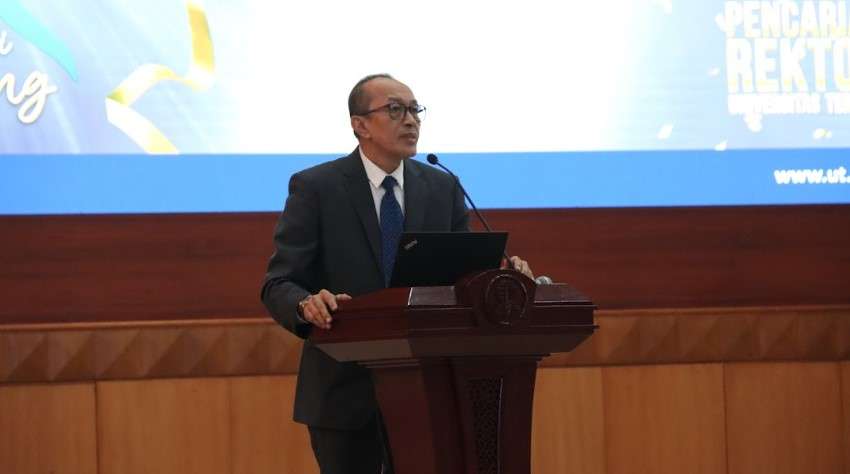
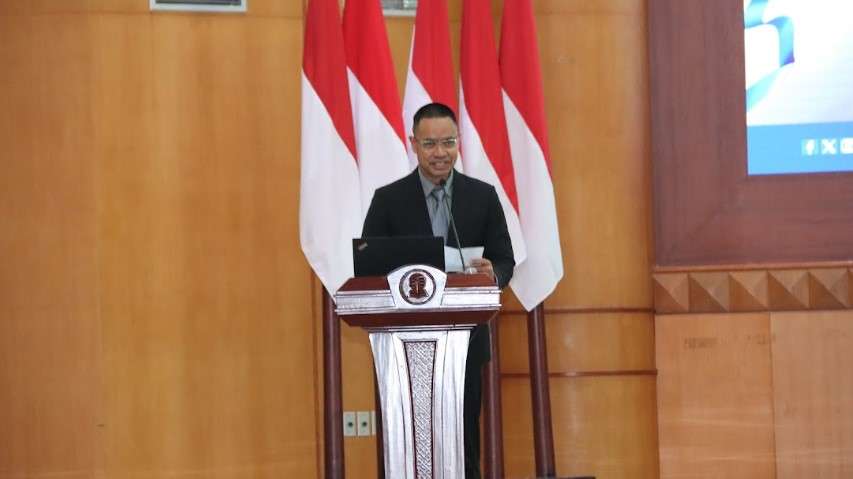
UT Bacarek Candidate No. 4, Prof. Dr. Tulus Suryanto, S.E., M.M., Akt., CA, CMA, CFA, PIA, ACPA., did not make his presentation as he resigned for various reasons.
Next, UT Bacarek Candidate No. 5, Prof. Udan Kusmawan, M.A., Ph.D., presented his vision and program titled Transforming Digital Ecosystems for Competence and Inclusive Education. Prof. Udan began his presentation by outlining the aspirations of the UT community for the future, where key aspirations include the need for UT to provide Real-Time Services, partnership with industry, careful attention to the Learning Management System (LMS), developing adaptive curricula, increasing the number of professors, appropriately developing micro-credentials and artificial intelligence, paying attention to cybersecurity, and achieving service efficiency and accessibility. He then presented his vision for UT: realizing excellent academic and administrative governance through digital system integration, Tridharma internationalization, and strengthening strategic partnerships to accelerate UT’s transformation into a World-Class Distance Higher Education Institution. He stressed the importance of a transformative strategy cycle through value internalization in the form of Quality, Integrity, Equity or QIE, critical reflection, inclusive commitment in all learning systems and processes, institutional restructuring adapting work culture, policies, and structures to institutional values, and adaptive and sustainable systemic integration towards WCU (World Class University).
At the end of his presentation, Prof. Udan emphasized, “UT’s digital transformation is based on strategic values of Quality, Integrity, Equity (QIE) to produce Employability, Accessibility, Inclusivity (EAI) as strategic values, which strengthen UT’s position in the global education ecosystem.” According to him, a value-driven transformation strategy is needed to drive fundamental changes in the education ecosystem, with the aim of increasing institutional competence, inclusivity, and competitiveness.
Next, UT Bacarek Candidate No. 6, Prof. Dr. Ali Muktiyanto, S.E., M.Si., presented a paper titled Consolidating Authority, Strengthening Integrity, & Reinforcing UT’s Academic Reputation Globally; Shine-Stars-Rid Model: UT’s Strategic Steps Towards Global PTTJJ Based on Scientific Excellence, Learning, and Graduates. He presented the view that currently, digital transformation is occurring for personalized and interactive learning, the massification of reskilling/upskilling, micro-credentials and competency certification, rapid development dynamics at national and global levels, changing dynamics in the PJJ market, and changing international student interest in higher education anywhere and anytime, indicating the need for open, flexible, and distance education that is modular, and multi-exit, multi-entry. Prof. Ali presented an idea in the form of a STAR Academic credo based on dignity, reputation, and integrity supported by synergy, transformation, accountability, relevance, and scalability by developing spirit, horizon, innovation, nurture, and entrepreneurship. In his presentation, Prof. Ali emphasized UT’s vision and mission in the RPJP 2025-2045 translated through the establishment of Main Achievement Milestones Phase I (2025-2029) “Becoming a World-Class PTTJJ Based on a Strong Digital Learning Ecosystem” which needs to be realized in the UT Rector’s Vision and Mission 2025-2030.
“My vision if appointed as UT Rector 2025-2030 is to solidify the authority, strengthen the integrity, and reinforce UT’s academic reputation globally. This is by implementing a Strategy and Program (3 Stages, 5 Pillars, 7 Strategies, and 20 Programs) based on customer perspective, academic reputation, financial perspective: Non-Operating Income and Financial Sustainability, business process perspective: Governance, Optimization, Operational and Quality, as well as Learning & Growth perspective,” said Prof. Ali Muktiyanto.
UT Bacarek Presentations Day 3 (June 13, 2025):
Bacarek Candidate No. 7, Rini Yayuk Priyati, SE., M.Ec. Ph.D., presented ideas titled Building Universitas Terbuka as a World-Class Future Distance Higher Education Institution. She explained the perspective of how to achieve UT GEMILANG (Generation, Education, Independent, Innovation, Outstanding, Access, Nusantara, and Global). According to Rini Yayuk Priyati, SE., M.Ec. Ph.D., for UT to achieve its mission of “Becoming a world-class distance learning institution,” strategic work programs need to be implemented in the following areas: 1) entrepreneurship and business orientation, 2) Tri Dharma of Higher Education, 3) human resources in terms of improving quality, qualifications, competence, and professionalism, 4) financial resources in terms of financial management that prioritizes accountable, transparent, efficient principles, providing benefits and impact for UT’s sustainable development, 5) networking and cooperation with strategic partners from within and outside the country in education, career centers for alumni, and research in scientific fields, as well as cooperation with business partners to improve student welfare, 6) digitalization and utilization of technology for the best services to students, 7) infrastructure governance in the form of organizational strengthening and governance in accordance with good university governance that impacts the improvement of Tri Dharma implementation and services to students.
In closing, Rini Yayuk, Ph.D. asserted, “UT is demanded to expand not only in the Tri Dharma of Higher Education but also in entrepreneurship and business orientation, as well as improving the quality of human resources (HR).”
Next, UT Bacarek Candidate No. 8, Dr. Hendrian, S.E., M.Si., presented an idea titled Service Excellence and Strategic Investment for Universitas Terbuka. Dr. Hendrian highlighted important points, including: 1) Service Excellence as UT’s main pillar where students are the service center, implementation of world-class service standards, continuous improvement of services, and developing supporting infrastructure in the form of optimizing helpdesk centers (24/7, chatbot) and improving the competence of front-line staff. 2) Strengthening Operations and Governance through sound and transparent financial governance, application of Good University Governance principles, efficient learning material supply chain management, and internal control & audit. 3) Academic Transformation to realize dynamic and relevant curricula, improving academic competence & welfare, flexible and technology-based learning, 5) Innovation-Based Welfare through HR investment programs, performance & innovation incentives, developing a work environment to encourage collaboration and creativity, and improving student welfare through online counseling, learning community platforms, and peer mentoring systems to support student mental and academic health. 6) Industry-Responsive Study Programs and Community Needs by proactively analyzing market needs through alumni tracer studies and annual industry needs surveys for study program (prodi) development always based on actual insights, developing innovative study programs that link and match with DUDI, and curriculum collaboration with industry, e.g., by involving industry experts in curriculum development and giving guest lectures, 7) Revenue Diversification with asset and business optimization, external education & training services by launching online course programs, certification, and professional training for the general public and industry employees, research and consultation partnerships for applied research development with government and private sectors, 8) Revolutionizing learning materials from hard copy to AI by developing dual-mode learning resources between printed and digital learning materials, Intelligent Tutoring Systems (AI), Open Educational Resources (OER), AI-based content production, for example: automatic personalized evaluation question generation, learning videos with multilingual AI voice-overs, or interactive VR/AR simulations, 9) Future Leadership Commitment, namely visionary and inclusive leadership, strengthening UT’s culture of excellence, and having a commitment to integrity and collaboration, as well as upholding the achievement of UT Gemilang.
In closing his presentation, Dr. Hendrian emphasized, “With service excellence as a foundation, strategic investment as leverage, and behavioral accounting principles as integrity guardians, I am confident that UT will grow into a world-renowned Open University. Let’s synergize to make UT a pioneer in quality distance education, a place where every individual gets lifelong learning opportunities, and an institution that makes Indonesia proud on the global stage.”
The last to appear in the Day 3 presentation session was UT Bacarek Candidate No. 9, Dr. Iqbal Miftahul Mujtahid, S.IP., M.Si., who presented a program and idea titled Algorithmic Leadership in Digital Education Policy Formulation. By highlighting the background of Indonesia’s demographic bonus where the productive age reaches 70% of the total population in 2020-2035, he explored examples of concepts like the Singasari Special Economic Zone (KEK), a Digital Development Model focused on technology and innovation through the development of digital education, edutech ecosystem, and global collaboration for the growth of a modern education ecosystem. He revealed a strategic vision towards a world-class UT, namely through strengthening digital infrastructure, developing global quality content, strategic collaboration, and implementing a quality assurance system.
“For this, the mission and strategic steps towards a world-class UT are through acceleration and IT and data management solutions (SSO) in the digital learning ecosystem (DLE), downstreaming & business processes to increase UT’s added value, rural development through equitable higher education with global competitiveness, and strengthening human resources through data science and technology,” explained Dr. Iqbal. He added, “With a comprehensive DLE, UT can provide a more personalized, adaptive, and market-relevant experience for the global job market.”
He even revealed the need for a five-vice-rector structure to comprehensively handle various aspects of university development, as a strong leadership structure to develop downstreaming and business through internal and external collaboration. For this, in closing his presentation, Dr. Iqbal emphasized the importance of implementing the PEAI concept for UT leadership, meaning UT leaders must have strength as performers with results-oriented and measurable performance achievement, entrepreneurs in bringing breakthroughs and innovations, administrators of systems and processes for operational efficiency, and integrators to unite various stakeholder elements in a shared vision. “This PEAI concept approach (Performer, Entrepreneur, Administrator, Integrator) can advance UT further with a focus on technology development and more competitive and adaptive educational quality towards the needs of modern education. This concept becomes the foundation for UT to become a world-class open university.” He concluded by saying, “Social media algorithms and universal algorithms are almost the same; the difference is that the universe is not just a machine but moves under the power of Allah. Therefore, if we want UT to be world-class, we need to include aspects of innovation, prayer, thought, and action, because all of these are universal inputs that Allah perfectly regulates.”
Interactive Discussion Session with Panelists, MWA, and Audience
Each Bacarek was given adequate time to present ideas, answer questions from panelists, and interact in discussion sessions. This process was designed to ensure that the selected Prospective Rector is the most competent and visionary figure to lead Universitas Terbuka towards a better future, especially in facing challenges and opportunities in the digital education era.
During the three-day presentation session, panelists and the audience actively posed a number of questions to the presenting UT Bacareks.
Prof. Kam Cheong Li asked about the vision and strength of the UT Bacareks to advance UT; the role of online and distance learning in achieving Golden Indonesia in 2045 through human resource development, strategies for business development through partnerships, effective communication strategies for UT’s future development and student welfare, agile curriculum development, e.g., through micro-credentials as UT’s future open and distance learning (ODL) strategy, developing quality research for publication in reputable Scopus-indexed journals by UT lecturers, strategies for developing the utilization of AI tools in learning, strategies for developing new programs in faculties including vocational in facing new challenges in the next five years; and UT’s international cooperation strategies with many world-renowned universities in the future.
Erry Riyana Hardjapamekas highlighted UT’s role in human resource development that emphasizes integrity values to be socialized internally and externally, and programs for utilizing the very large number of alumni, approaching 3 million.
Prof. Dr. KH. Komaruddin Hidayat asked how UT Bacareks view and assess the development of national education conditions and problems in general; what is UT’s position and role in addressing problems such as insufficient link and match, unemployment, many state universities busy seeking money and compromising quality; regarding character building; what are the flagship researches and how much research funding is there to support UT’s institutional branding to become a public choice; appropriate programs and curricula to improve the competence of UT students who are mostly already working and not merely offering diplomas so that UT graduates are not inferior to alumni of other universities; and ways to improve the competence and quality of alumni who are mostly already working.
Dr. Melinda dela Pena Bandalaria (Day 2) asked about how technology balances access and quality to achieve the vision of becoming a world-class PTTJJ; strategies to maintain the sustainability of programs under the leadership of previous UT rectors across generations.
Olivia Basrin, S.Sos., MPP asked questions about the utilization of technology, integration of AI in learning, and the threats of AI use; connectivity strategies to ensure equity; strategies for managing PTNBH (State Universities with Legal Entity Status) so that tuition fees do not increase amidst resource limitations for improving UT’s performance; and developing research that impacts UT’s elevation to world-class status.
Meanwhile, Prof. Dr. Ir. KH. Mohammad Nuh, DEA asked questions related to the benefits and impact of the UT Bacarek’s work programs and ideas in meeting community needs; how to motivate the entire UT academic community to become true learners.
Prof. Emeritus Tan Sri Datuk Dr. Anuar Ali asked about the UT Bacarek’s programs related to improving student quality amidst efforts to increase student numbers; strategies for increasing UT’s income generation as a PTNBH, and the quality of leadership required for a UT Rector.
Denni Puspa Purbasari, Ph.D. raised discussion questions related to the measurement and impact of affordable UT programs; what are the reasons and priorities for a one-year program if one becomes rector; the use of AI in learning linked to student integrity; strategies to optimize assets to gain extra income.
Prof. Mohamad Nasir, M.Si., Ph.D. (Day 3) provided discussion questions on how to generate revenue for UT as a PTNBH; the level of technology readiness in developing a research roadmap for increasing UT’s revenue generation; and strategies for improving service excellence as UT’s branding to be socialized to stakeholders, especially students.
Several MWA members also asked questions, including about the priority between large student numbers linked to service quality; how to improve UT’s world ranking (e.g., on THE WUR); the implementation of flexible curricula; business units and innovative funding strategies to increase UT’s revenue as a PTNBH; alumni involvement programs to increase cohesiveness and UT’s strategic role in increasing the Gross Enrollment Rate (APK) by 40% in 2027; and the provision of technology infrastructure to improve student academic administration services. Furthermore, online audiences via Zoom and offline attendees at UTCC also asked questions about UT’s digital technology strategy to improve employability and make UT an inclusive campus for people with disabilities; effective budget and financial management; strategies for effective operational systems between UT Central and Regional UTs for long-term financial sustainability; and strategies for adjusting study programs and agile curricula.
Conclusion of Presentation Session and Awaiting Rector Candidate Announcement
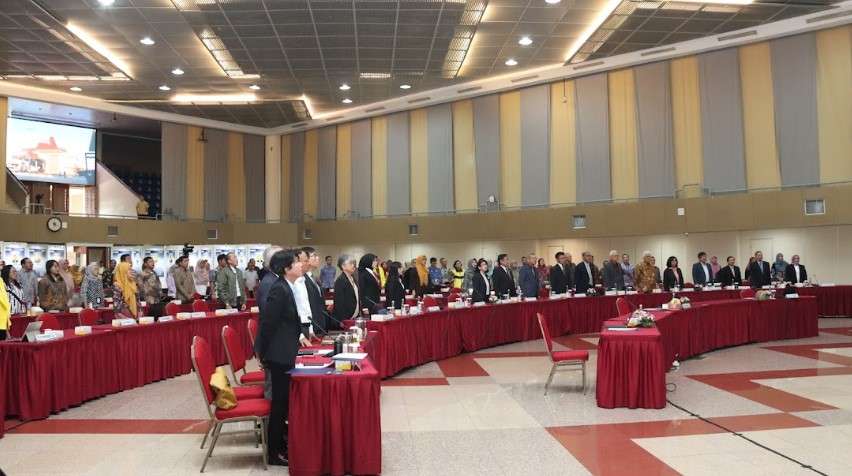
The presentation session for the Prospective Rector Candidates (Bacarek) of UT for the 2025-2030 period, as an Open Plenary Meeting of the UT Board of Trustees, officially concluded on the third day, Friday, June 13, 2025. The closing was led directly by the Chairman of the Board of Trustees (MWA). After the presentations, the panel discussion with the Rector Election Committee (PPR) continued to delve into the presentation results.
The public and the UT academic community are now awaiting the announcement of the names of the 3 selected Rector Candidates from the nine UT Bacareks who have gone through a rigorous selection process. The determination of the 3 Rector Candidates will be made through a Closed Plenary Meeting of the UT Board of Trustees on Monday, June 16, 2025. This will be followed by the official announcement of the 3 UT Rector Candidates by the MWA and PPR. The next crucial stage is the Election and Appointment of the Elected Rector, planned for July 9, 2025. The culmination of this entire internal democratic process will be marked by the Inauguration of the UT Rector for the 2025-2030 Period, scheduled for August 25, 2025. With the advent of new leadership at UT, there is great hope that Universitas Terbuka can continue to advance, achieve brilliant success, and become even stronger in realizing its vision as a World-Class Distance Learning Institution.