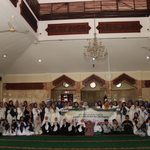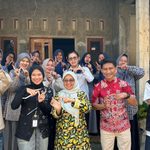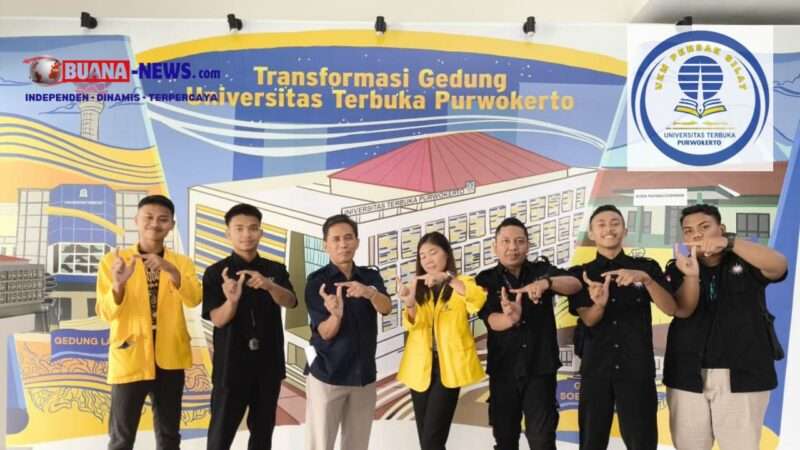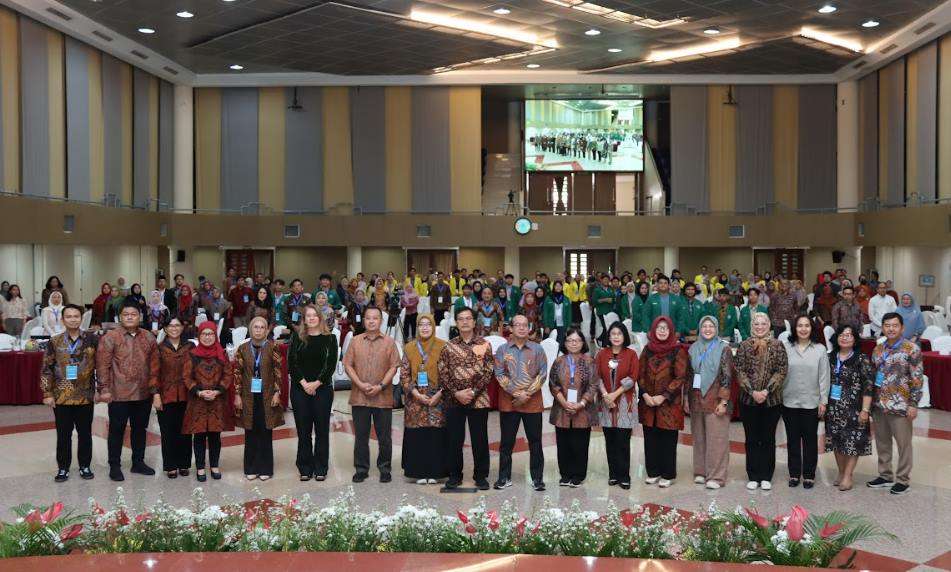

Bogor, August 14, 2025 – The Sociology Study Program at Universitas Terbuka (UT), in collaboration with the PKK Mobilizing Team of Pengasinan Village, Gunung Sindur District, Bogor Regency, held a Community Service (PKM) on Thursday, August 14, 2025. With the theme “Strengthening Family Functions through Collaboration with PKK to Face the Impact of Social Change on Children and Adolescents,” the event aimed to strengthen the capacity of PKK cadres in dealing with the social challenges faced by the younger generation in the digital era.
The event was opened with a speech by the Village Head, Nur Kholis, who emphasized the important role of PKK as the front line that can easily educate the wider community. Meanwhile, the Head of the Pengasinan Village PKK, Yeni Nurhaeni, also affirmed the PKK’s readiness to provide insights related to families in line with its 10 main programs, with families as a key part of its working group.
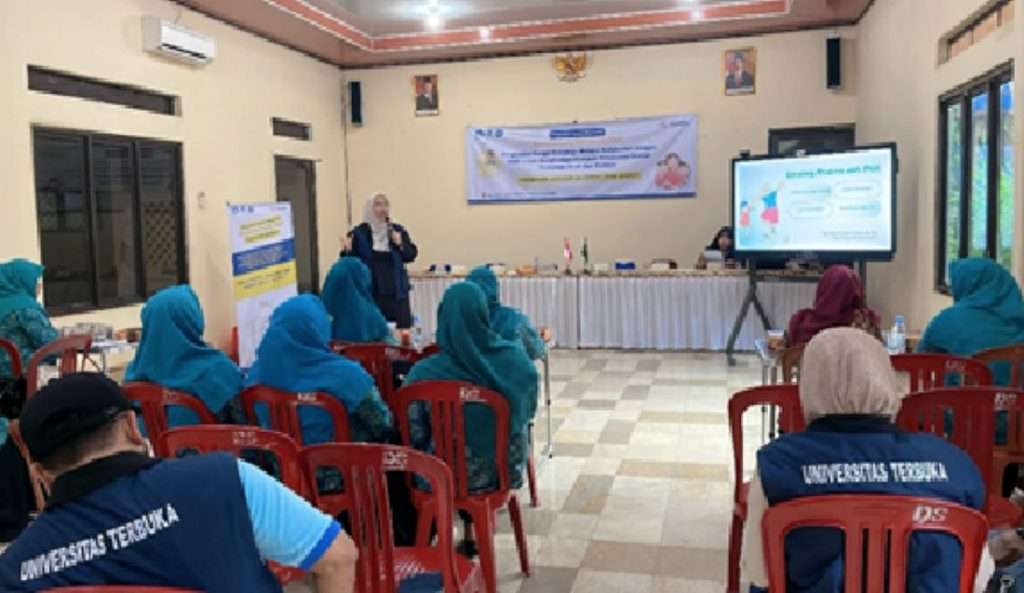
The core material was presented by UT Sociology lecturer Sri Pujiati, S.Pd., M.Sos., with the topic “Resilient PKK, Strong Families, Great Generation.” She highlighted the negative impacts of digitalization on children and adolescents, including decreased concentration, damaged social relationships, the emergence of social deviations, the phenomenon of Online Gender-Based Violence (KBGO), and a decline in health and other social functions. Sri Pujiati emphasized the importance of the family as a fortress of resilience for children and adolescents by carrying out its core functions in a balanced way, whether in religious, social and cultural, affection, protection, reproduction, socialization and education, economic, or environmental development aspects. She added that parents need to provide a good example of behavior to their children, for example, by limiting cellphone use when they are together.
Furthermore, she also explained the synergy and family functions that can be implemented by PKK cadres, including through digital parenting classes, community mutual assistance activities, instilling polite behavior in both the real and virtual worlds, compiling family gadget rule modules, introducing traditional games, creative competitions without gadgets, and digital literacy classes.
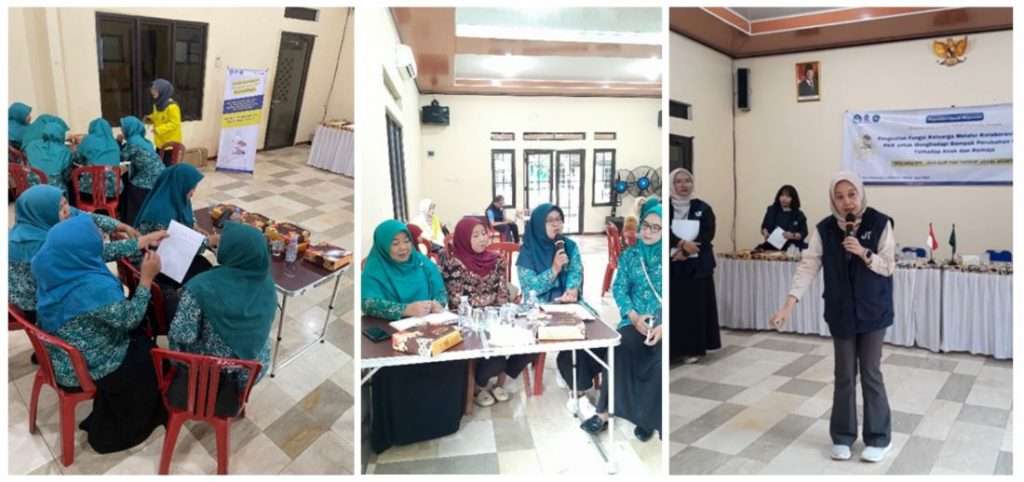
After the material session, the activity continued with a Focus Group Discussion (FGD) led by another Sociology Study Program lecturer, Nur Hayati, S.Pd., M.A. Participants were divided into four groups and given worksheets with five questions to identify problems of digitalization’s impact and formulate solutions for children and adolescents. Each group was then given the opportunity to present their work to other participants.
In the FGD session, UT Sociology students played an active role in assisting the discussions. They helped participants understand the content of the worksheets, facilitated the exchange of ideas in small groups, and took notes of the ideas that emerged to be summarized later. The role of the students not only made the activity run smoothly but also gave them an opportunity to learn directly from the community and apply sociological theory in the field.
The FGD session concluded with a message from Dr. Pardamean Daulay, S.Sos., M.Si., who stated that parents need to have adequate education to educate their children. He recommended Universitas Terbuka as a solution due to its flexibility, which is suitable for all age groups. The event was closed by the Pengasinan Village Head, Nur Kholis, who hoped that this PKM activity would be beneficial for the PKK cadres as a bridge to educate the community regarding social change in the digital era.
This PKM program provides tangible benefits to the community of Pengasinan Village. The PKK cadres now have the knowledge and applicable strategies to assist children and adolescents in facing the challenges of digitalization. With the strengthening of family functions, it is hoped that the community will be more empowered to maintain social resilience, family harmony, and prevent behavioral deviations resulting from uncontrolled use of technology.
This PKM activity also supports the achievement of the Sustainable Development Goals (SDGs), specifically SDG 4 (Quality Education) through the increase of family digital literacy, SDG 5 (Gender Equality) with the prevention of Online Gender-Based Violence, and SDG 16 (Peace, Justice, and Strong Institutions) through the strengthening of family functions as a pillar of social resilience. The synergy between the university and the community affirms UT’s role as an Impactful Campus that provides real solutions to contemporary social issues.
With the conclusion of this activity, UT hopes that the synergy between academics, students, and the community can continue to be strengthened so that Indonesian families are more resilient in facing social change. The great hope is that the results of this PKM will not only be beneficial for Pengasinan Village but also can inspire the birth of similar programs that are beneficial for village communities in various regions.