
For some, becoming a migrant worker is a last resort. For Suma, a native of Sende Village, Arjawinangun District, Cirebon Regency, his decision to work in Taiwan became a turning point that reshaped his life. Leaving in 2011 and staying until 2020, Suma entered the manufacturing sector—not only to earn a living, but to build a better future for his family and break free from economic limitations.
Working in manufacturing demanded physical endurance, discipline, and adaptability. Suma navigated strict selection processes, cultural and language barriers, and the relentless rhythm of factory work. While overtime helped increase his income, he learned that sustainable productivity also requires caring for one’s health and resilience.
“During my second contract, my savings grew. Overtime increases income, but it means nothing if the body never rests,” Suma reflected (January 12, 2026).
Despite achieving financial stability in Taiwan, Suma realized that work alone was not enough. Thinking ahead to life after migration, he enrolled in the Management program at Universitas Terbuka (UT). UT’s open and distance learning system allowed him to study while working, with affordable tuition and flexible access—embodying SDG 4: Quality Education and the spirit of lifelong learning. Over 4.5 years, Suma balanced work, study, and organizational activities.
“UT made it possible for migrant workers in Taiwan to study at an affordable cost. I wanted to prove that Indonesian migrant workers can also become university graduates,” he said.
Beyond work and study, Suma was actively involved in community leadership. He served as Chair of the Pantura Organization in Taiwan and as a task force member at the Indonesian Economic and Trade Office (KBRI) in Taiwan, assisting fellow migrant workers from West Java. These roles strengthened his leadership, problem-solving skills, and social awareness.
Financially, Suma chose discipline over consumption. He invested his earnings in gold savings, gradually accumulating around 200 grams, which he later sold to purchase land and build a home upon returning to Indonesia.
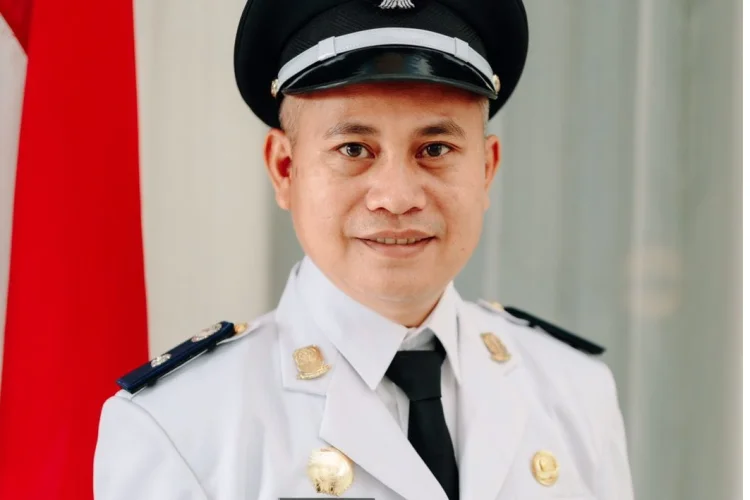
When he returned home, Suma did not start from zero. Supported by experience, education, and public trust, he has served as Kuwu (Village Head) of Sende Village since 2021. He emphasizes two keys to migrant worker success: living modestly abroad and ensuring that earnings are managed honestly and responsibly at home.
Today, alongside his duties as kuwu, Suma remains active as an advisor to the Pantura Organization, leading social and humanitarian initiatives for disaster relief and community support. His journey illustrates that migrant workers are not merely wage earners, but agents of social change. With open access to education, careful life planning, and a commitment to community, the journey abroad can return home as a force for sustainable development and local progress.