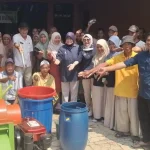

Kerupuk tinta cumi (Squid ink crackers), abon tuna (dry shredded tuna), and basreng (crispy fried fish snacks) produced by coastal women in Desa Padak Guar, Lombok Timur, have already found a market. Their products are popular souvenirs among tourists, are sold throughout Kecamatan Sambelia, and even supply the government’s Free Nutritious Meals (Makanan Bergizi Gratis – MBG) Program. Despite these promising opportunities, one major challenge remains: traditional production methods have limited product quality and competitiveness, preventing them from entering the modern retail market.
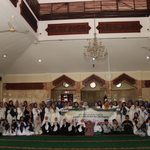
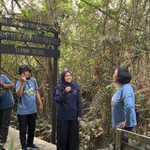
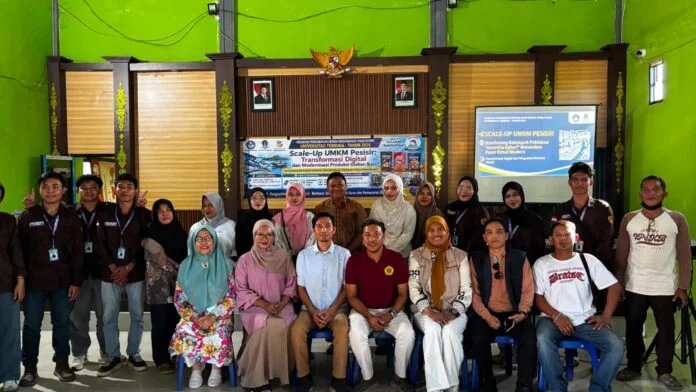
Recognizing this challenge, Universitas Terbuka (UT) launched its 2026 Lecturer Community Service Program (Pengabdian kepada Masyarakat – PkM) entitled “Scaling Up Coastal SMEs: Digital Transformation and Modernization of Fish Processing Production.” Held at the Desa Padak Guar Office Hall in Kecamatan Sambelia, Kabupaten Lombok Timur, Nusa Tenggara Barat, on Friday (July 24, 2026), the program was designed to help small businesses increase production capacity, strengthen quality standards, and expand market access through technology adoption and digital marketing.
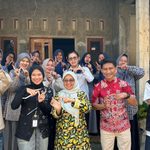
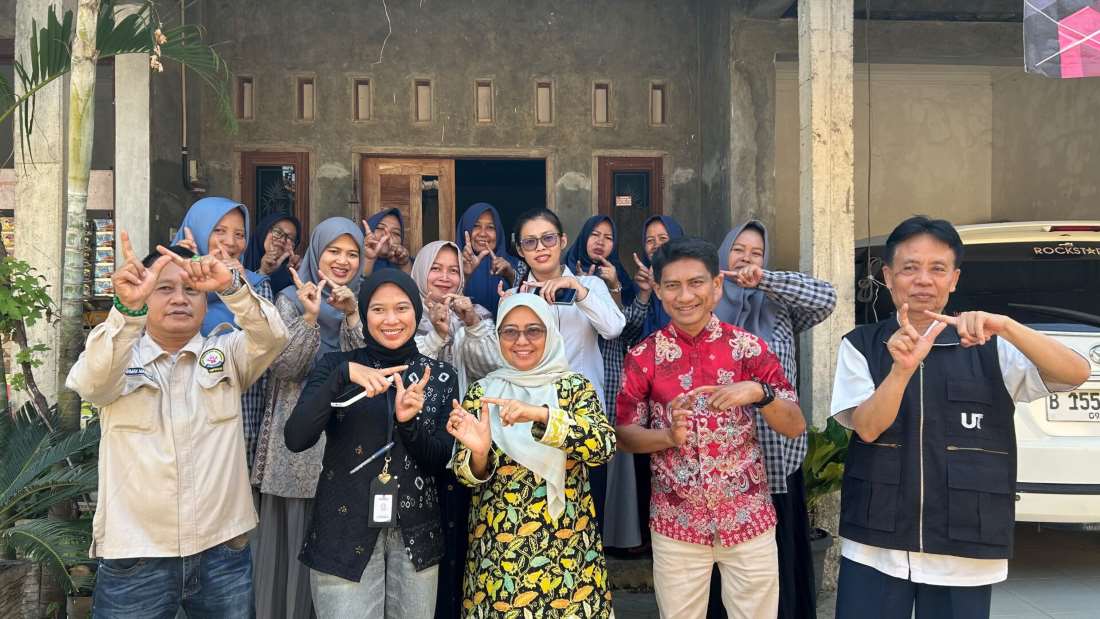
The program focuses on Kelompok Pengolah dan Pemasar Hasil Perikanan (Poklahsar), a women’s empowerment group established by the Desa Padak Guar Government in February 2023. Consisting of 13 women, the group transforms locally caught seafood into value-added products, gradually strengthening household incomes while increasing the economic value of the village’s fisheries.
Although market demand continues to grow, Amertha Bahari’s production capacity remains limited to approximately 50 kilograms of raw materials per month. Existing equipment cannot support larger-scale production. Excess oil remaining in the products also causes abon and basreng to spoil more quickly, while the absence of a Fish Processing Feasibility Certificate (Sertifikat Kelayakan Pengolahan – SKP) has become another obstacle to expanding distribution through modern retail networks.
Head of the UT Community Service Team, Dr. Hulaifi, S.Pi., M.Agr., said that Desa Padak Guar possesses tremendous fisheries potential that deserves to be supported through innovations capable of improving both product quality and economic value.
“Desa Padak Guar has extraordinary fisheries potential. The challenge is that their basreng and shredded fish products do not last long because of the remaining oil in the packaging, while conventional stoves also limit production capacity. Through this program, we are providing high-performance cooking stove technology and assisting participants in understanding the importance of quality management and digital marketing,” Hulaifi explained.
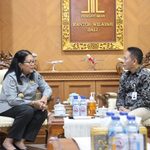
The assistance extends beyond production modernization. To ensure products meet food safety standards, UT collaborated with the Nusa Tenggara Barat Provincial Marine and Fisheries Agency (Dinas Kelautan dan Perikanan – DKP) by providing training on the Fish Processing Feasibility Certificate, a certification required for processed seafood products to enter broader commercial markets.
Rina Susanti, S.St.Pi., Junior Quality Assurance Specialist of DKP of Nusa Tenggara Barat, explained that the SKP certification is mandated under Law No. 31 of 2004, as amended by Law No. 45 of 2009, and Ministerial Regulation of Marine Affairs and Fisheries No. 3 of 2024. The certification confirms that fish processing units comply with Good Manufacturing Practices (GMP) and Sanitation Standard Operating Procedures (SSOP).
“Processing is not simply about preservation, but it is also about creating additional economic value. By maintaining the cold chain, separating raw and cooked processing areas, and obtaining SKP certification, products from Desa Padak Guar can be assured to be safe, hygienic, competitive, and ready for placement on the shelves of modern retail stores,” Rina said.
Efforts to improve product competitiveness also focused on marketing. Together with Dr. I Gusti Ngurah Aryawan Asasandi, S.P., M.Si., a lecturer in Agribusiness from the University of Mataram, the UT community service team organized a “Digital Kitchen” session. Participants learned how to photograph products using smartphones, create promotional content for Instagram and TikTok, optimize WhatsApp Business, and expand market reach through Google Business Profile, Shopee, and Tokopedia. The initiative is expected to help local entrepreneurs not only produce higher-quality products but also make them more visible to potential customers.
For Desi Rahmayanti, Chair of the Amertha Bahari Poklahsar Group, the mentoring program has opened new perspectives on growing the business they have built together.
“This program has been incredibly helpful. Previously, we did not know how to prevent our basreng from becoming rancid or how to obtain permits required by modern retailers. Now we have better production equipment, understand the SKP requirements, and know how to promote our products using smartphones. We hope this assistance continues so that our coastal families can enjoy greater economic prosperity,” Desi said.
In Desa Padak Guar, change may begin with a cooking stove, a certification process, and a smartphone screen. Yet for the coastal women who process seafood every day, these changes represent new opportunities to improve their families’ livelihoods. Through innovation, mentoring, and collaboration, local products are now better positioned to enter broader markets while strengthening the sustainable economic development of coastal communities.