
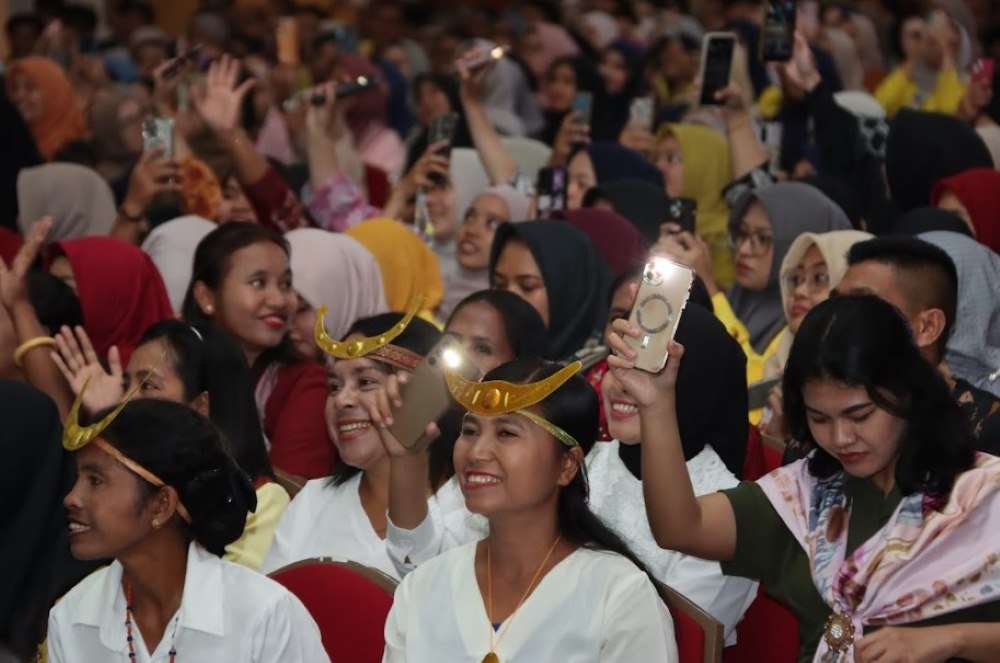
South Tangerang, July 28, 2025 – Universitas Terbuka (UT) once again hosted a meaningful academic event, the Graduation Seminar for Academic Year 2024/2025 Even Semester Region 3, held at the Universitas Terbuka Convention Center (UTCC) on Monday (July 28). More than just a ceremony leading up to graduation, the seminar served as a crucial platform for UT to strengthen its strategic partnerships, advance distance education, and respond to the challenges of the digital era, including the use of Artificial Intelligence (AI).
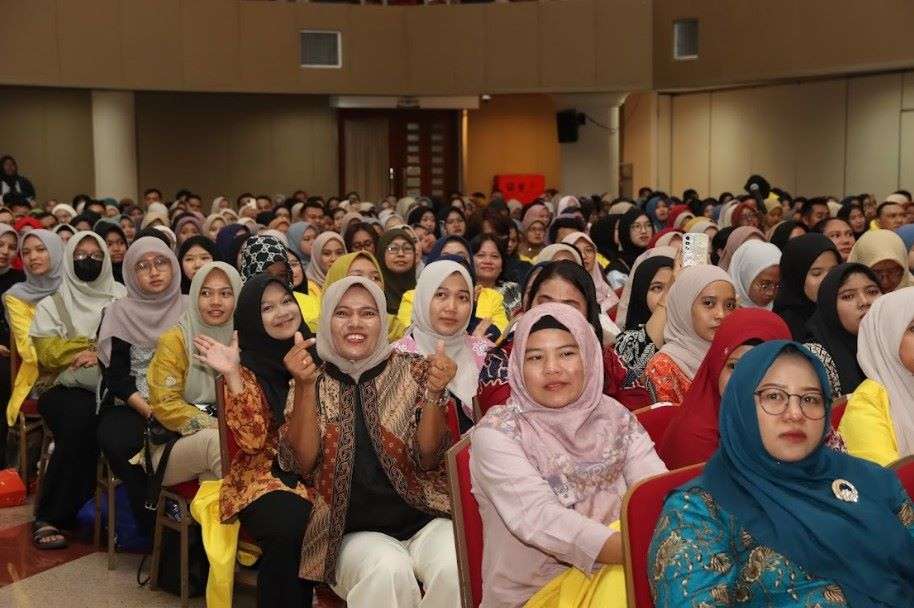
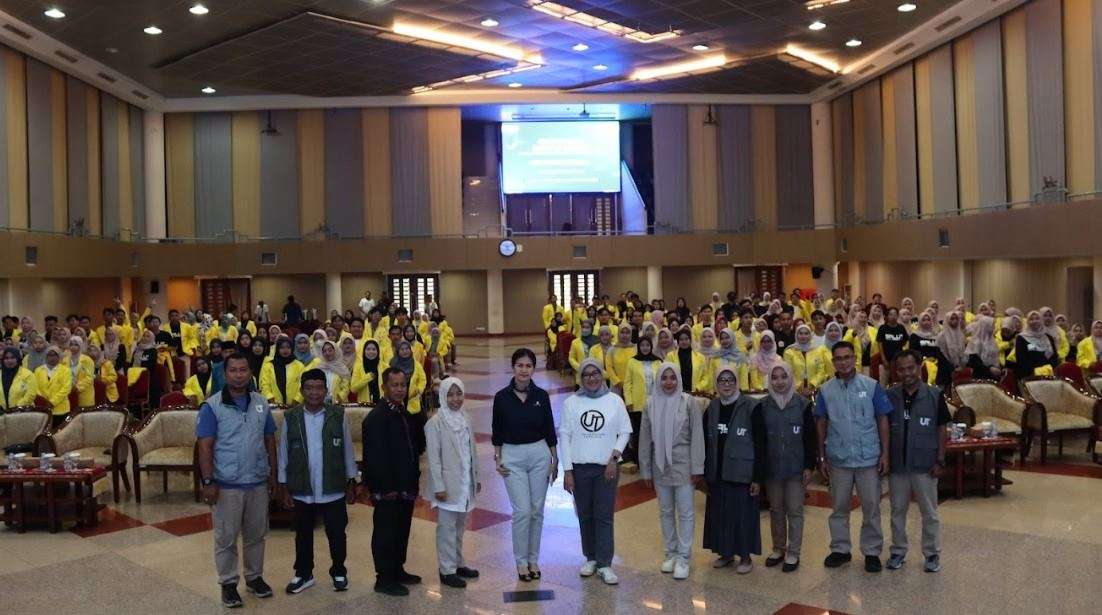
The event was attended by over 1,500 prospective graduates from 14 regional UT offices across western, central, and eastern Indonesia. The atmosphere was filled with enthusiasm from the start, with the singing of the national anthem and UT’s hymn, followed by a joint prayer and a welcoming address from the Vice Rector for Academic Affairs, Prof. Rahmat Budiman, S.S., M.Hum., Ph.D.
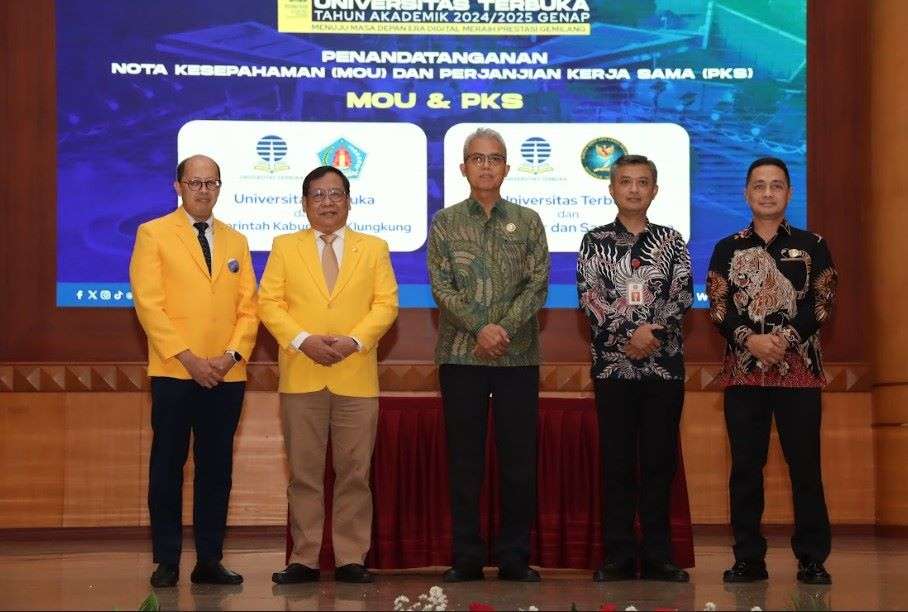
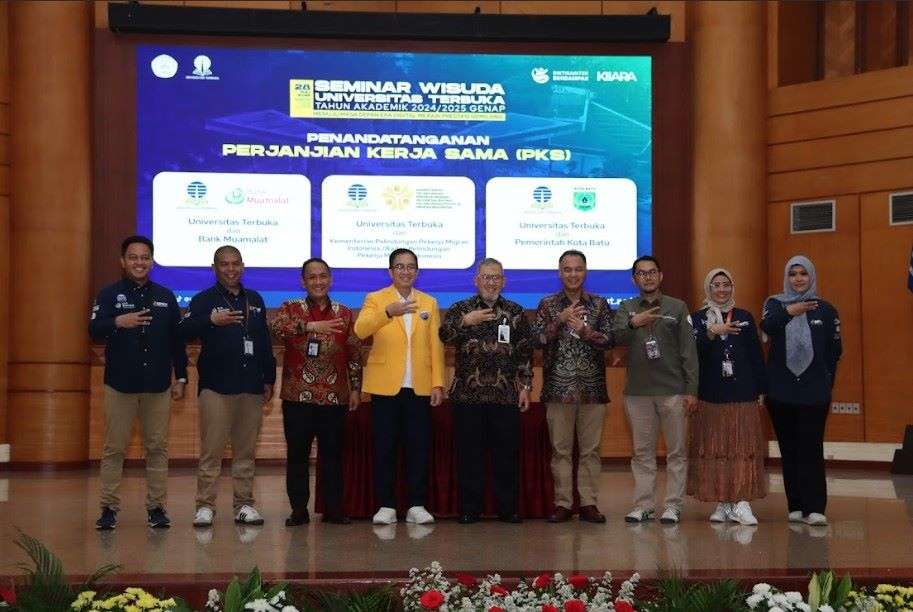
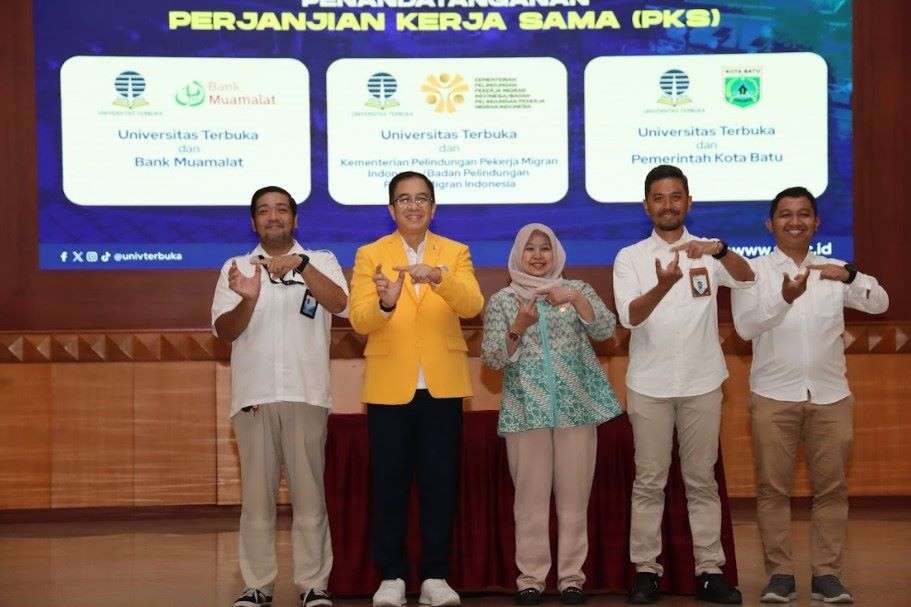
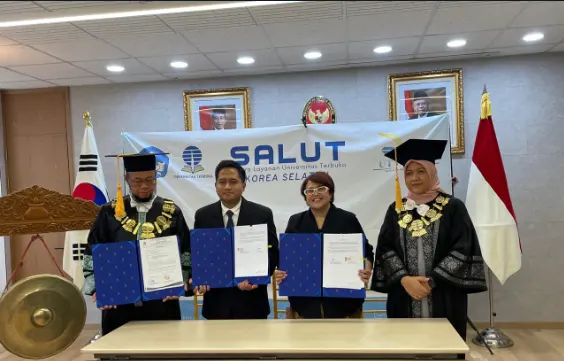
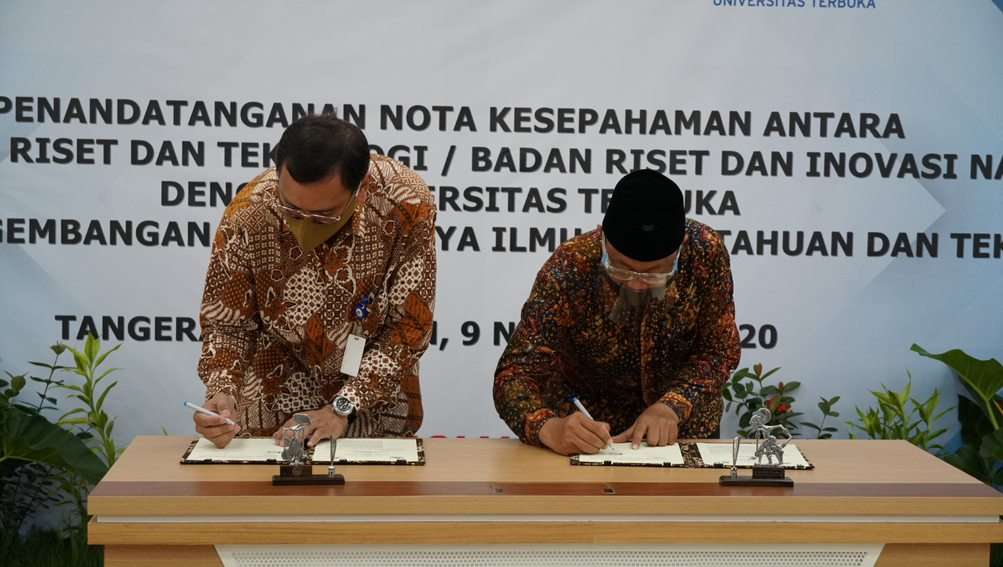
During the graduation seminar, UT signed various Memoranda of Understanding (MoU) and Memorandums of Agreement (MoA) with strategic partners.
MoUs were signed with:
- The National Cyber and Crypto Agency (BSSN): Signed by UT Rector Dr. Mohamad Yunus, S.S., M.A. and BSSN Main Secretary Y.B. Soesilo Wibowo, S.E., M.M., covering education, research, and community service.
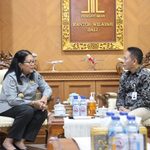
- The Government of Klungkung Regency, Bali: Signed by UT Rector Dr. Mohamad Yunus, S.S., M.A. and Klungkung Vice Regent Tjokorda Gde Surya Putra, S.E., to support the three pillars of higher education in Klungkung Regency.
MoAs were signed with five parties:
- UT and BSSN: Signed by UT’s Director of Information Systems, Dr. Muhammad Rif’an, S.T., M.T., and the Director of Cyber Security and Human Development Crypto at BSSN, Agus Prasetyo, focusing on improving cybersecurity capabilities.
- UT and the Klungkung Bali Government: Signed by the Director of UT Denpasar, Agus Tatang Sopandi, S.Sn., M.Pd., and Klungkung Vice Regent, Tjokorda Gde Surya Putra, S.E., for the implementation of the three pillars of higher education in Klungkung Regency.
- UT and the Indonesian Migrant Worker Protection Agency (BP2MI): Signed by the Acting Vice Rector for Research, Innovation, Cooperation, and Business at UT, Prof. Rahmat Budiman, M.Hum., Ph.D., and the Director General of Placement at the Ministry of Indonesian Migrant Worker Protection (KP2MI)/BP2MI, Ahnas, S.Ag., M.Si., to synergize services for Indonesian migrant workers (PMI) through the development of the three pillars of higher education.
- UT and PT Bank Muamalat Indonesia Tbk.: Signed by the Acting Vice Rector for Research, Innovation, Cooperation, and Business at UT, Prof. Rahmat Budiman, M.Hum., Ph.D., and President Director of Bank Muamalat, Imam Teguh Saptono, to provide payment services for tuition fees via Host-to-Host Virtual Accounts.
- UT and the Head of the Education Office of Batu City, Malang: Signed by the Director of UT Malang, Dr. Lilik Sulistyowati, M.Si., and the Head of the Batu City Education Office, M. Chori, for human resource development in the form of providing Bachelor’s scholarships.
These collaborations encompass a variety of initiatives: BSSN and UT will work together to safeguard digital data integrity; Bank Muamalat will simplify tuition payments, provide bridging financing, and offer scholarships from social funds; BP2MI and UT will serve over 7,000 Indonesian migrant workers in 54 countries, allowing them to enhance their skills through flexible and affordable education at UT; the Klungkung Regency Government will provide 300 scholarships for local residents and migrant workers on cruise ships; and the Batu City Education Office has committed to providing 1,000 undergraduate scholarships annually, including affirmative action for teachers, village heads, people with disabilities, and human resource development in the agriculture, MSME, and tourism sectors.
UT Rector, Dr. Mohamad Yunus, S.S., M.A., emphasized the significance of these collaborations for the future of UT students. “UT cannot stand alone. We need synergy with various partners so that our students can have a better tomorrow. This collaboration brings a real impact on access, quality, and the sustainability of education in Indonesia,” he said.
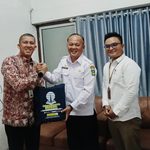
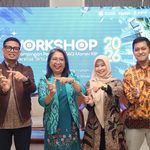
The MoU and MoA signing was witnessed by all parties present and concluded with a warm exchange of souvenirs and a group photo. The event then proceeded with a motivational session by Prof. Gorky M. Sembiring, followed by a seminar.
This graduation seminar, themed “Towards the Future of the Digital Era: Achieving Brilliant Achievements,” featured a keynote speech by Prof. Ojat Darojat, M.Bus., Ph.D., Deputy for Coordination of Higher Education Quality Improvement at the Coordinating Ministry for Human Development and Cultural Affairs. Prof. Ojat highlighted the role of AI in education and the importance of students developing critical thinking skills.
“AI is a tool. Students must be wise in filtering information so they are not ‘poisoned.’ AI should be used to build new ways and prepare an excellent generation of critical thinkers,” he stressed.
He mentioned that the government is preparing a National AI Strategy (Stranas AI), an AI learning curriculum, and a National AI Task Force. This program will support the competency profiling of 35 million Indonesian students, paving the way for more personalized learning.
UT Rector Dr. Yunus added that UT has already been using AI technology in managing its academic administration system. “We use AI at UT as a tool for our management system, but in learning, students are still directed to think critically,” Dr. Yunus said.
The seminar proceeded smoothly and was enthusiastically attended by the participants. After the seminar, the event continued with a song performance by UT Denpasar student, Shela Juliana. The event concluded with a “Temu Wicara” session, where prospective graduates met and discussed with UT leadership.
Through this event, UT solidified its position as a digital-based state university that leads the transformation of distance education in Indonesia. With these strategic partnerships, UT is ready to open access to higher education for everyone and lead the use of technology—including AI—to prepare an excellent generation of Indonesians ready to face the future.