
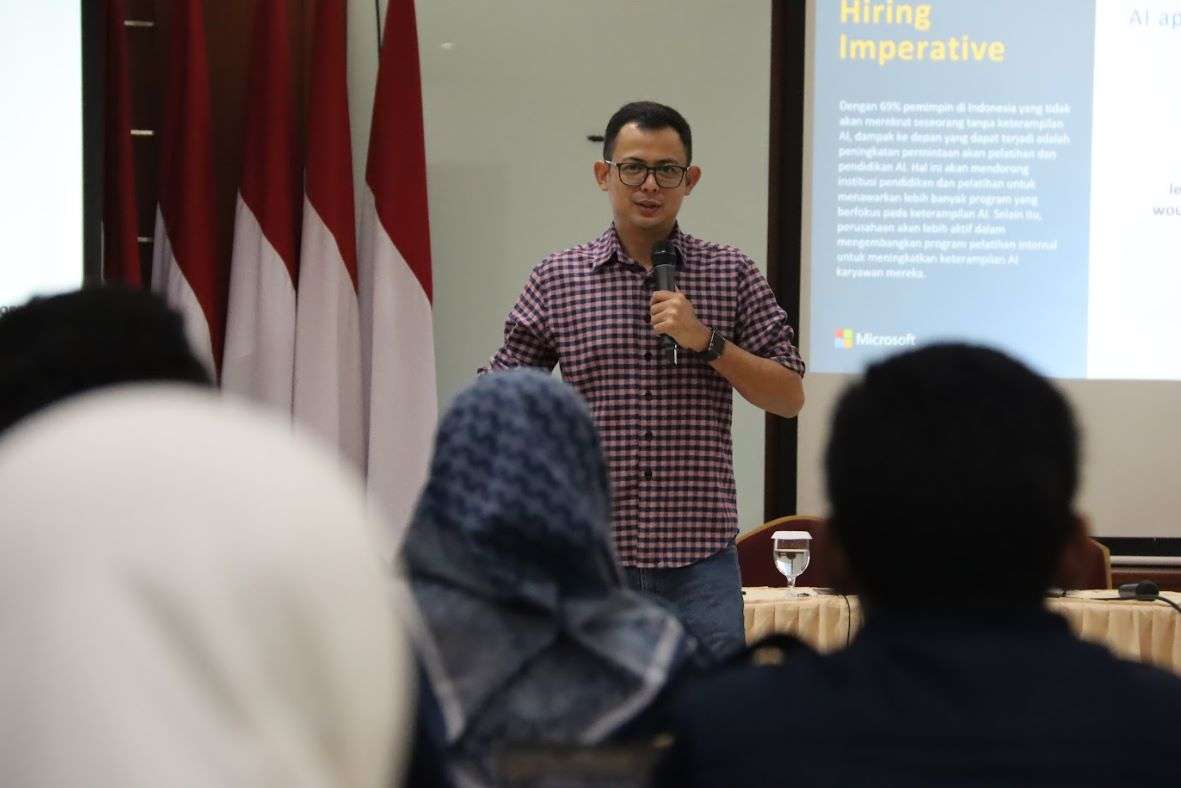
Universitas Terbuka (UT) keeps showing commitment to increase the quality of open distance learning (ODL) through the use of relevant technology. One of the concrete steps in doing so is the training for Microsoft AI Copilot which was held as an implementation of the partnership between UT and Microsoft. This event is attended by representatives of the 44 study programs at UT. This event aims to give insight on how to integrate AI Copilot into the learning process while improving the competence of the lecturers. In addition, this training is also a way to increase UT’s main work index towards world class university.
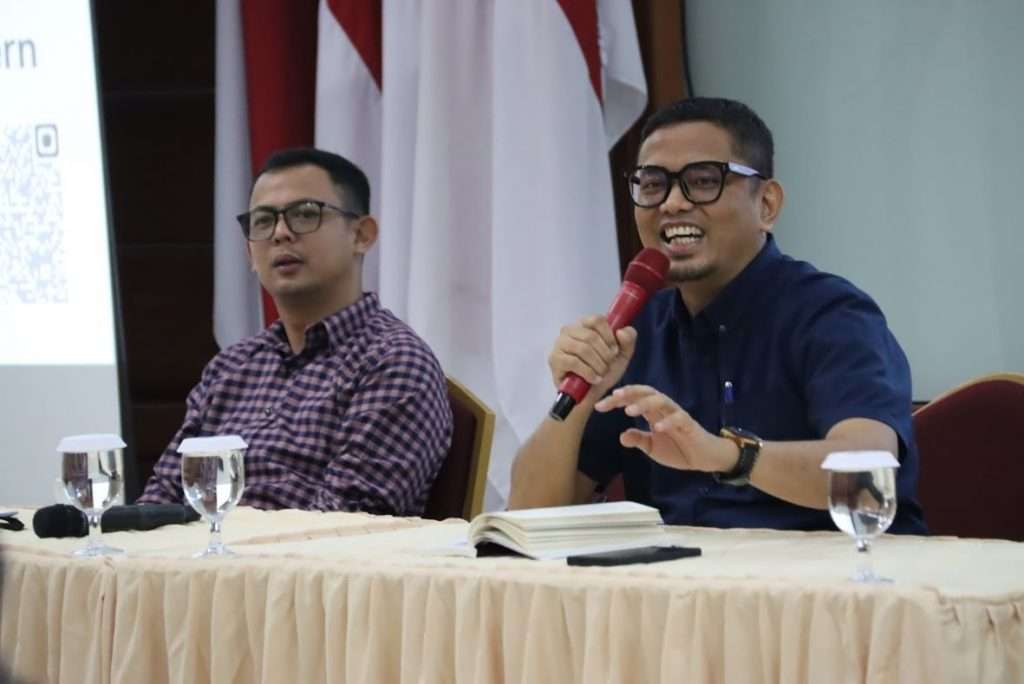
In his remarks, Director of Marketing and Partnership of UT, Ali Tarigan, S.E., emphasized that this training is an important effort to support education innovation at UT. By utilizing AI, lecturers are expected to provide a more interactive, efficient, and relevant with time. In addition, this training also supports UT’s vision of being the pioneer of technology-based education in Indonesia.
This training presents an experienced speaker, Arief Suseno, Director of AI National Skills in Microsoft Indonesia, which explains that the main goal of this training is to increase AI literacy amongst lecturers. This training program, named elevAIte, includes introduction to AI, including generative AI, designed to create content based on received data. In addition, he emphasized that the principle of AI needs to be based on justice, transparency, security, privacy, and accountability.
AI is not merely an assistant tool, but also eases the lecturer’s job. For example, Learning Accelerators, the learning tool integrated in Microsoft 365, offers progress trackers and coaching platforms to supervise student development in real-time. This tool can also be used to design a syllabus, give students in-depth feedback, and help lecturers prepare their teaching materials.

However, Mr. Arief also reminds the obstacles of AI use in education, such as risk of plagiarism and over-dependency. Therefore, AI literacy becomes an important skill for lecturers to possess.
“AI is an assistant tool, not a replacement tool.” he emphasized. With the correct understanding, this technology can be ethically utilized to increase productivity and learning effectiveness.
It is hoped that this training will have a positive impact on the learning processes at UT. Technology integration like the AI Copilot will strengthen UT’s position as a tech-based university that’s inclusive and adaptive.
Microsoft’s AI Copilot training is not just an implementation of technology, but also a concrete proof of education transformation provided by UT. With this technology, UT is optimistic in providing relevant, flexible, and quality learning experience for students.
Let’s support tech-based education innovations to create generations of learners for the future!