
MAJENE — For a village head whose daily routine is filled more with public service activities than academic assignments, pursuing a university degree can be challenging. However, his experience serving the community can be recognized as an academic asset. Through the Village Officials’ Recognition of Prior Learning (RPL) program, Universitas Terbuka recognizes the work experience of Bahtiar, Head of Desa Lombong Timur in Sulawesi Barat, enabling him to complete his studies in 2.5 years.
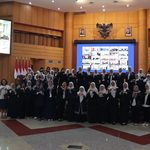
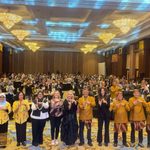
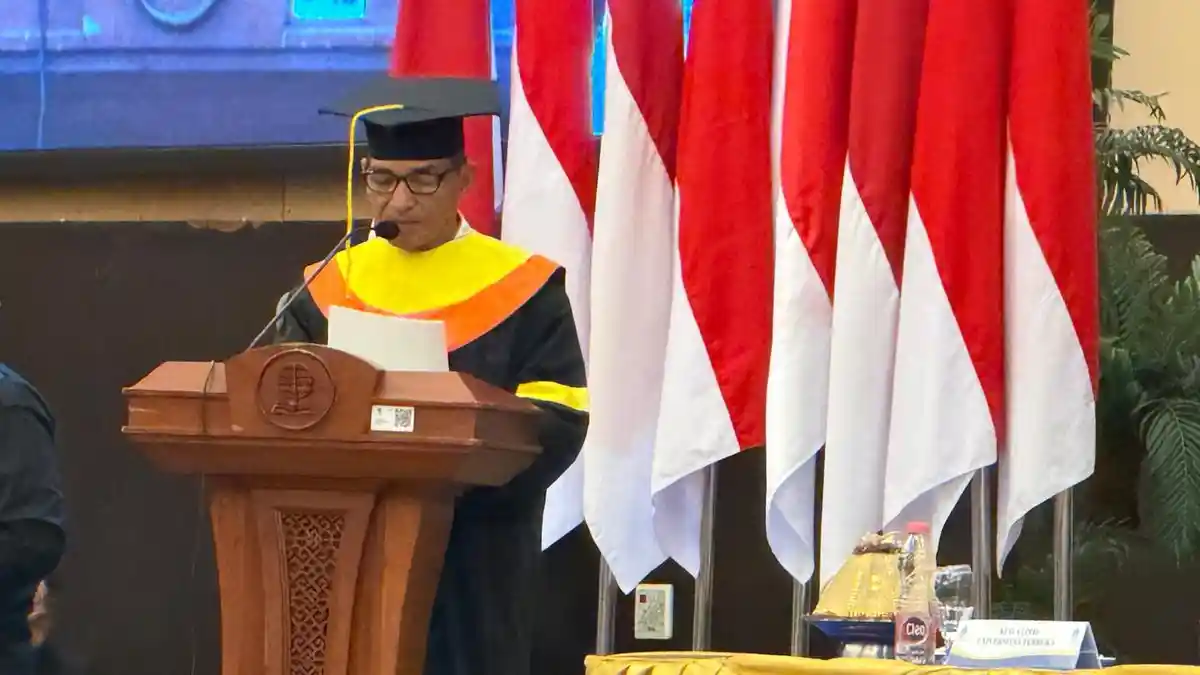
Bahtiar was selected as an inspirational graduate at the Second Period of 2026 UT Majene graduation ceremony, held at the Grand Maleo Hotel and Convention in Mamuju on Monday (October 19, 2026). He completed his studies in five semesters while continuing to carry out his duties as village head. Through RPL, his professional experience was assessed and converted into 50 semester credit units (credits), equivalent to exemptions from 17 courses. This recognition gave him the opportunity to pursue higher education more efficiently without neglecting his responsibilities to the community.
For Bahtiar, continuing his studies was not merely about earning a degree, but also about expanding his knowledge and personal capacity to fulfill his responsibilities as village head. Universitas Terbuka’s (UT) flexible distance-learning system gave him the opportunity to continue his education while managing his professional responsibilities. His experience demonstrates UT’s role in expanding access to higher education for people who want to continue learning without leaving their professional duties.
“That was one of the inner motivations that drove me to complete my university studies,” he said before the UT Majene graduates.
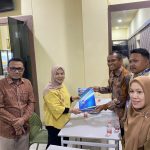
Bahtiar learned about this opportunity in 2023, when a memorandum of understanding (MoU) was signed between the Director of UT Majene and the Chair of the Association of Indonesian Village Governments (Asosiasi Pemerintah Desa Seluruh Indonesia – APDESI) at the Office of Community and Village Empowerment (kantor Dinas Pemberdayaan Masyarakat dan Desa). To participate in the RPL program, he submitted his appointment decree as village head along with 12 types of portfolio documents, including certificates from training sessions and seminars he had attended over the previous two years.
“What is remarkable is that Universitas Terbuka assessed my entire professional record and converted it into course credits. As a result, I received recognition for 50 credits, equivalent to exemptions from 17 courses at that time,” Bahtiar explained.
Recognition of up to 50 credits also applies to village secretaries, while village consultative body (Badan Permusyawaratan Desa – BPD) chairs, village facilitators, heads of administrative affairs, and section heads may receive approximately 35 credits, equivalent to exemptions from up to 12 courses. Through Recognition of Prior Learning (RPL), UT expands access to higher education for experienced workers, in line with SDG 4 on Quality Education.
Support from UT Majene through the WhatsApp group “Pembimbingan RPL Desa Sulbar,” which means RPL Mentoring of Desa Sulbar helped him understand registration procedures, online tutorials, discussion forums, and online examinations. This support demonstrates UT’s role in helping students adapt to digital learning.
His university experience also broadened his perspective on village leadership. Bahtiar believes village officials need to strengthen their understanding of policies, participatory development, and transparency to establish accountable governance, in line with SDG 16 on Peace, Justice, and Strong Institutions.
“Therefore, based on what we have proven today, I want to declare from this podium that all village heads and village officials in Sulawesi Barat should earn university degrees,” he stressed. He encouraged village officials not to feel inferior because of their age or be afraid of technology.
Bahtiar’s story demonstrates that professional responsibilities need not be an obstacle to pursuing higher education. Through UT’s RPL system, flexible learning, and mentoring support, village officials have opportunities to improve their capabilities without abandoning their service to the community.