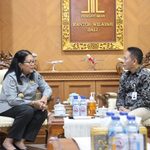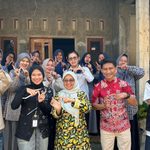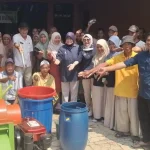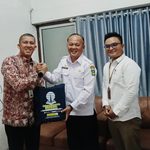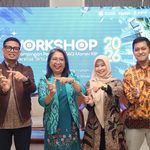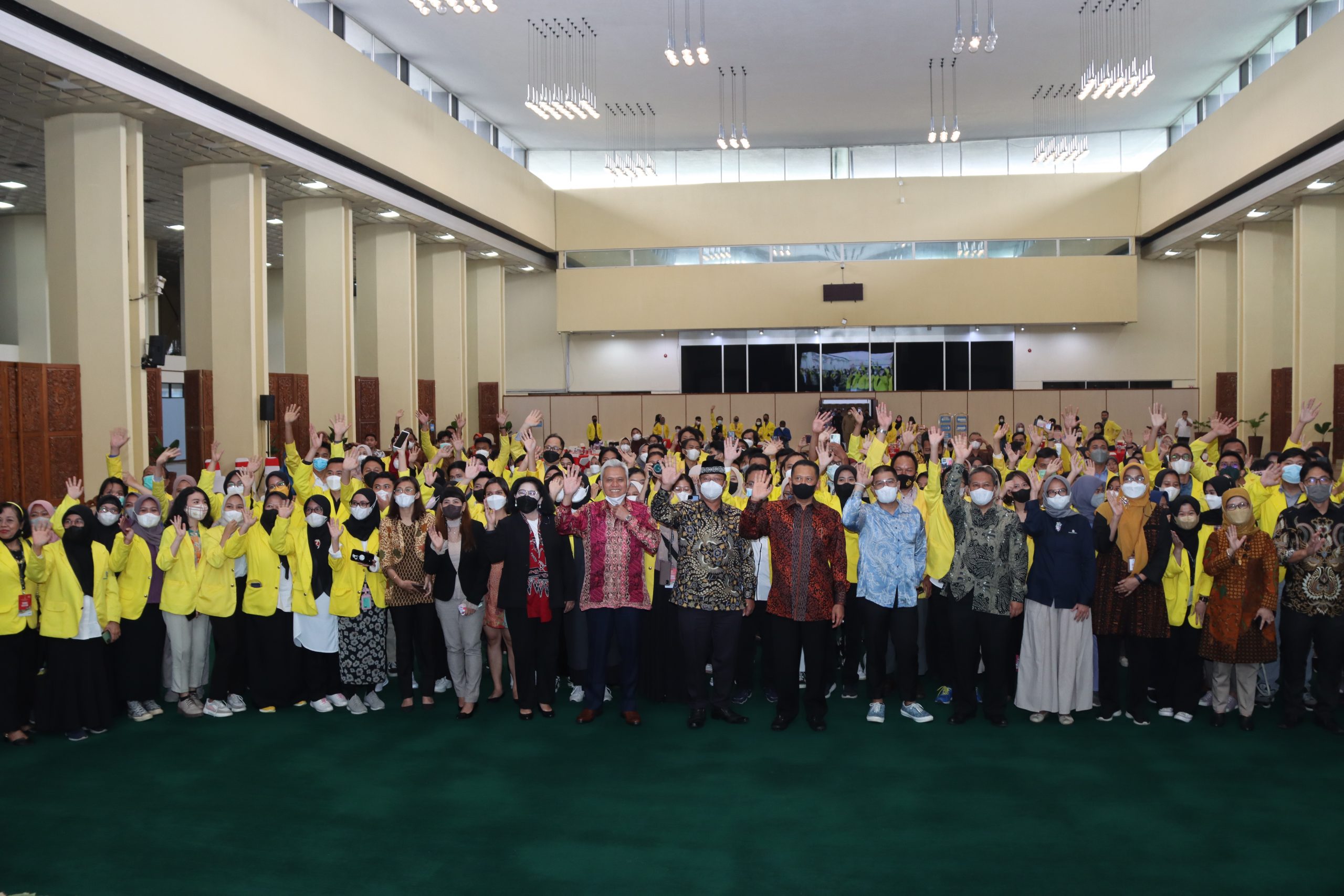

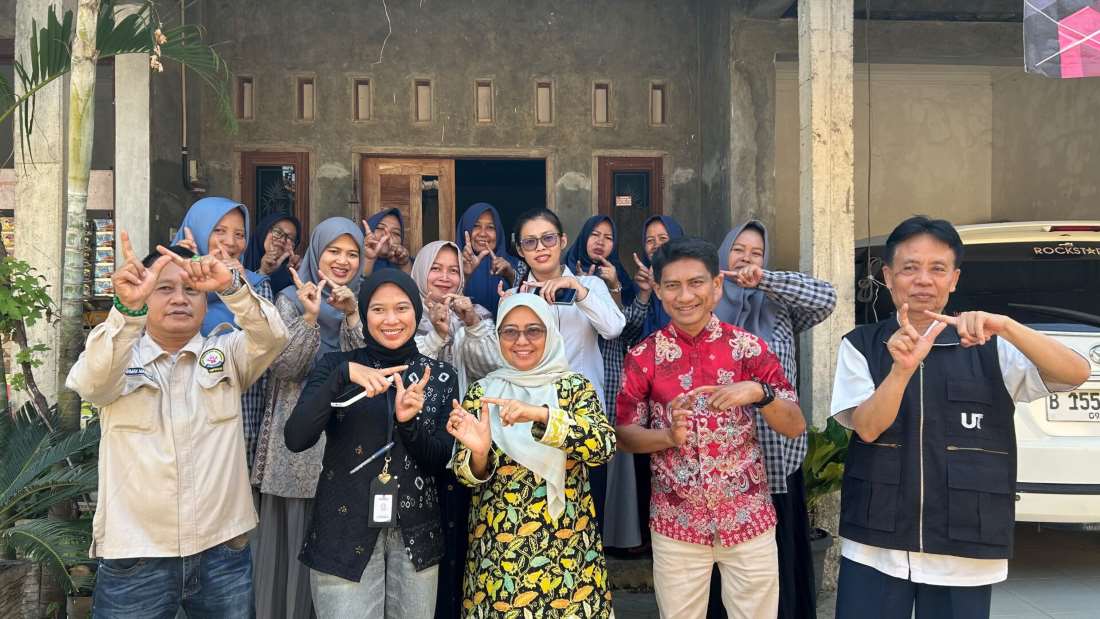
Behind every MSME product in Banyumas, there are efforts, skills, and hopes that are continuously nurtured so that the businesses can keep growing. However, this potential can be difficult to develop if business owners do not have sufficient information to identify their strengths, needs, and business development directions. Addressing this issue, Universitas Terbuka (UT) Purwokerto, through its Community Service (PKM) activities, is supporting MSMEs across Kabupaten Banyumas by introducing a data-driven approach, digital literacy, cultural branding, and economic strategies.
Together with members of the Banyumas Association of Micro, Small, and Medium Enterprises (Asosiasi Pengusaha Mikro, Kecil dan Menengah Banyumas – ASPIKMAS), UT Purwokerto is not merely providing assistance to business groups. The university is also helping develop a more organized and integrated MSME database so that information on the characteristics, types of businesses, products, potential, needs, and development of business groups can be understood more clearly.
The initiative began with a re-survey, identification, and updating of business group data. The information collected was then used to map business groups based on product types, economic potential, business capacity, development needs, and cultural elements associated with their products and areas. The mapping is expected to serve as a basis for ensuring that assistance is not provided uniformly but can instead be tailored to the characteristics and needs of each business group.
For MSME operators, this approach brings more tangible benefits. More organized mapping allows business groups with similar characteristics and needs to receive more appropriate assistance. At the same time, products with local advantages and Banyumas’ rich cultural heritage can be given opportunities to be developed as part of the creative economy ecosystem with stronger identities.
The Chairperson of ASPIKMAS said that one of the strategic objectives of developing the database is to produce a mapping of business groups that can be used for the clustering process. The data can also be developed into a prototype for mapping business groups based on both geographical areas and business characteristics.
The availability of more structured data then creates opportunities for MSME development programs to move from a general approach toward more specific, needs-based measures. Data can serve as a basis for determining assistance priorities, capacity development, branding enhancement, digital literacy improvement, and economic strategies suited to the conditions of each business group.
Efforts to strengthen digital capabilities are also part of the program. Head of the Library and Information Science Study Program at UIN Prof. K.H. Saifuddin Zuhri, Umi Haniati, M.A., also attended to deliver material on the importance of business media and business cloud services in supporting MSMEs. The knowledge is expected to help business owners use digital spaces more strategically to manage information and develop their businesses.
The program is subsequently being directed toward becoming a literacy incubation prototype for business groups across 27 districts in Kabupaten Banyumas. Team Leader Dewi Maharani Rachmaningsih, M.A., expressed hope that the prototype could be gradually developed across all districts.
The literacy incubation concept being developed does not stop at the ability to understand information. Business groups are encouraged to manage data, understand markets, build product identities, use digital media, and make economic decisions based on available information. In this way, the learning process does not end when the PKM activities are completed but can continue to grow within the business community.
For UT Purwokerto, PKM activities provide an avenue for bringing knowledge from higher education institutions closer to the needs of the community. In the context of Banyumas MSMEs, this knowledge is used to help map potential, strengthen digital literacy, and develop the capacity of business groups.
For MSME operators, data is more than just numbers in a table. Behind it are names, products, stories, and the hopes of businesses to survive and grow. As the information becomes more organized, their potential and needs can be seen more clearly. From there, development steps can be designed more appropriately, because different MSMEs do not always need the same solutions.