
PALANGKA RAYA — Amid the risk of forest and land fires that can occur at any time, volunteers are among those who actively work to protect the environment and assist the community. For those working in the field, support for their daily needs is an important part of ensuring that their humanitarian duties can continue.
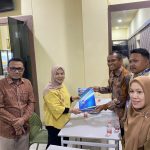
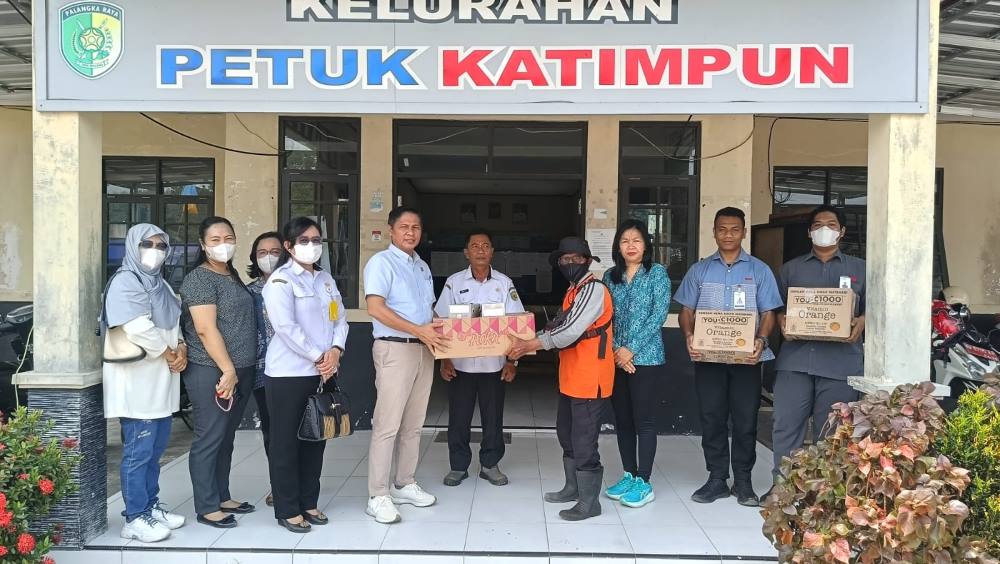
Recognizing this role, Universitas Terbuka (UT) distributed assistance in the form of supplements, food, masks, and other essential supplies to the firefighting volunteers in Kelurahan Petuk Katimpun, Kota Palangka Raya, on Wednesday (August 26, 2026).
The assistance was provided to several volunteer groups, namely Tim Serbu Api Kelurahan (TSAK), Masyarakat Peduli Api (MPA), and KALTANA (Kelompok Siaga Bencana atau Kalurahan Tangguh Bencana). The support was intended for volunteers who have been assisting the community while also responding to various potential disasters in the Petuk Katimpun area.
The assistance handover was witnessed by Kelurahan Petuk Katimpun Head Berita Asi, who expressed her appreciation for the attention shown by UT to the volunteers carrying out their duties in the area.
According to Berita, supplies such as food, supplements, masks, and other equipment are beneficial to volunteers, particularly when they are required to carry out their duties in the field.
“This assistance means a great deal to the volunteers. They need support, especially when they have to carry out their duties in the field. We thank Universitas Terbuka for its concern and assistance to the volunteers in Kelurahan Petuk Katimpun,” she said.
For the volunteers, the support is not only about the assistance they receive, but also represents recognition of their role in helping the community. The presence of TSAK, MPA, and Kaltana is part of a collective effort to address disaster risks in the Petuk Katimpun area.
Berita Asi expressed hope that the relationship between Universitas Terbuka, the government of Kelurahan Petuk Katimpun, and volunteer groups could continue to be strengthened. According to her, collaboration among various parties is needed so that disaster prevention and response efforts in Petuk Katimpun can be carried out more effectively.
She also called on the community to increase environmental awareness and vigilance toward potential disasters. Efforts to maintain the safety of the area, she said, cannot rely solely on volunteer groups but require the collective involvement of the community.
“Volunteers cannot work alone. Support and concern from all parties are needed to keep the environment safe and protect the community,” she added.
The support provided by UT represents one form of higher education institutions’ involvement in strengthening communities at the local level. When volunteers receive support and the community increases its environmental awareness, efforts to protect the area from disaster risks can be carried out more collectively and sustainably.