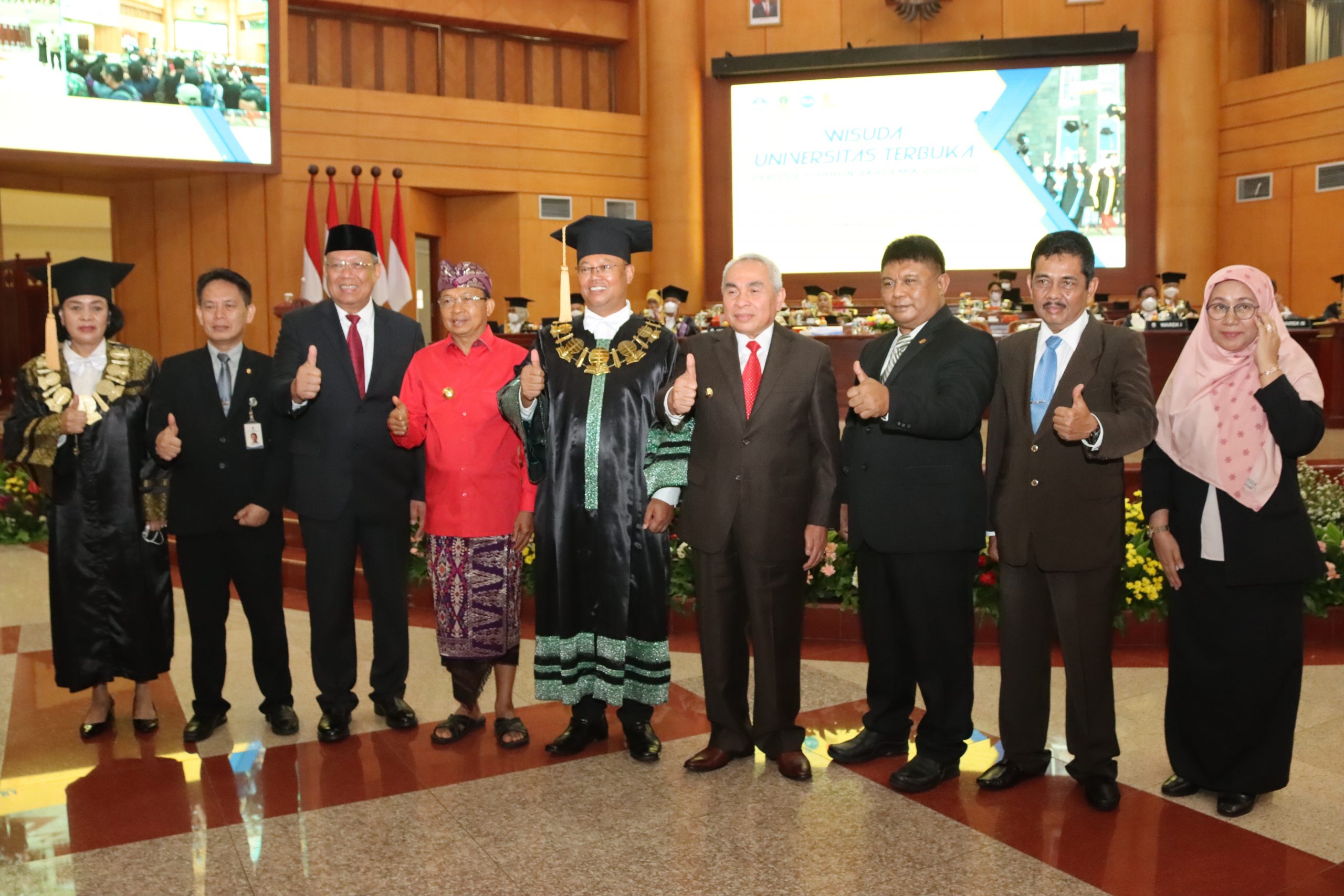

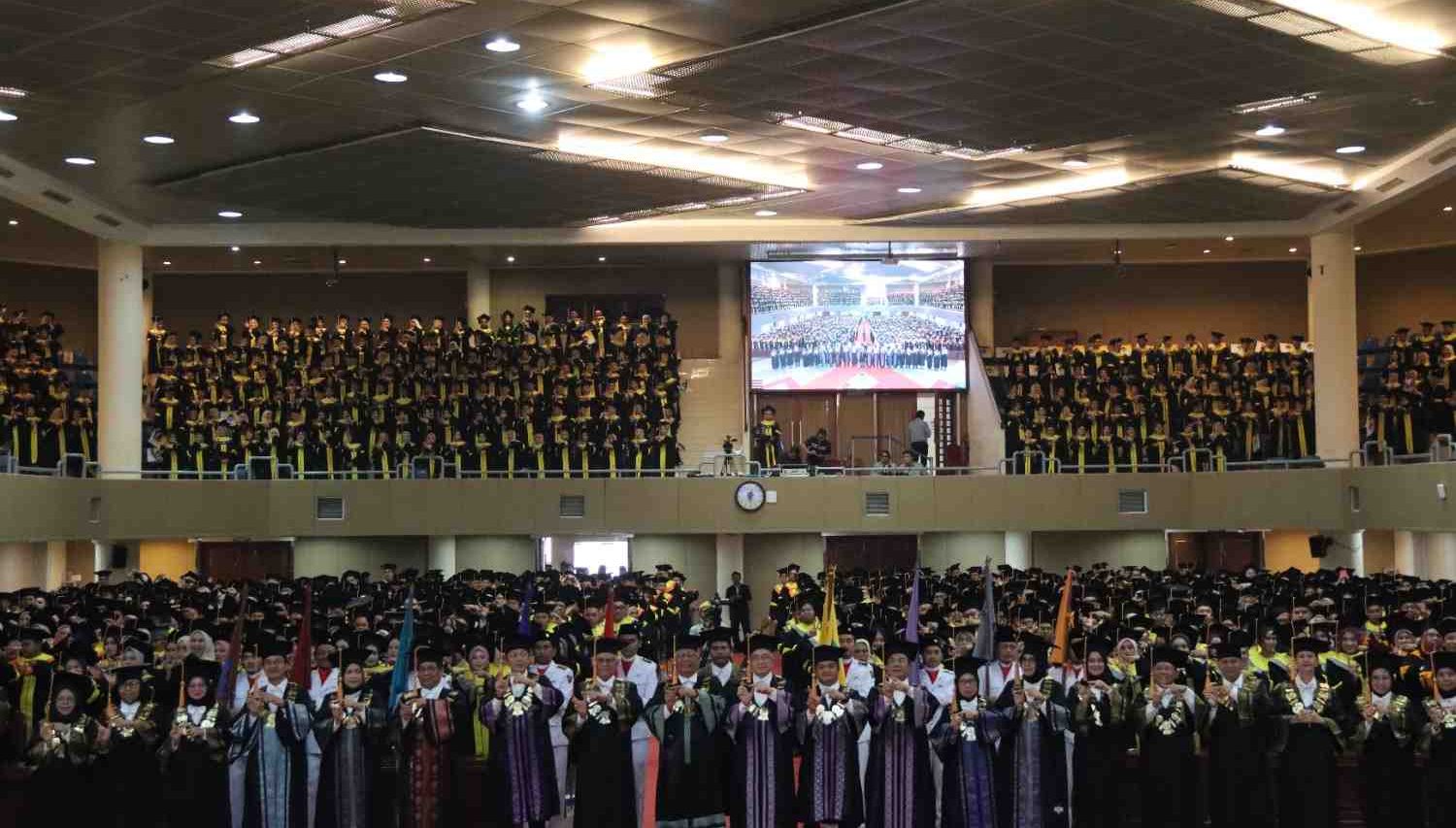
Tangerang Selatan – Tuesday morning (30 June 2026), the main stage of the Universitas Terbuka Convention Center (UTCC) suddenly turned into an extraordinary mosaic of professions. On the grand podium, the top graduates stood neatly side by side wearing graduation gowns, ranging from a vice rector, directors of national oil and gas state-owned enterprises (BUMN), senior state officials holding doctoral degrees in audit, to a professional Indonesian futsal athlete who is usually active on the field, all standing proudly with dignity. The camera flashes warmly captured a special moment as a 67-year-old female graduate smiled with confidence among them, standing harmoniously next to the youngest graduate, a 21-year-old student who earned the title of youngest graduate.
The unique scene on the podium was not merely a ceremonial event, but a strong demonstration of how Universitas Terbuka (UT) breaks down outdated stigma about higher education. Through the concept of an open, flexible, digital ecosystem, UT proves its excellence by providing a borderless learning system. The institution demonstrates that geographical distance, professional boundaries, and age differences are no longer barriers to accessing quality higher education.
This adaptive and inclusive flexibility is what has attracted tens of thousands of learners to entrust their academic future to the university. In the Graduation Ceremony for the First Period of 2026, Region 1, a total of 1,753 graduates attended the in-person ceremony at UTCC, Tangerang Selatan. This number is not merely statistical, but a clear indication of growing public trust in Universitas Terbuka. These thousands of graduates show that quality higher education can now be accessed by anyone, from anywhere, without having to leave work, family, or productive activities.
The alignment between flexible learning and real-world professional demands is strongly reflected among doctoral graduates. A clear example of this borderless system was demonstrated by Adrian Sutawijaya, Vice Rector for Finance, Resources, and General Affairs at UT, who successfully completed a Doctoral Program in Management at UT Jakarta. His achievement was accompanied by another remarkable milestone from Dr. Ida Herawati (Ida Irawati), Director of Examination I.C of Badan Pemeriksa Keuangan Republik Indonesia (BPK RI), who also earned a Doctorate in Public Administration amid demanding national duties. These two central figures break the myth that professional busyness and high-level public service are obstacles to academic upskilling at the highest level.
The inspiration flowing from national policy circles also extended into the corporate sector and the world of sports. On the same podium, Muh Erry Sugiharto, Director of Business Support at PT Pertamina (Persero), and Selvia Vivi Devianti, Head of the Policy Analysis Center of BPK RI, proudly received their Bachelor of Law degrees. Meanwhile, Indonesian professional futsal star Marvin Alexa Wossiry also demonstrated UT’s adaptive system by successfully completing his Management studies at UT Jakarta amid a demanding training schedule.
Interestingly, this moment of achievement was not only dominated by established professionals but also brought together learners across generations in lifelong learning. The public was inspired by the determination of Sri Atkarti (67), the oldest graduate from the Bachelor of Business Administration program at UT Jakarta, proving that learning has no age limit. The same spirit was reflected by Ruki Madulari (21) from UT Malang, the youngest graduate, as well as Yurni Prawita from UT Bengkulu, who achieved a perfect GPA of 4.00 with highest distinction.
Although embracing all groups through a highly flexible system, UT does not compromise its academic standards in maintaining graduate quality. In a press conference session, UT Rector Prof. Dr. Ali Muktiyanto explained that UT implements an artificial intelligence-based examination monitoring system (AI proctoring) to safeguard academic integrity. This strict measure has resulted in high public accountability and strong alumni employability rates that exceed national standards. These efforts continuously support the achievement of Sustainable Development Goals (SDGs) Goal 4, ensuring equitable, inclusive, and internationally quality higher education access for all levels of society.