
Creating schools that are safe, supportive, and free from bullying cannot be achieved by schools alone. It requires collaboration among educators, parents, government institutions, and the wider community to ensure that every child can grow in a healthy learning environment. This is the vision that Universitas Terbuka (UT) continues to advance through its EQUITY Program in Desa Tegal, Kecamatan Kemang, Kabupaten Bogor, Jawa Barat.
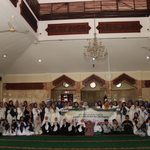
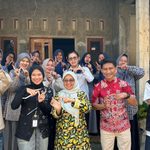
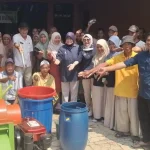
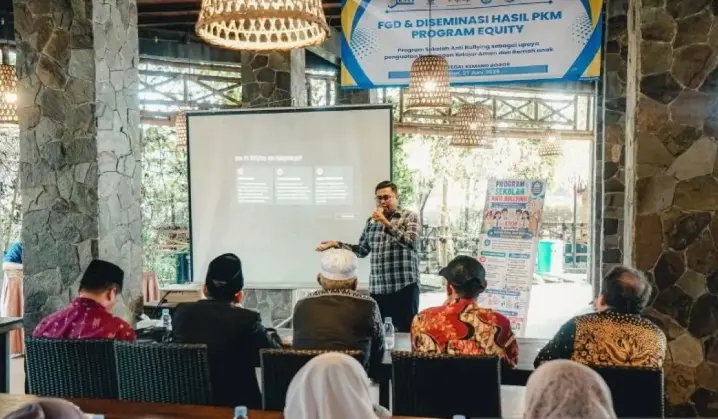
This commitment was reaffirmed through a Focus Group Discussion (FGD) and the dissemination of the results of the National Community Service (Pengabdian kepada Masyarakat – PkM) Program conducted by UT’s Faculty of Teacher Training and Education (FKIP). The forum served as an opportunity to evaluate the achievements of the three-year mentoring program while formulating collaborative strategies to further strengthen the implementation of child-friendly schools and an anti-bullying culture in Desa Tegal. The event brought together village officials, educational institutions, religious leaders, youth organizations, early childhood educators, foundations, and local community members as key partners in building a more inclusive educational ecosystem.
Chair of the FKIP UT Community Service Team, Dony Darma Sagita, explained that the university’s community engagement extends far beyond the implementation of individual activities. Over the past three years, various sustainable programs have been carried out to strengthen a community-based education ecosystem.
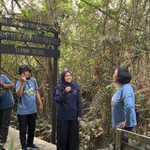
These initiatives include the development of reading corners, positive parenting programs, assistance in preparing Daily Learning Implementation Plans (Rencana Pelaksanaan Pembelajaran Harian – RPPH) for early childhood education teachers, and support for implementing the Merdeka Belajar Curriculum. All of these programs are designed to foster a more inclusive learning environment that prioritizes children’s growth and development.
“Desa Tegal has become a strategic partner of Universitas Terbuka in building a community-based education ecosystem. Over the past three years, various programs have been implemented successfully with strong support from the village government, schools, teachers, parents, and the community,” said Dony.
He added that the Community Service Program is also designed to build sustainable collaboration by involving schools, families, village governments, community leaders, and local organizations. This synergy serves as an essential foundation for creating a child-friendly educational environment while preventing bullying.
These efforts are aligned with the Sustainable Development Goals (SDGs), particularly SDG 4 (Quality Education), by strengthening access to inclusive, safe, and supportive learning environments for every learner. The cross-sector collaboration established through the program also reflects the spirit of SDG 17 (Partnerships for the Goals), recognizing partnerships as a key driver of sustainable community development.
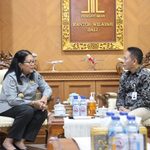
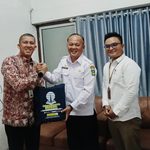
The program has also received appreciation from the Desa Tegal Government. Desa Tegal Secretary Jayadi expressed his gratitude for the assistance provided by Universitas Terbuka over the past three years.
“On behalf of the Desa Tegal Government, we would like to express our sincere appreciation to Universitas Terbuka and the UT Institute for Research and Community Service (LPPM UT). The UT Community Service Program has brought significant benefits to the people of Desa Tegal. We hope this collaboration will continue in the years to come,” Jayadi said.
The EQUITY Program itself is an initiative of the Ministry of Higher Education, Science, and Technology in collaboration with the Indonesia Endowment Fund for Education (Lembaga Pengelola Dana Pendidikan – LPDP). The program aims to strengthen higher education while accelerating the transformation of universities into World Class Universities through enhanced research and publication.
For Universitas Terbuka, building child-friendly schools cannot be achieved through one-time training or short-term assistance alone. Meaningful change requires sustained collaboration among schools, families, government, and the community. Through its three-year engagement in Desa Tegal, UT has demonstrated that community service is not merely about delivering programs, but about building an inclusive, safe, and bullying-free educational ecosystem for the future.