
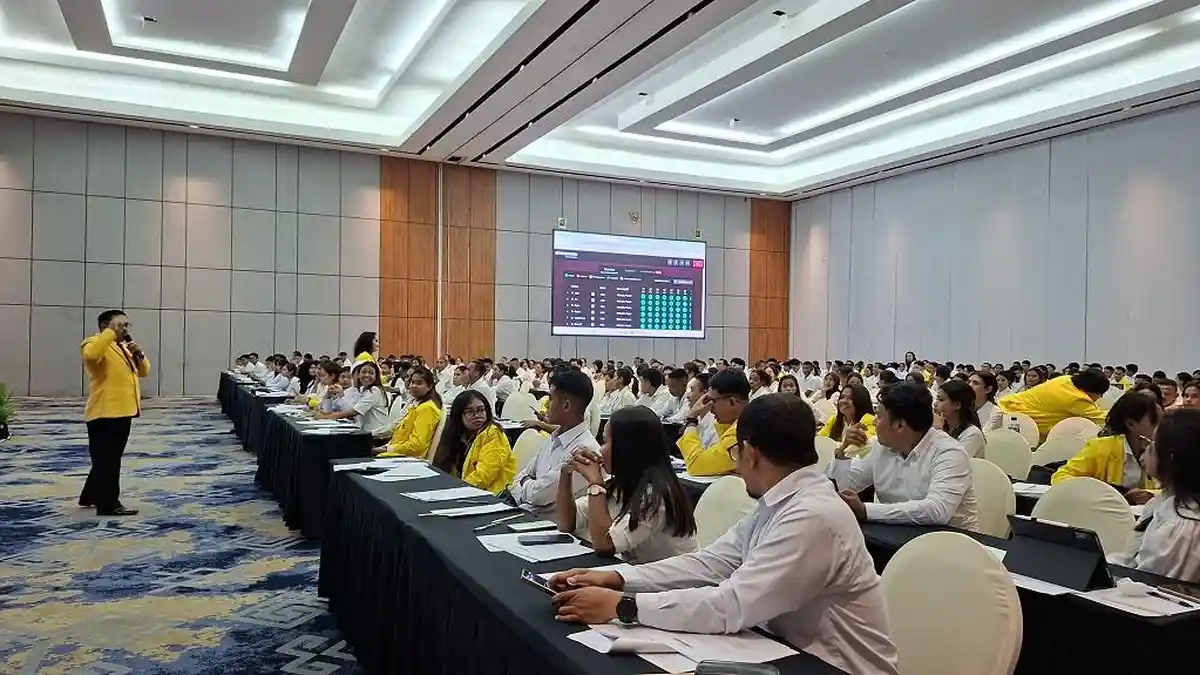
A total of 1,539 new students began their academic journey at Universitas Terbuka (UT) Kupang through the Distance Learning Skills Training (LPKBJJ) and New Student Orientation (OSMB), held on Sunday, March 1, 2026, at Harper Hotel Kupang. The program serves as a gateway before students officially enter UT’s distance learning system.
Participants came from across East Nusa Tenggara (NTT)—including Kupang, Flores, Sumba, Timor, and Alor—and represented diverse backgrounds, from working professionals and homemakers to recent high school graduates. Despite their differences, they share a common goal: pursuing higher education through a flexible system.
UT Kupang Director Albert Gamot Malau emphasized the importance of early preparation, noting that understanding the learning system is key to student success. Unlike conventional universities, UT requires independent study supported by online tutorials, digital learning materials, and structured academic and examination systems.
Through the program, students were introduced to academic services, registration procedures, tutorial systems, and exam mechanisms, giving them a clear picture of their learning journey from the first semester.
Albert also reported a 10% increase in student enrollment, largely driven by younger generations, reflecting growing awareness that higher education can now be accessed without leaving one’s job or hometown.
To ensure effective support across its geographically dispersed region, UT Kupang implements LPKBJJ in stages and through both offline and online formats, including platforms like Microsoft Teams.
The program includes OSMB, study skills training (PKBJJ), assignment workshops, and exam clinics—equipping students with essential skills such as time management, academic writing, and exam readiness.
This initiative reflects UT’s commitment to expanding inclusive and quality higher education, particularly in regions like NTT where distance and geography have long been barriers. At UT, higher education is no longer about location, but about opportunity.