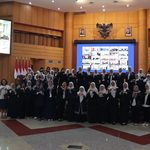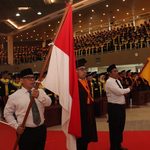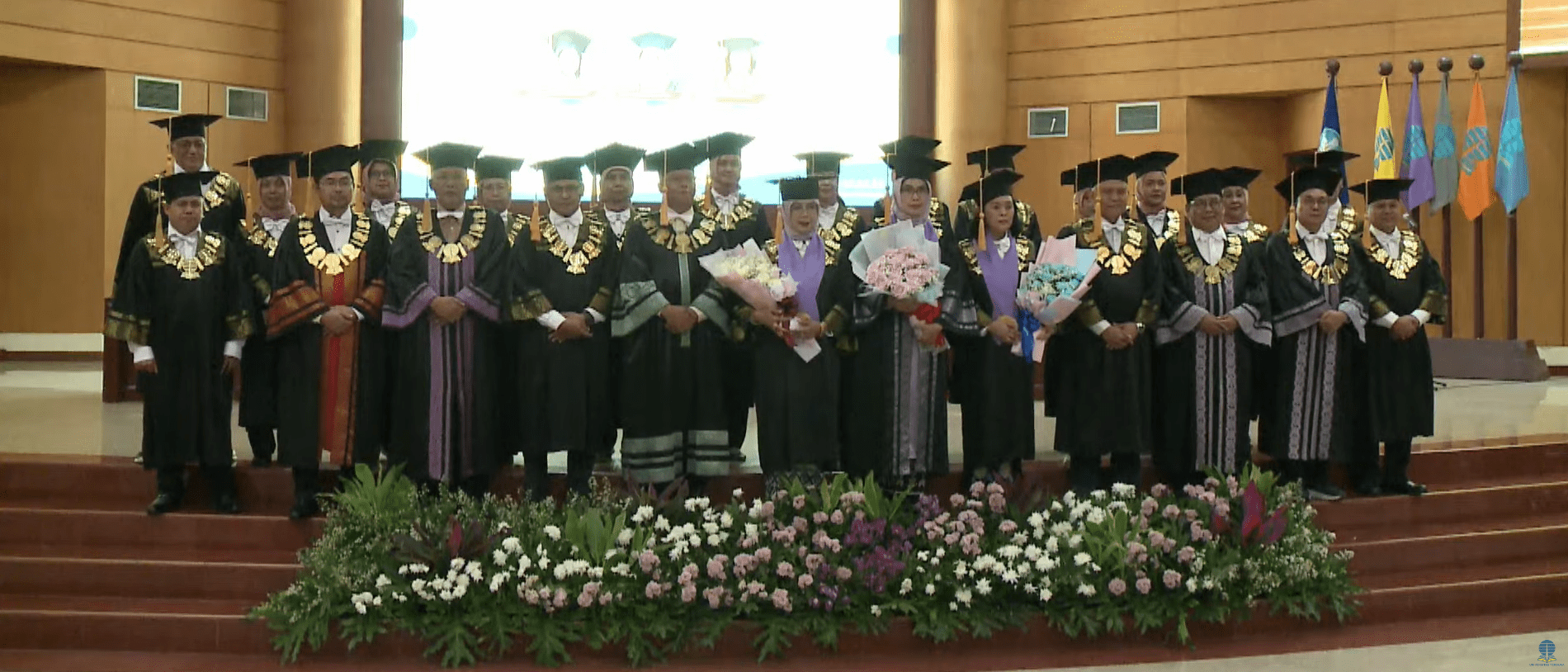


Tangerang Selatan — Amid rapid changes in higher education, Universitas Terbuka (UT) marked a pivotal moment through the inauguration of new officials at the Universitas Terbuka Convention Center (UTCC) on Friday (30 January 2026). More than a routine leadership rotation, the ceremony reaffirmed UT’s institutional transformation following its status as a State University with Legal Entity (PTNBH), signaling a renewed commitment to becoming a more agile, resilient, and future-ready open and distance learning university.
The appointments were carried out based on Rector’s Decree No. 333 of 2026 dated 28 January 2026, concerning the honorable dismissal of several officials and the assignment of new additional duties to others (names attached). This move forms part of UT’s comprehensive restructuring of its organizational structure and governance (SOTK), designed to address both internal dynamics and increasingly complex external demands.
In his address, UT Rector Prof. Ali Muktiyanto, S.E., M.Si. emphasized that the inauguration marked a new chapter in UT’s more than 40-year journey, from a government work unit to a public service agency, and now as a PTNBH. He described the current restructuring as the second major overhaul of UT’s SOTK, aimed at aligning the university with national development directions toward 2045 and strengthening UT’s mission in delivering world-class open and distance higher education.
The new SOTK reinforces academic authority by positioning faculties, postgraduate programs, and vocational education as the main drivers of academic development under the Rector’s leadership. UT Regional Offices are also strengthened as the frontline of services and public engagement, serving as both showcases and microcosms of UT across regions. The restructuring process, Prof. Ali noted, was carefully designed with professional input, including from the University of Indonesia’s psychology institute, to ensure optimal talent placement.
UT also introduced the role of University Secretary to enhance coordination, communication, evaluation, and institutional control, complementing existing governance mechanisms. The overall restructuring prioritizes academic services, regional services, and the distinctive learning systems of distance education, including more flexible examination models.
Closing his remarks, the Rector urged newly appointed officials to view their roles as a full leadership mandate grounded in competence, integrity, loyalty, and collaboration. The inauguration underscores UT’s commitment to strengthening institutional governance and developing high-quality human resources, in line with the Sustainable Development Goals—particularly quality education and strong institutions—as UT moves forward with renewed structure and vision.