
The island clusters of North Maluku are home to thousands of children whose educational dreams have long been limited by geography. Under the leadership of Governor Sherly Tjoanda, the provincial government is introducing people-centered policies to bring secondary education closer to island communities, ensuring children no longer have to leave their families just to attend school.
This initiative has been warmly welcomed by Universitas Terbuka (UT) Ternate, which views the expansion of senior high school access in island areas as a meaningful solution to educational inequality. Given North Maluku’s archipelagic geography, bringing schools closer to students is seen as essential to preventing dropouts and easing the economic burden on families.
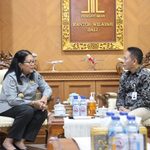
UT Ternate Director Dr. Muhlis Hafel praised the policy as visionary and inclusive. He emphasized that not all families can afford to send their children to other islands for schooling, and that local access creates fairer opportunities for young people across the region.
The initiative aligns with Sustainable Development Goal 4 on inclusive and equitable quality education. As a pioneer of distance education, UT Ternate expressed its readiness to support the program by sharing its experience in managing open and distance learning, including infrastructure planning, teacher preparation, learning modules, and monitoring systems.
UT Ternate reaffirmed its commitment to partner with the local government, with the hope that North Maluku can become a national model for equitable education in island regions—proving that quality education can reach every child, wherever they live.