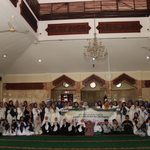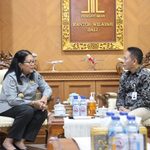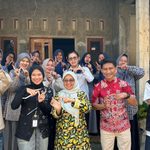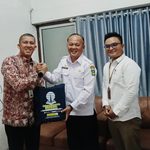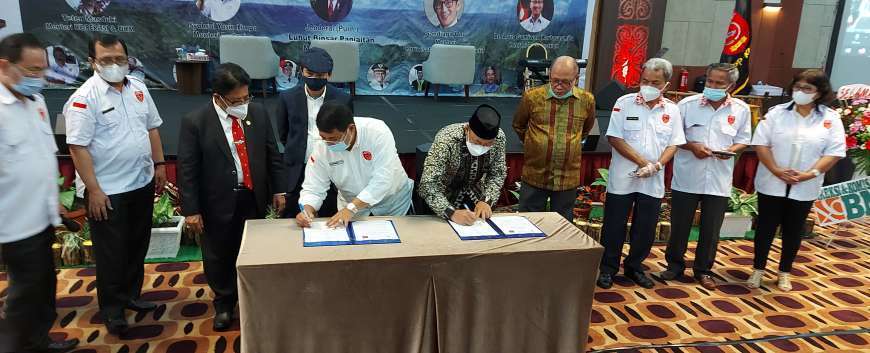

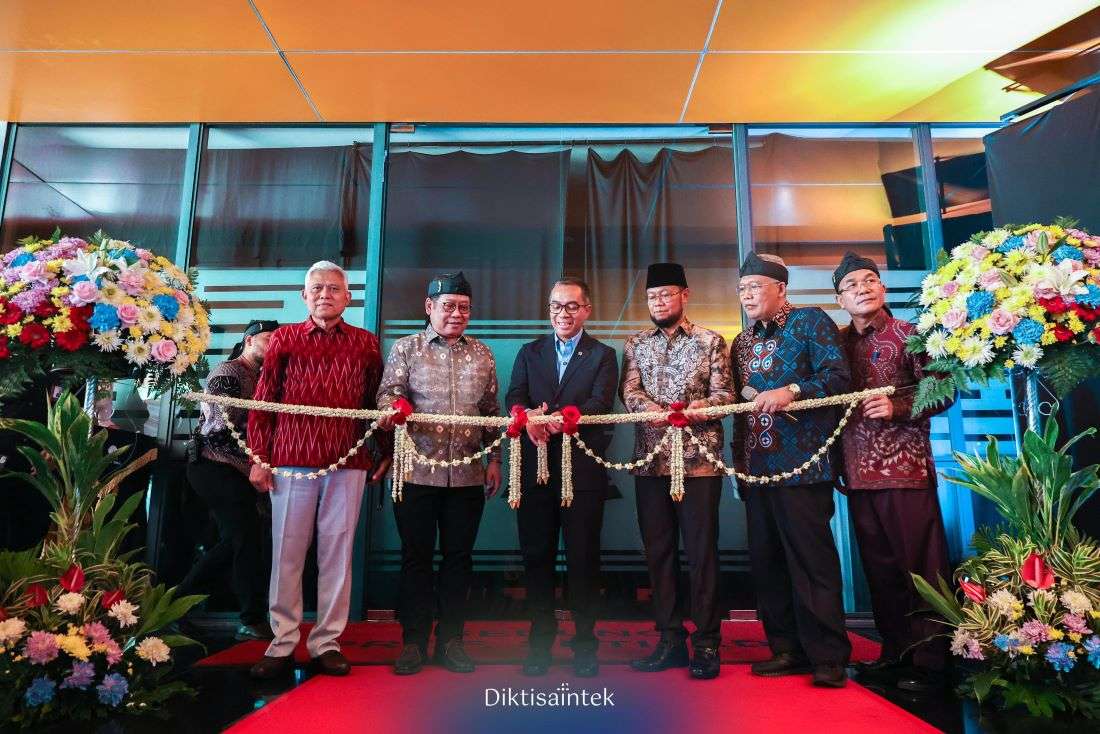
Pondok Cabe, August 13, 2025 — Universitas Terbuka (UT) reaffirmed its strategic steps as a pioneer of digital, open, and distance higher education (PTTJJ) in Indonesia through the inauguration of two new icons: the Prof. Setijadi Building and the UT Central Front Gate. The inauguration, held at UT Headquarters in Pondok Cabe, South Tangerang, was more than just an infrastructure development—it was a manifestation of UT’s commitment as an Open and Impactful Campus, marked by innovation, inclusivity, and the use of technology to deliver real benefits for the nation.
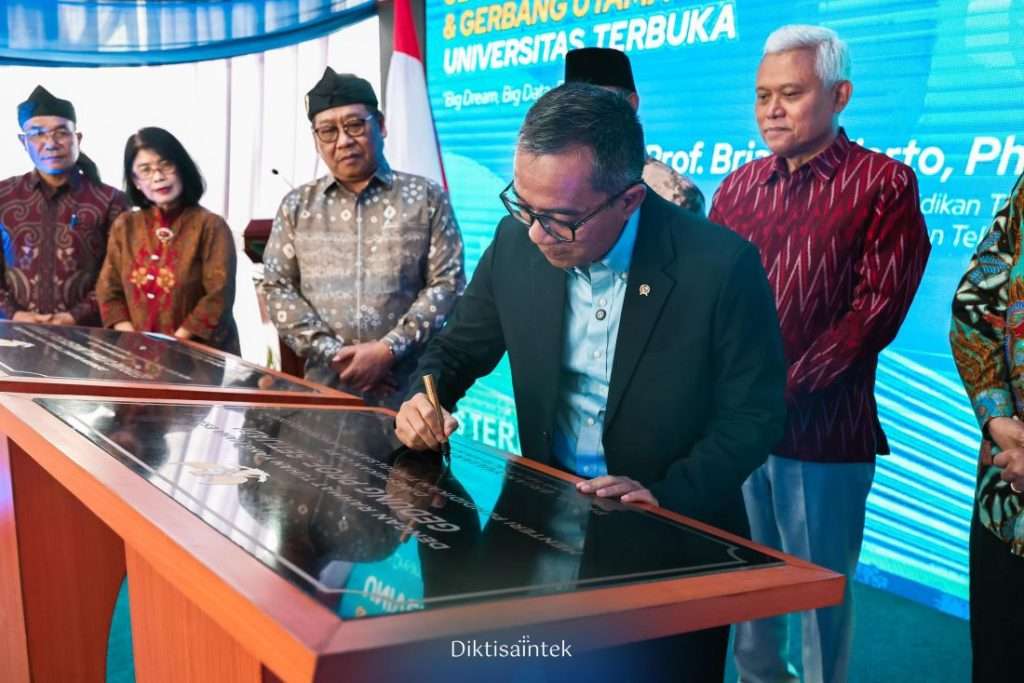
The event was attended by the Minister of Higher Education, Science, and Technology of the Republic of Indonesia, Prof. Brian Yuliarto, Ph.D., Deputy of the Coordinating Ministry for Human Development and Cultural Affairs (Kemenko PMK), Prof. Ojat Darojat, M.Bus., Ph.D., the Mayor of South Tangerang (represented by Regional Assistant I for Government and People’s Welfare, Chaerudin), university partner rectors, representatives from the Ministry of Education and Culture’s Higher Education, Science, and Technology division (Kemdiktisaintek), industry stakeholders including the President Director of Microsoft Indonesia, representatives from the UT Alumni Association (IKA UT), and the family of the late Prof. Dr. Setijadi, M.Eng.
Carrying the theme “Big Dream, Big Data, Big Impact,” the inauguration underscored UT’s commitment to leveraging technology and data to broaden access, improve learning quality, and create impact in both national and global education.
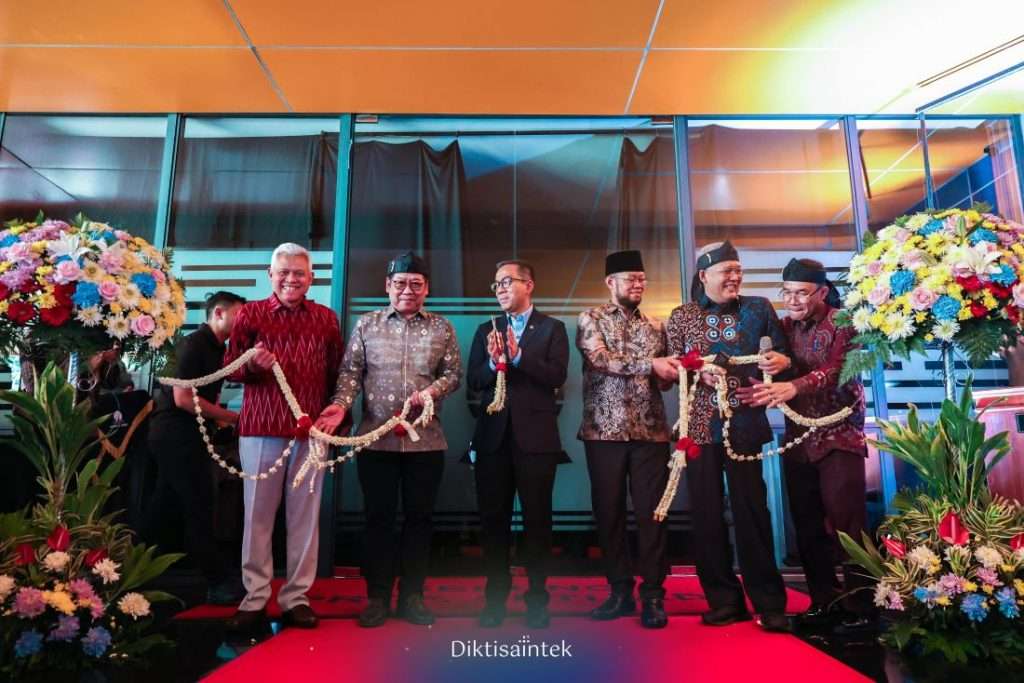
In his speech, Prof. Brian Yuliarto, Ph.D., expressed appreciation for naming the new building after Prof. Setijadi. “This is a tribute to a great teacher who played a key role in the founding of UT. Even before the internet existed, Prof. Setijadi had the vision to spread knowledge to all corners of the nation,” he said.
Prof. Brian emphasized that UT is a pioneer in open and distance higher education that provides learning opportunities to people across the country at affordable costs and with high-quality learning processes. “In this era of transformation, UT’s role becomes even more relevant. With digital-based learning, UT has a noble duty to fill the gaps—equipping those who are limited by distance, time, or socio-economic conditions,” he added.
He also encouraged higher education institutions to become impactful campuses. He stressed that universities should not only help solve problems in their environment but also lead a major revolution in education.
“UT’s impact lies in its ability to provide benefits to all through a distance learning system that enables anyone to study without limitations. UT also offers Open Educational Resources through the UT Digital Library, making knowledge broadly accessible,” he noted.
As part of UT’s increasing contribution to Indonesian education, Prof. Brian entrusted UT with the strategic responsibility of developing and coordinating the production of high-quality instructional videos that can be used by lecturers across Indonesia—supporting equal learning opportunities and improving national education.
“This major revolution in educational video development belongs to UT—to lead and coordinate. We entrust this to UT because it is the most advanced in digital technology and instructional material development,” said Prof. Brian. He also suggested that more UT learning modules be developed in English to help expand UT’s reach to international learners.
Concluding his remarks, Prof. Brian declared: “Let us inherit the spirit of Prof. Setijadi in opening access to knowledge for the nation. With this, I officially inaugurate the Prof. Setijadi Building.”
In his speech, UT Rector Dr. Mohammad Yunus, S.S., M.A., emphasized that the inauguration of these two new icons is part of UT’s grand strategy to build a future-ready, inclusive, flexible, and technology-driven higher education ecosystem.
“Being impactful means UT brings tangible benefits to the nation. By integrating open access, digital innovation, and sustainability principles, we are ready to produce high-quality graduates wherever they are—realizing flexible, globally competitive higher education,” he said.
The Rector explained that the Prof. Setijadi Building was constructed on an area of approximately 5,000 m², with a building size of 2,700 m², adopting the Smart & Green Campus concept—environmentally friendly, inclusive, and innovation-driven. “This building is part of UT’s Digital Learning Ecosystem and will serve as a center for research, learning technology development, and interdisciplinary collaboration to address the challenges of the Fourth Industrial Revolution and Society 5.0,” the Rector explained. He added that naming the building after Prof. Setijadi was a tribute to his legacy as UT’s first rector who played a vital role in establishing and growing UT.
At the same time, the UT Central Front Gate was inaugurated as a symbol of openness, equitable access, and UT’s identity as a campus of the future—where access meets quality, and inclusion meets innovation. This gate is not only a physical entrance but also reflects UT’s spirit in welcoming anyone who wishes to pursue higher education, regardless of distance, age, economic status, or social background.
The inauguration of these two UT icons also reaffirms UT’s commitment to sustainability, in line with the **Sustainable Development Goals (SDGs)**—especially SDG 4 (Quality Education), SDG 9 (Industry, Innovation, and Infrastructure), SDG 10 (Reduced Inequality), SDG 11 (Green Building, Energy Efficiency), and SDG 17 (Partnerships for the Goals). Through inclusive infrastructure, energy efficiency, and advanced technology, UT actively contributes to building a higher education ecosystem that promotes equal learning opportunities and supports the national development agenda.
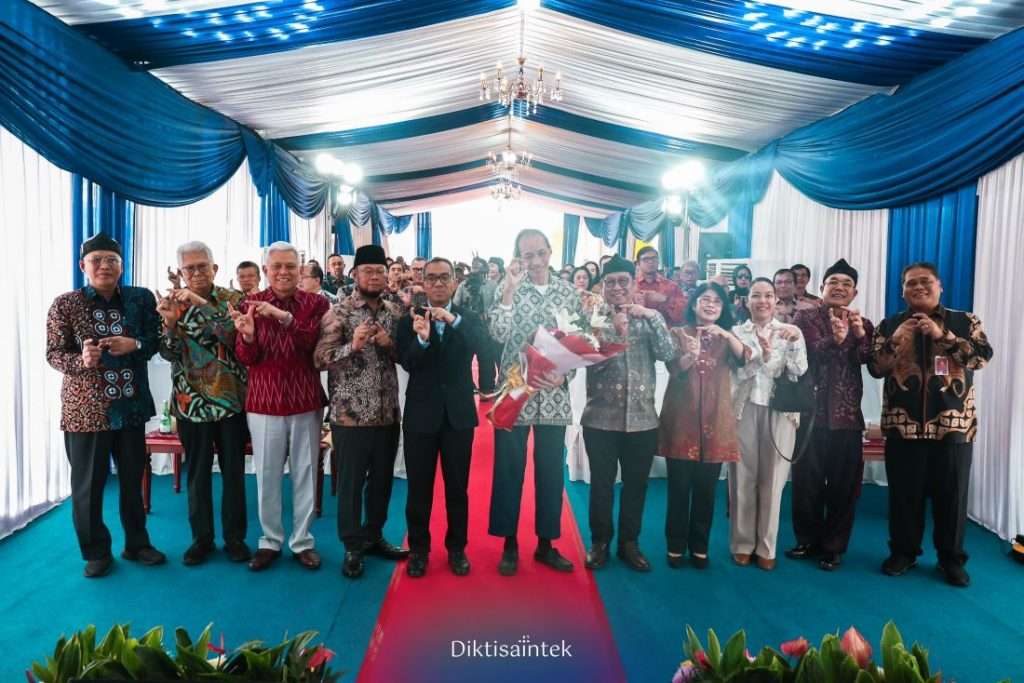
“With the inauguration of the Prof. Setijadi Building and UT Central Front Gate by the Minister of Higher Education, Science, and Technology, we hope the impact will be significantly felt across the educational sector,” said the Rector. He urged university leaders and all members of the academic community to maintain and optimize the use of these facilities: “Let these spaces foster creativity, professionalism, and real contributions to the nation,” said Dr. Yunus.
He also emphasized that the construction of the Prof. Setijadi Building and UT Central Front Gate reflects UT’s core values: open access, quality education, and broad impact. UT is not just building infrastructure—it is strengthening its identity, integrity, and strategic role as the pioneer of distance higher education in Indonesia and the region.
Through a blend of cutting-edge technology, modern governance, and sustainability principles, UT further solidifies its position as a leader in digital higher education in Indonesia. This inauguration marks a concrete step in advancing educational equity, strengthening human capital, and creating a lasting positive impact across the nation.