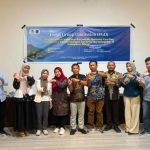

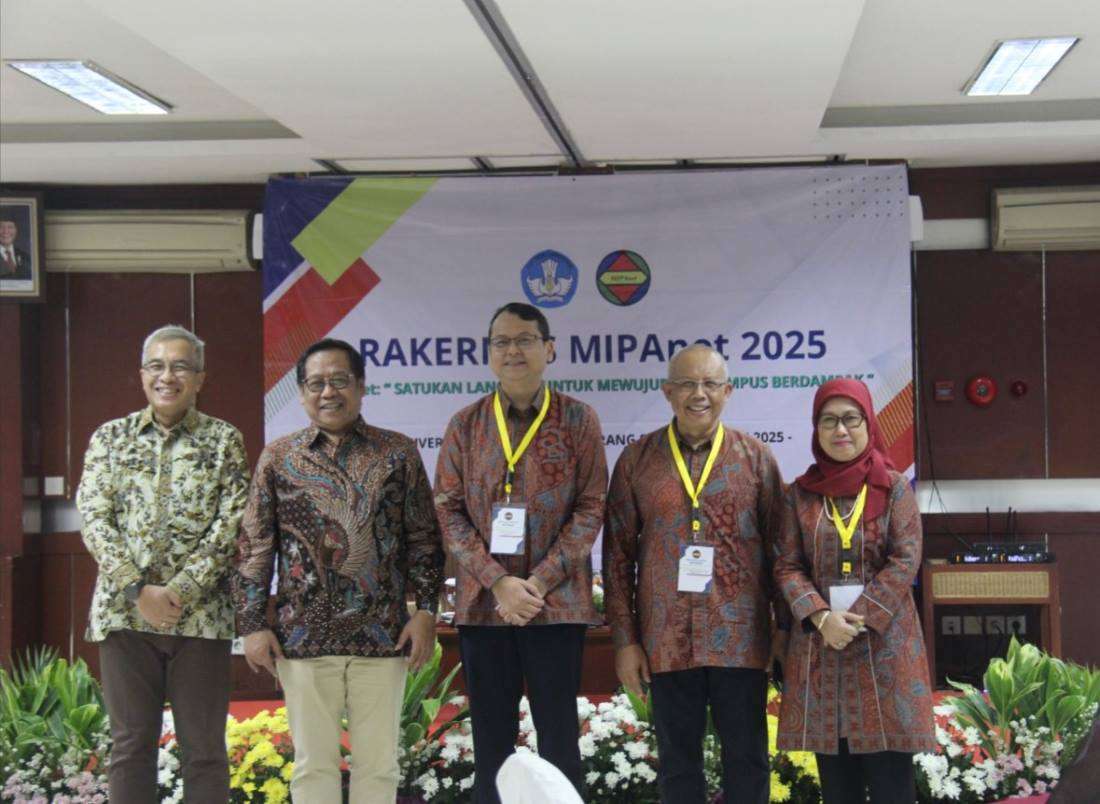
Tangerang Selatan, May 16, 2025 – The National Mathematics and Natural Sciences Network (MIPAnet) held its 2025 National Work Meeting (Rakernas) as an effort to strengthen national synergy, especially in the field of Science, Technology, Engineering, and Mathematics (STEM). This year’s Rakernas carried the theme “MIPAnet: Uniting Steps to Realize an Impactful Campus” and was held on Friday, May 16, 2025, at the Multipurpose Building, Universitas Terbuka (UT) Central Office, Pondok Cabe, South Tangerang.
STEM—Science, Technology, Engineering, and Mathematics—is a key pillar in driving national progress, especially in the era of the Industrial Revolution 4.0 and towards Society 5.0. However, despite its urgency, Indonesia still faces the challenge of low youth interest in MIPA fields. Therefore, this Rakernas serves as an important momentum to respond to various strategic issues in the development of MIPA education and research in the country.
The event was attended by notable speakers, including the Minister of Higher Education, Science, and Technology, Prof. Brian Yuliarto, Ph.D., who participated online; the Acting Director of Learning and Student Affairs (Belmawa) of the Ministry of Higher Education, Science, and Technology, Dr. Berry Juliandi, S.Si, M.Si.; the Rector of UT, Dr. Mohamad Yunus, S.S, M.A.; the Vice Rector for Academic Affairs at UT, Rahmat Budiman, S.S, M.Hum, Ph.D.; the Secretary-General of MIPAnet and Dean of FMIPA UGM, Prof. Dr. Eng. Kuwat Triyana, M.Si.; the Dean of FST UT and Chief Executive of the 2025 MIPAnet Rakernas, Dr. Subekti Nurmawati, M.Si.; as well as representatives from 53 universities across Indonesia affiliated with MIPAnet, consisting of leaders from FMIPA, FST, FSM, and the Faculty of Biology.
The MIPAnet network forum of Indonesia strives to enhance cooperation capacity and performance, focusing on various currently developing strategic issues, including:
- Strengthening cross-institutional research collaboration in basic sciences.
- Harmonizing STEM-based curricula that are adaptive to global challenges.
- The role of science in achieving the Sustainable Development Goals (SDGs).
- Increasing interest and regeneration of MIPA students through national collaborative programs.
- Quality assurance and strengthening of graduate learning outcomes (CPL) based on industry and community needs.
- And study program accreditation policies.
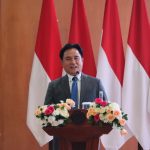
The series of events began with welcoming remarks from the Rector of UT, Dr. Mohamad Yunus, S.S., M.A. In his speech, he expressed his highest appreciation to all MIPAnet members for choosing UT as the venue for the 2025 MIPAnet Rakernas with the theme, “MIPAnet: Uniting Steps to Realize an Impactful Campus.” Mohamad Yunus also stated that Universitas Terbuka (UT) opens wide opportunities to establish partnerships with MIPAnet members in the implementation of the Tri Dharma of Higher Education.
“As a higher education institution that promotes an open and distance education system, UT has the advantage of reaching a wide audience, including those who have historically had limited access to higher education,” said Mohamad Yunus.
The event then continued with remarks from the Secretary-General of MIPAnet, Prof. Dr. Eng. Kuwat Triyana, M.Si. In his speech, Prof. Kuwat expressed appreciation to all parties participating in this MIPAnet Rakernas. According to him, the holding of this MIPAnet Rakernas will generate proposals and innovations that can increase public interest, especially in the MIPA fields. This, of course, requires synergy from various parties, especially the Ministry of Higher Education, Science, and Technology (Kemendiktisaintek).
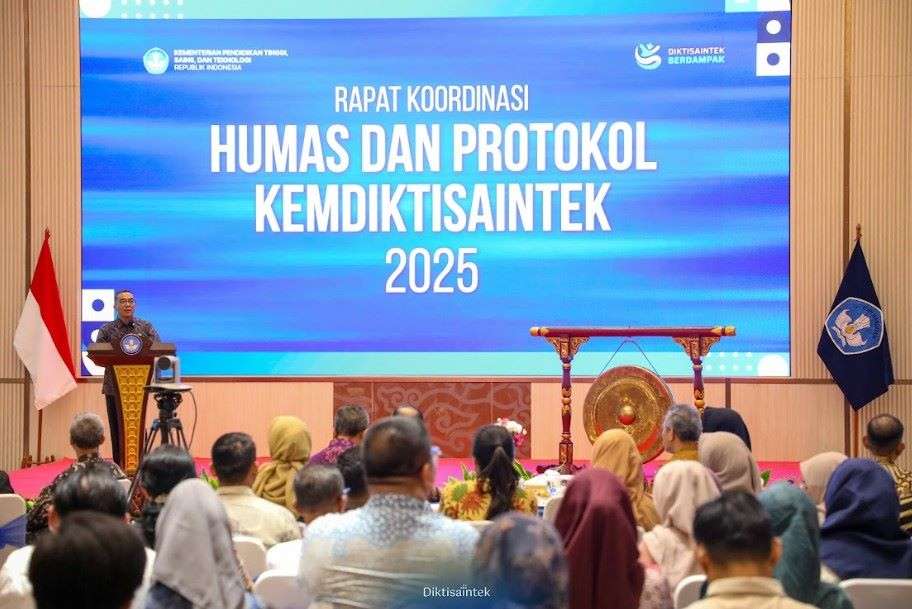
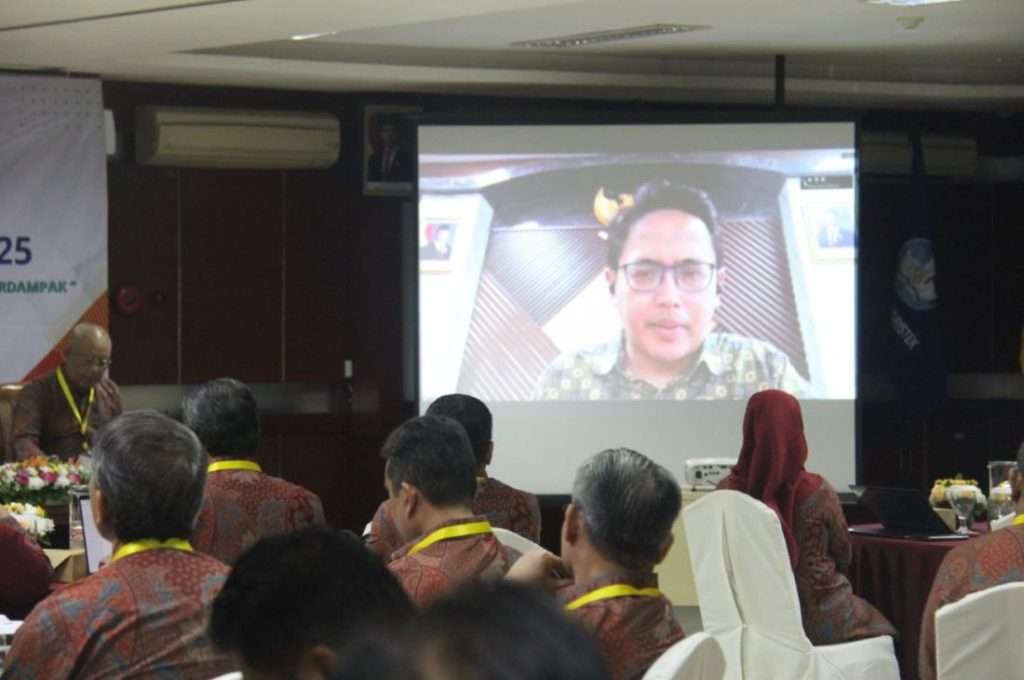
The event continued with remarks and directives from the Minister of Higher Education, Science, and Technology, Prof. Brian Yuliarto, Ph.D., represented online by the Director-General of Research and Development (Dirjen Risbang) of Kemendiktisaintek, Dr. Mohammad Fauzan Adziman ST, M.Eng. In his directives, he stated that the Ministry of Kemendiktisaintek officially launched the “Diktisaintek Berdampak” program on May 2, 2025, coinciding with National Education Day, as a strategic step to strengthen the contribution of higher education to national development. This program emphasizes the importance of transforming campuses into economic growth hubs and centers for strategic research and policy acceleration that directly address community needs. In the spirit of gotong royong (mutual cooperation), various initiatives such as Regional KIP Kuliah (Smart Indonesia Card for Higher Education), inter-institutional mentoring, and strengthening vocational education are carried out to address the challenges of equitable access and quality of higher education. “Diktisaintek Berdampak” also encourages research downstreaming, science communication, and fostering science and technology talent to prepare a superior generation towards Golden Indonesia 2045. He also emphasized that through a collaborative and impact-based approach, Kemendiktisaintek wants to ensure that higher education becomes a motor for sustainable social, economic, and environmental change.
The next agenda was a Sharing Session and Belmawa Policy Direction delivered by Dr. Berry Juliandi, S.Si., M.Si. as the Acting Director of Belmawa Kemendiktisaintek. In this session, Dr. Berry presented the policy direction of Belmawa and conducted a sharing session with the participants. This session was interactive, and several proposals and ideas related to higher education, especially concerning the MIPA fields, emerged.
The event then continued with the Sharing Program of the Independent Accreditation Agency for Natural Sciences and Formal Sciences (LAMSAMA) presented by Prof. Dr. Muktiningsih N. In her presentation, she outlined the policy direction and strategic programs to be implemented in the 2024–2029 period, including institutional strengthening, increasing accountability, and the internationalization of the accreditation system. LAMSAMA reaffirmed its commitment as an independent external quality assurance institution in ensuring that higher education standards in natural sciences and formal sciences align with national policies and international best practices. Through the launch of new accreditation instruments (IAPS 3.0), optimization of the SALAM 3.0 platform, and efforts to obtain ISG recognition from INQAAHE, LAMSAMA is further strengthening its strategic position to professionally and sustainably accredit more than 600 study programs while boosting the global competitiveness of Indonesian higher education. The event then proceeded with the reorganization and formation of the new MIPAnet board.
As a result of this Rakernas, several concrete action plans were agreed upon, including:
- Formation of a national MIPA research consortium for strategic issues.
- Launch of the “MIPA Masuk Desa” program for science-based community engagement.
- Acceleration of digital learning and training for MIPA lecturers across Indonesia.
The Rakernas also served as a platform for synergy among academics and stakeholders to formulate MIPA education policy directions in the context of sustainable development towards Golden Indonesia 2045.
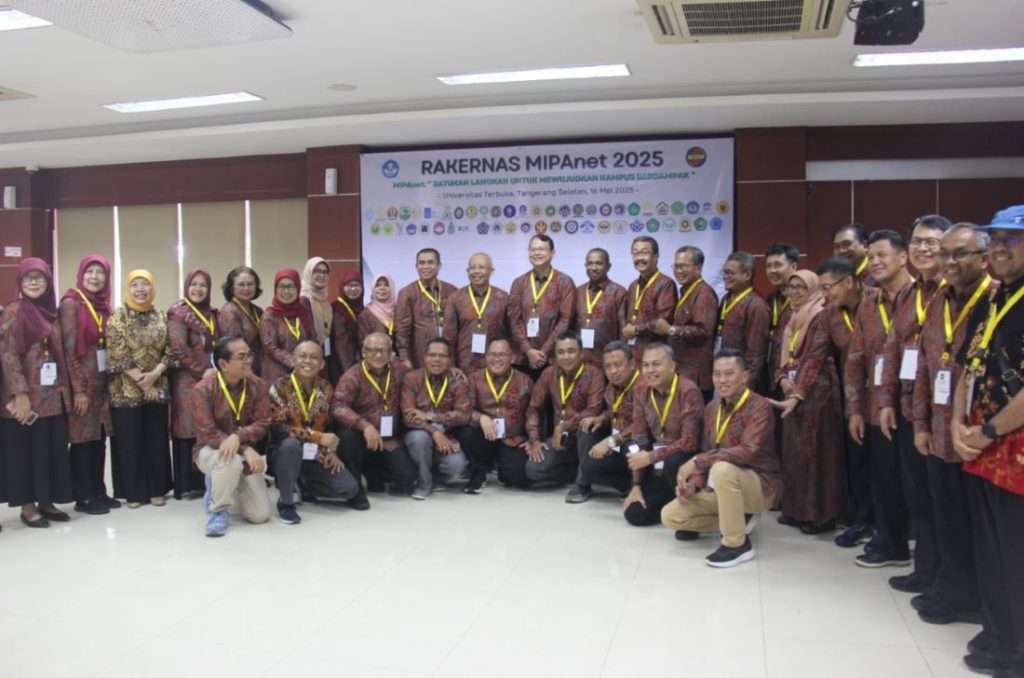
With the successful holding of this Rakernas, MIPAnet affirms its role as an active national network promoting the strengthening of basic sciences in facing future challenges. All participants are committed to making MIPA a primary force in building superior and innovative human resources in Indonesia.