
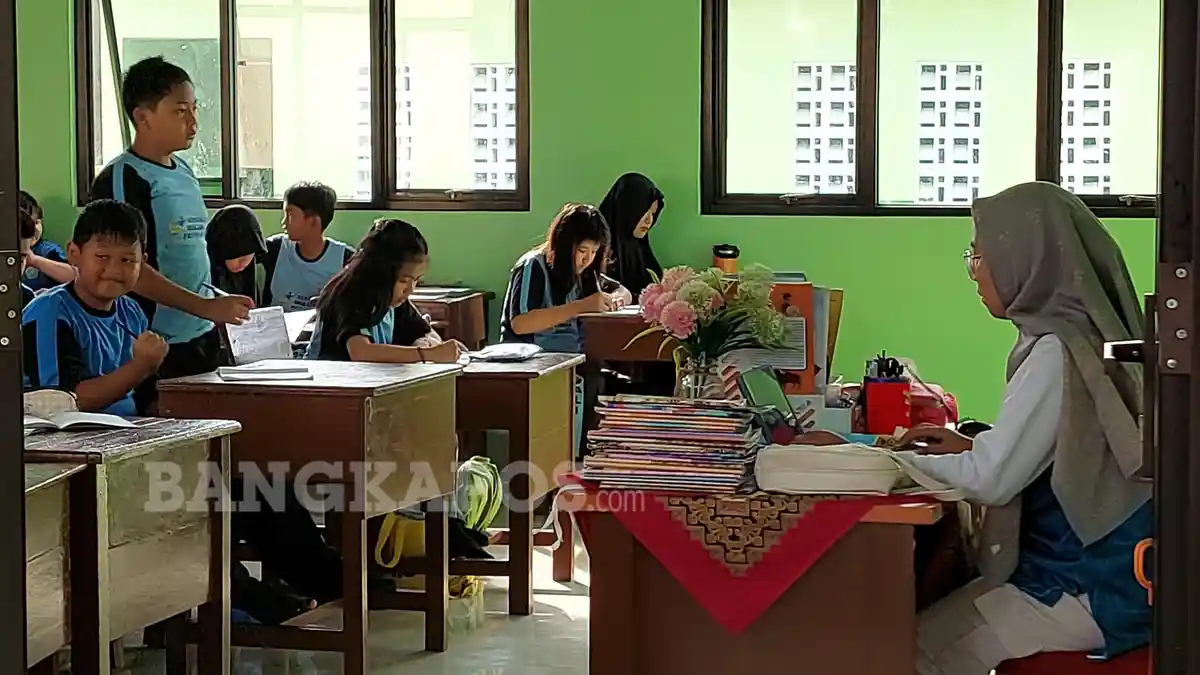
When a classroom must continue operating despite a shortage of teaching staff, the solution does not always have to wait for new teachers to arrive. In Bangka Selatan, students from Universitas Terbuka (UT) are being prepared to work directly with schools as teacher assistants, bringing the knowledge and learning experiences gained from university into the classroom.
The initiative is part of a collaboration between the Government of Kabupaten Bangka Selatan and UT to support schools that continue to face shortages of teaching personnel. Through an internship program, UT students will be placed at schools that need additional support, particularly those located near their homes.
For students, the opportunity is more than simply gaining additional experience. They can learn to respond to real classroom situations directly. Meanwhile, schools are expected to benefit from the presence of students who can support teaching and learning activities while the local government develops long-term solutions to address teacher shortages.
Head of the Kabupaten Bangka Selatan Education and Culture Office, Anshori, emphasized that students participating in the program will not replace teachers. Their role will be to assist teachers and share the knowledge they have gained during their studies at UT.
“They can gain experience while assisting schools that are short of teachers. But they are not replacements for teachers; they will only serve as interns or teacher assistants,” Anshori told Bangkapos.com on Saturday (1/8/2026).
From Collaboration to Real-World Experience
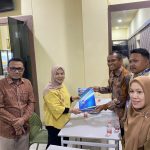
The initiative is now taking a more concrete form. After the Government of Kabupaten Bangka Selatan signed a memorandum of understanding with UT, the collaboration continued between the Education and Culture Office and UT’s Faculty of Teacher Training and Education (FKIP).
Through the discussions, UT introduced its Peluru Program, which enables students to gain direct field experience through learning activities in schools. Interestingly, students who meet the requirements may have their internship experience converted into academic course credits.
The scheme is expected to apply to students in their fifth or sixth semester, subject to UT regulations. Students in other semesters may also participate in the internship program, although their participation will not be eligible for course-credit conversion.
This means student learning does not take place solely through university coursework. Knowledge acquired during their studies can be applied in school environments while providing practical experience that enriches their learning process.
An Opportunity That Remains Voluntary
Although the program provides students with an opportunity to get involved, participation is not mandatory. The Bangka Selatan Education and Culture Office will first communicate with students and their parents to confirm their willingness to participate.
“We will communicate with the students and their parents to find out whether they are willing to help us, given that we are currently experiencing a shortage of teaching personnel,” Anshori explained.
Based on coordination with UT, approximately 15 students are expected to meet the requirements for the internship program with course-credit conversion. Other students may still participate in internships according to university regulations, but without receiving academic credit conversion.
At this point, the collaboration is not only about addressing schools’ needs. It also demonstrates how flexible access to higher education can create opportunities for students to learn while contributing to their surrounding communities.
The initiative is aligned with Sustainable Development Goal (SDG) 4 on Quality Education, particularly in promoting inclusive and quality education. The collaboration between the local government and higher education institutions also reflects SDG 17 on Partnerships for the Goals.
Internships Are Only a Temporary Solution
Despite its potential benefits, the student internship program is not a permanent solution to Bangka Selatan’s teacher shortage. The local government continues to prepare long-term measures through coordination with the Regional Personnel and Human Resources Development Agency (BKPSDMD) regarding plans for civil servant recruitment.
Such measures are important because teacher needs continue to change as more educators reach retirement age. This year alone, around 50 teachers in Bangka Selatan are expected to retire.
At the same time, the demand for classroom teachers, particularly at the elementary school level, remains relatively high. The shortage of classroom teachers is estimated at around 30 people.
“Actually, we have quite a significant shortage of classroom teachers. Around 50 teachers are expected to retire this year, while the shortage of classroom teachers at the elementary school level is estimated at around 30,” Anshori concluded.
Therefore, the collaboration between the Government of Kabupaten Bangka Selatan and UT is expected to serve as a bridge for maintaining the continuity of learning while teacher recruitment is carried out gradually. At the same time, students gain valuable opportunities to learn from real-world situations.
Ultimately, the collaboration demonstrates that higher education does not end in the lecture hall. When students are given opportunities to learn directly in schools, they not only gain professional experience but also contribute to sustaining teaching and learning activities amid shortages of teaching personnel.
Through its flexible learning model, UT continues to expand access to higher education while encouraging students to create a meaningful impact in their communities.