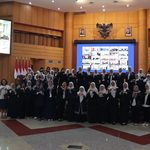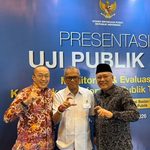

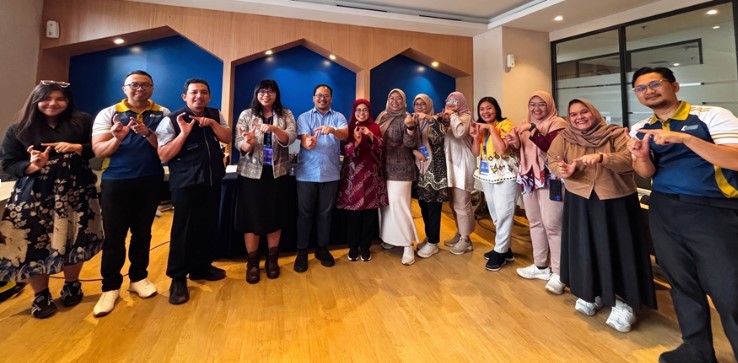
TANGERANG SELATAN, August 25, 2026 — Twelve students from various higher education institutions brought their best ideas to the final round of the 2026 National Disporseni Student Scientific Writing Competition (Lomba Karya Tulis Ilmiah Mahasiswa – LKTIM) organized by Universitas Terbuka (UT). More than simply competing for the championship title, they were challenged to demonstrate how student scientific work can contribute to finding solutions to various global crises.
The LKTIM final round was held online over two days, August 19–20, 2026. All finalists’ presentations were broadcast live through the Universitas Terbuka TV (UT TV) channel, allowing the exchange of ideas to be viewed by a wider audience.
Under the theme “Intellectual Creativity and Academic Sportsmanship in Responding to Global Crises to Strengthen National Resilience and Achievement,” the competition brought together the 12 best scientific papers that had passed the selection process. The finalists were not only required to identify problems but also to develop innovative solutions supported by strong arguments and research methodologies.
Following the presentation and question-and-answer sessions, the competition produced four top teams. Nanda Riswana and Dhisyah Tsabitah from UT Bogor won First Place. Second Place was awarded to Ihsan Nurjamil and Teguh Putra Prayoga from UT Bandung, followed by Sakira Kusuma Ayu Maharani and Kharisma Juwita Putri from UT Malang in Third Place. Meanwhile, Abdul Aziz and Muhammad Mahfuzh Habibi from Sultan Agung Tirtayasa University received an Honorable Mention.
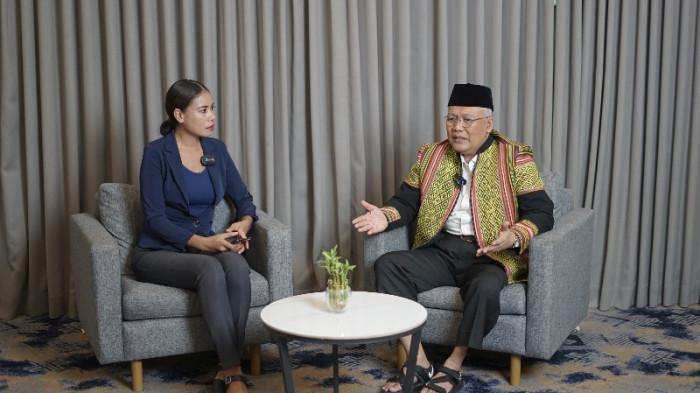
To ensure the quality of the participants’ work and arguments, the final round was evaluated by two academics from different institutions: Prof. Dr. Istianingsih Sastrodiharjo, S.E., S.H., M.S.Ak, Ak., CA. from Bhayangkara University and Prof. Dr. Ernik Yuliana, S.Pi., M.T. from Universitas Terbuka.
Istianingsih said the finalists demonstrated strong intellectual sensitivity. According to her, the participants were able to examine global crisis issues critically while offering concrete solutions through sharp and well-structured research methodologies. Such abilities, she noted, provide an important foundation for producing studies with broader impact.
Ernik shared a similar assessment. She said the participants’ enthusiasm for research was reflected in the question-and-answer sessions, where they defended their arguments in a sporting, sharp, and data-based manner. She also hoped that the work produced would not end with the competition but could continue to be developed to benefit society.
This expectation reflects the direction that LKTIM seeks to establish. More than a competition to determine winners, the event serves as a learning platform for students to sharpen their critical thinking, develop research, and academically defend their ideas.
This spirit aligns with SDG 4 on Quality Education, particularly in promoting the development of competencies, creativity, and critical-thinking skills among young people. At the same time, the encouragement to produce research-based solutions supports SDG 9 on Industry, Innovation, and Infrastructure.
Through the 2026 National Disporseni UT LKTIM, students’ ideas were given space to be tested, debated, and academically defended. Achievement was therefore measured not only by who became the winner, but also by how far the knowledge generated through the competition could develop into ideas that benefit society.
When creativity meets research and sportsmanship, competition becomes more than simply winning or losing. It becomes a means of preparing a generation capable of understanding complex issues and contributing solutions. This spirit is reflected in the slogan of Disporseni 2026: “Sportsmanship and Creativity for National Achievement.”