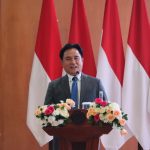

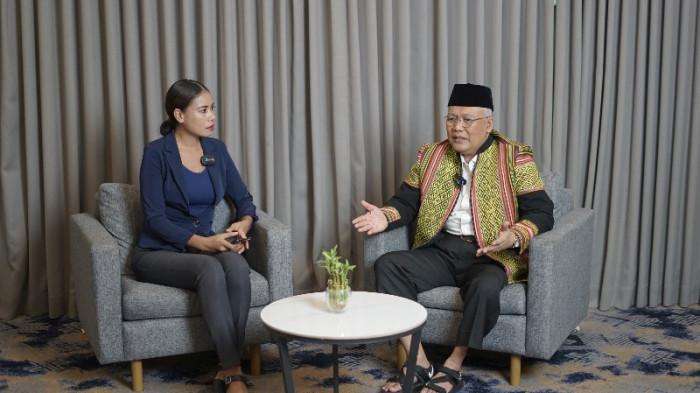
Universitas Terbuka (UT) is steadily moving towards the global education stage. With continuous innovation, this pioneer of distance education is using technology as a main gateway to bring the future into the present. The Rector of UT, Prof. Dr. Ali Muktiyanto, S.E., M.Si., in an exclusive interview with Pos Kupang on Monday, September 22, 2025, affirmed that UT not only provides opportunities for people to attend university but is also preparing an inclusive and global digital learning ecosystem.
Since its establishment on September 4, 1984, UT has been the answer to the limited capacity of state universities in Indonesia. Starting from a correspondence system with simple printed modules, UT has now transformed into a modern university with digital-based services. At 41 years old, UT manages more than 50 study programs that are relevant to the needs of the times while supporting the aspirations of Golden Indonesia 2045.
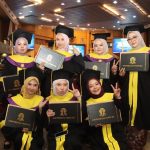
UT’s journey is not just about the number of students, but about how widely educational access can be reached. Currently, UT has more than 760,000 active students, while the number of alumni has reached 2.5 million people. This scale makes UT one of the universities with the largest population in the world.
UT also has a capable learning management system, where students can study from anywhere with the same quality standards. “The quality culture at UT is ingrained, and I can assure you that the quality of our students in the Far East and the West is the same,” said Prof. Ali.
In addition, UT tutorials are now available both offline and online, exams can be done with an automatic online proctoring system, while interactive digital teaching materials complement a more flexible distance learning experience.
At the global level, UT is not only recognized but also trusted. The university regularly obtains certification from the International Council for Distance Education (ICDE) and has become the first distance university in Asia to achieve accreditation from the association of open and distance learning universities. Now, UT is even trusted to lead the association as its presidency and secretariat.
UT’s reach also extends across countries. Currently, UT students are spread across 56 countries, the majority of whom are Indonesian diaspora and migrant workers who are still hungry for knowledge. In fact, UT has started to open up to foreign students, such as in Timor-Leste through UT Kupang, which has accepted around 100 new students. International cooperation has also been expanded to Asia, Europe, and ASEAN countries with a focus on teaching, research, and community service. This strategic step is also part of UT’s commitment to supporting the sustainable development goals, especially Quality Education (SDG 4) and Reduced Inequalities (SDG 10), by providing inclusive and flexible access to higher education through digital technology. UT opens up learning opportunities for people who have been constrained by distance, time, and economic conditions.
Furthermore, UT is preparing for increasingly personalized learning. It is no longer students who come to the campus, but the campus that comes into the lives of students—even, as Prof. Ali puts it, “into the depths of their hearts.” With an unrelenting spirit of innovation, UT continues to prove itself as a university that is open to all, breaking down the barriers of space, time, and distance.