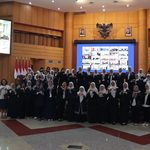

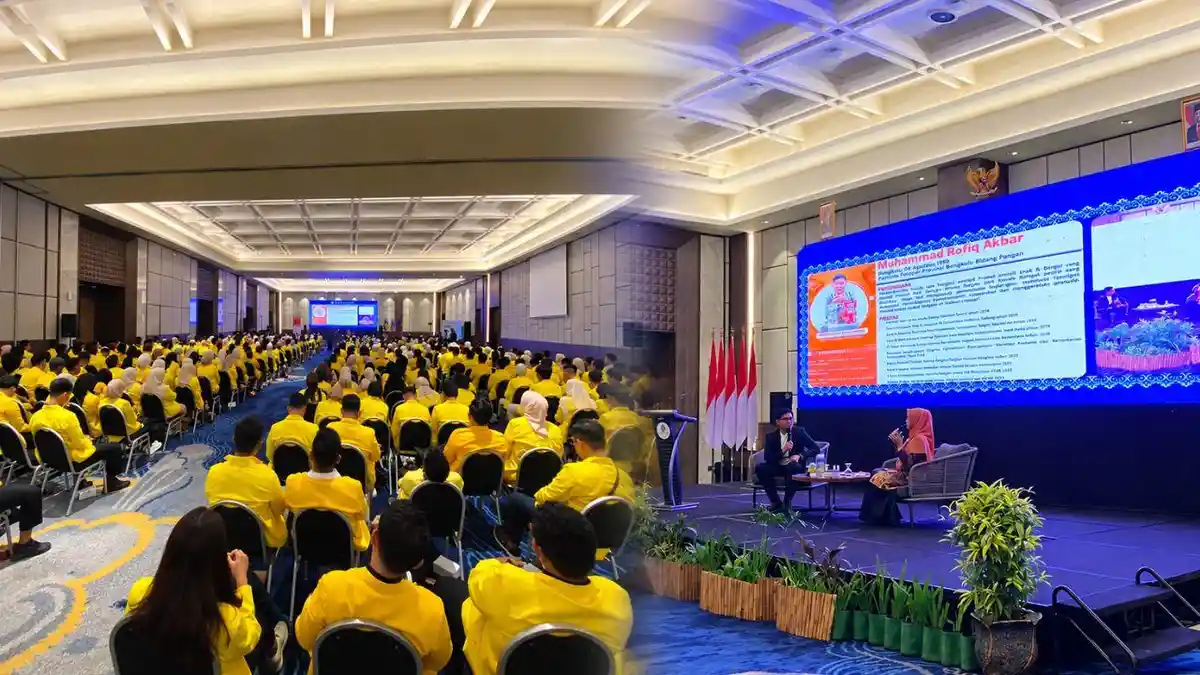
BENGKULU – A total of 586 students of Universitas Terbuka (UT) Bengkulu attended an Academic Seminar at Hotel Mercure in Kota Bengkulu on Saturday (September 19, 2026). Ahead of graduation, they received guidance to carry more than just a degree with them: integrity, adaptability, and a spirit of producing work that benefits society.
The seminar was part of a series of activities leading up to the UT Bengkulu graduation ceremony on Sunday (September 20, 2026). This year, the seminar carried the theme “Creating a Generation with Integrity, Inspiring Others, and Making an Impact.”
Director of UT Bengkulu Anton Robiansyah said graduation marks the completion of one stage of education, not the end of the learning process. According to him, a diploma demonstrates that students have gained the foundation needed to face the next stage of life.
“A diploma is not a reason to stop learning, but proof that you are ready to enter a greater stage of life,” Anton said.
Therefore, Anton encouraged the audience to view the future not only from the perspective of employment. After completing their education, they need to determine what kind of person they want to become and what benefits they can provide to others.
“After graduation, don’t just ask, where will I work? Also ask, who do I want to become and what can I give to others?” he said.
Anton continued that these questions are closely related to integrity. For graduates who are already working as well as those who are about to enter the workforce, education needs to be translated into attitudes and responsibility in carrying out their roles.
This applies to graduates working as teachers, civil servants, private-sector employees, and business owners. Anton reminded them not to perform their jobs merely to fulfill their obligations.
“Don’t just work to get things done; complete your work with quality,” he said.
In addition to integrity, the ability to adapt and the courage to face challenges are also necessary. Anton said inspiration does not always come from someone with a prominent position or major achievements. The courage to start something, face difficulties, and rise from failure can also inspire others.
This also serves as valuable preparation for students who wish to pursue entrepreneurship. During the seminar, the owner of Kerupuk Tuiri, M Rofiq Akbar, shared his experience of building a business.
Anton said building a business requires readiness to deal with various challenges, ranging from capital and business management to maintaining the sustainability of the business.
“Because the business or entrepreneurship sector is not as easy as we imagine. We face many challenges, and we need to know how to manage all of them so that they can lead us to success,” he said.
On the other hand, Anton considered networking skills important in both career development and life. He encouraged the audience to broaden their social circles and maintain good relationships with those around them.
“Networking with people is very important because our opportunities do not come from just one person; they can come from many people,” he said.
Behind these academic achievements, Anton also reminded the audience not to forget their families and the people who have supported them throughout their journey. The prayers, struggles, sacrifices, and trust of those closest to them have been part of the process that brought them to graduation.
He hopes that UT Bengkulu graduates will use the knowledge and experience they have gained to produce meaningful work and benefit society.
“Don’t just become graduates who have finished college. Become graduates who, after college, are able to create meaningful work, make an impact, and leave a legacy of goodness,” he said.
One day before putting on their graduation gowns, the 586 UT Bengkulu the prospective graduates carried an important message for their journey beyond campus: graduation is not merely about adding a degree after one’s name. Knowledge needs to be translated into quality work, integrity, achievements, and benefits for others. “Don’t just become graduates who have finished college. Become graduates who, after college, are able to create meaningful work, make an impact, and leave a legacy of goodness,” Anton emphasized.
This spirit is in line with SDG 4 on Quality Education and SDG 8 on Decent Work and Economic Growth, particularly through strengthening lifelong learning, readiness to enter the workforce, and entrepreneurship.