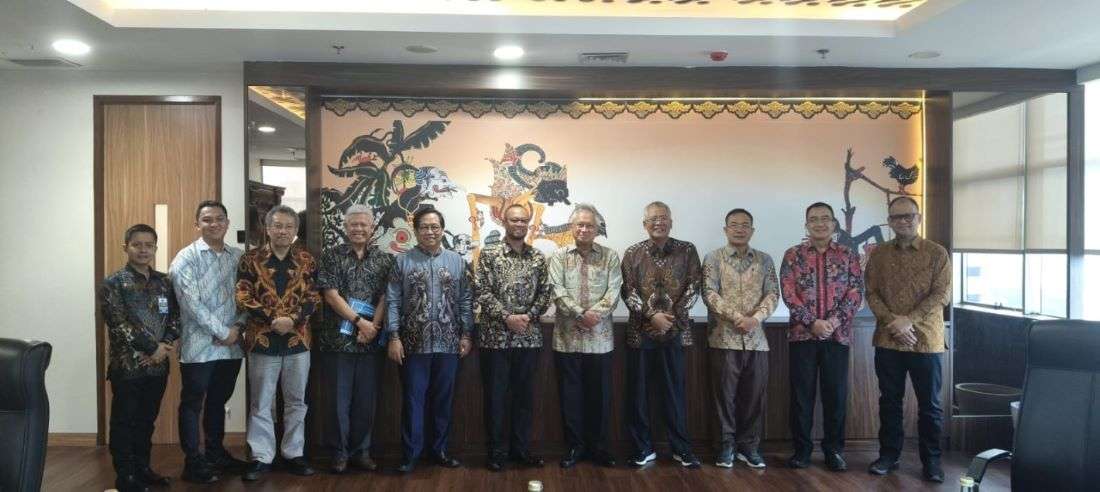

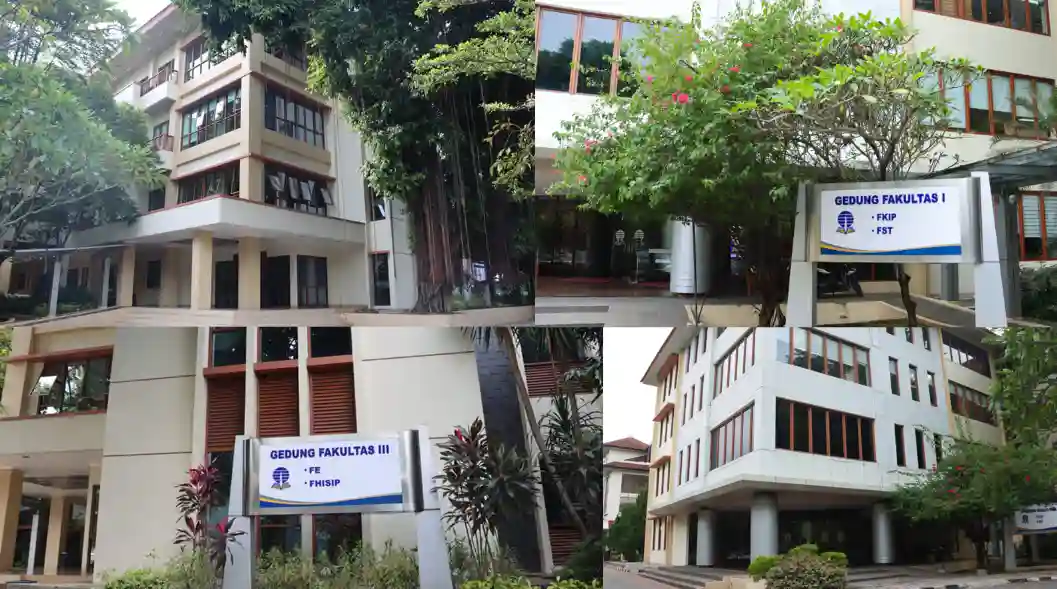
In line with Universitas Terbuka (UT) transformation into a Legal Entity State University (PTNBH/Perguruan Tinggi Negeri Berbadan Hukum), UT remains committed to enhancing the quality and capacity of its educational services. With wider autonomy after obtaining PTNBH status, UT has increased flexibility in regulations covering academic, non-academic, and financial management aspects. This makes UT more adaptable, agile, and relevant to the challenges and needs of society and industry.
In the middle of dynamic changes in technology and taxation, UT responds to these needs and challenges with concrete innovative steps. Remarkably, UT has introduced two new flagship study programs: the Bachelor’s Program in Taxation (Prodi S1 Perpajakan) and the Bachelor’s Program in Data Science (Prodi S1 Sains Data).
The Bachelor’s Program in Taxation at the Faculty of Law, Social and Political Sciences (FHISIP) was launched on February 6, 2024, and the Bachelor’s Program in Data Science at the Faculty of Science and Technology (FST) was launched on February 21, 2024. The launches were based on the decree of UT Rector Number 751/2024 for the Taxation Program and UT Rector’s Decree Number 1086/2024 dated February 19, 2024, for the Data Science Program. Detailed information about the two new study programs is as follows:
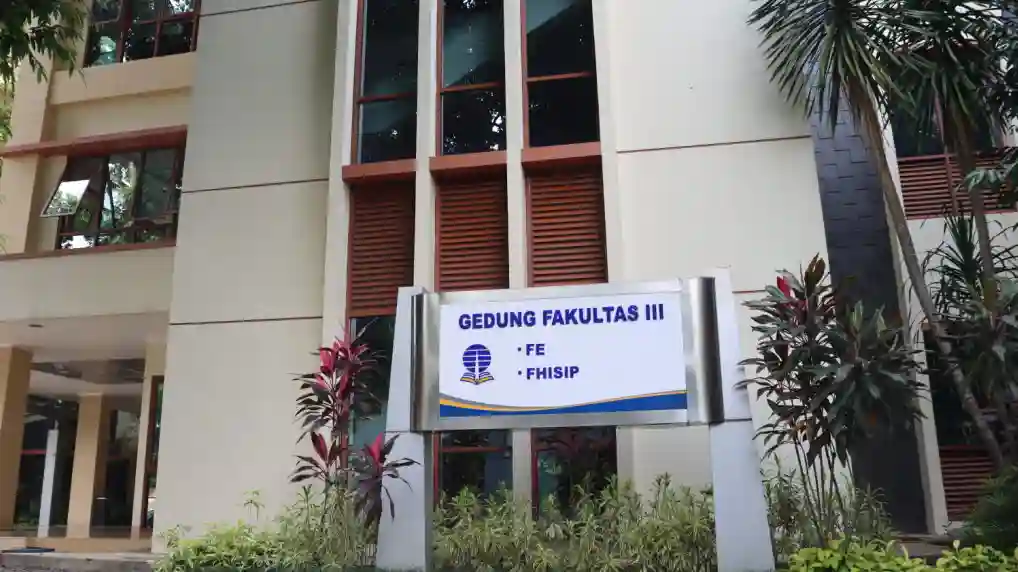
Bachelor’s Program in Taxation
The Bachelor’s Program in Taxation started admitting students on February 6, 2024, and is offered throughout Regional UT with Sistem Paket Semester (SIPAS) service scheme while Non-SIPAS service scheme will be offered starting the Odd Semester of the Academic Year 2025/2026.
The program aims to produce professional tax graduates in digitalized tax systems and tax policies. Graduates are expected to play roles such as tax analysts, tax consultants, tax specialists, tax educators, and tax administrators.
The Learning Outcomes of the Taxation Program, based on the reference source Permendikbud Number 3/2020 concerning the National Standards for Higher Education (SNDIKTI/Standar Nasional Pendidikan Tinggi), include specific skills in the following areas:
Applying taxation systems and procedures according to the applicable regulations.
Planning and analyzing the finances of individuals or entities to optimize tax structures and prevent unnecessary tax risks in accordance with applicable regulations.
Communicating effectively and having ethics in providing comprehensive tax education to the public about taxation.
Problem-solving in taxation in public organizations, companies (business entity), services, trade, and/or large-scale and/or publicly traded organizations.
Conducting examinations and solving problems based on generally applicable regulations/standards in taxation.
Examining, analyzing, and evaluating existing tax policies.
Analyzing and providing advice to agencies on tax planning in line with financial goals.
Conducting tax inclusion by analyzing tax phenomenon expressed in writing using appropriate methods.
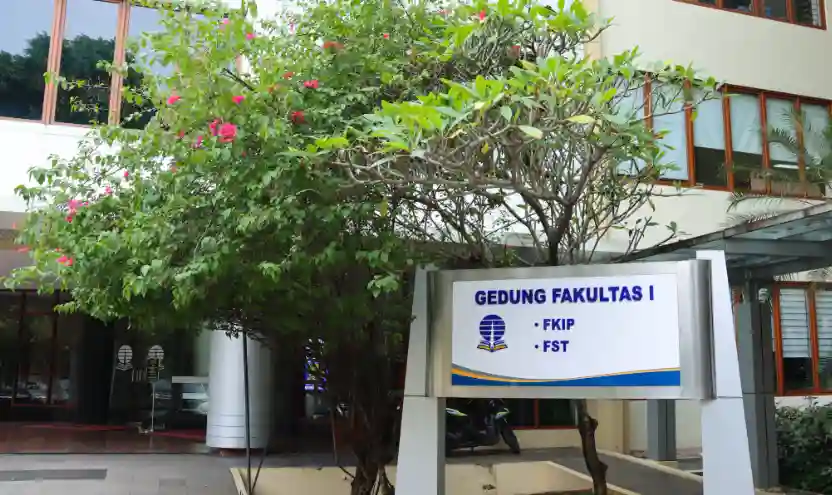
Bachelor’s Program in Data Science
Offered in 7 Regional UT with SIPAS Non-Face-to-Face Tutorial (TTM) service scheme, namely in UT Denpasar, UT Mataram, UT Palembang, UT Jakarta, UT Bogor, UT Serang, and UT Bandung.
Data Science Program aims to produce graduates who are professionals in various fields of work such as Data Engineer, Data Scientist, Data Analyst, Business Intelligence Analyst, and Functional Data and Information Analyst in various sectors such as business, industry, environment, education, and social, both in the government and private sectors.
The curriculum of Data Science program is developed with the target competencies of graduates referring to the National Work Competency Standards in the field of data processing and standard competencies in the scientific data analyst functional position. Graduates of this program are expected to have general knowledge and skills in:
Knowledge Aspects
Mastering the basic concepts of Mathematics, Statistics, and Computer Science in general.
Mastering the basic data science concepts in Business, Economics, Environment, and Social Humanities.
General Skill Aspects
Able to apply logical, critical, systematic, and innovative thinking in the development of science and technology in accordance with their expertise independently, with quality, measurable, and responsible for the achievement of work results in their fields.
Able to make accurate decisions in the context of solving problems in their field of expertise, based on the results of independent or group analysis of information and data; and able to compile and communicate the results of scientific study in the form of scientific work reports and upload them to the college website.
Specific Skill Aspects
Able to organize data, preprocess data, and transform data in the fields of Business, Economics, Environment, and Social Humanities.
Able to perform data processing, analyze data, explore, and describe data.
Able to perform data analysis automation, visualization, and interpretation of the results of data analysis in the fields of Business, Economics, Environment, and Social Humanities, and able to communicate in an easily understandable form both in writing and orally.
Able to analyze various alternative solutions available in data science to solve problems and present analysis conclusions for accurate decision-making.
Further information regarding the two programs can be inquired through Hallo UT on 1500024 or hallo-ut.ut.ac.id.
With the launch of these two latest programs, UT proves to be increasingly real and at the forefront of expanding higher education reach to the community. This aligns with the Indonesian government mandate to open access to quality higher education for all segments of society.
As a pioneer in Open and Distance Learning Higher Education, UT will continue to provide competent higher education services based on information technology, aiming to be globally competitive, especially in the fields of Data Science and Taxation. To facilitate the learning process, both programs will follow up with concrete actions through collaboration and resource sharing with various stakeholders, working together to make UT a provider of quality, affordable, flexible, and global distance education.