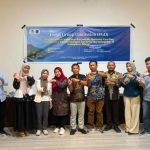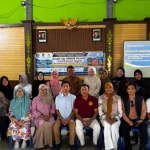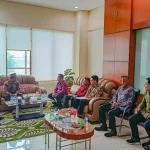

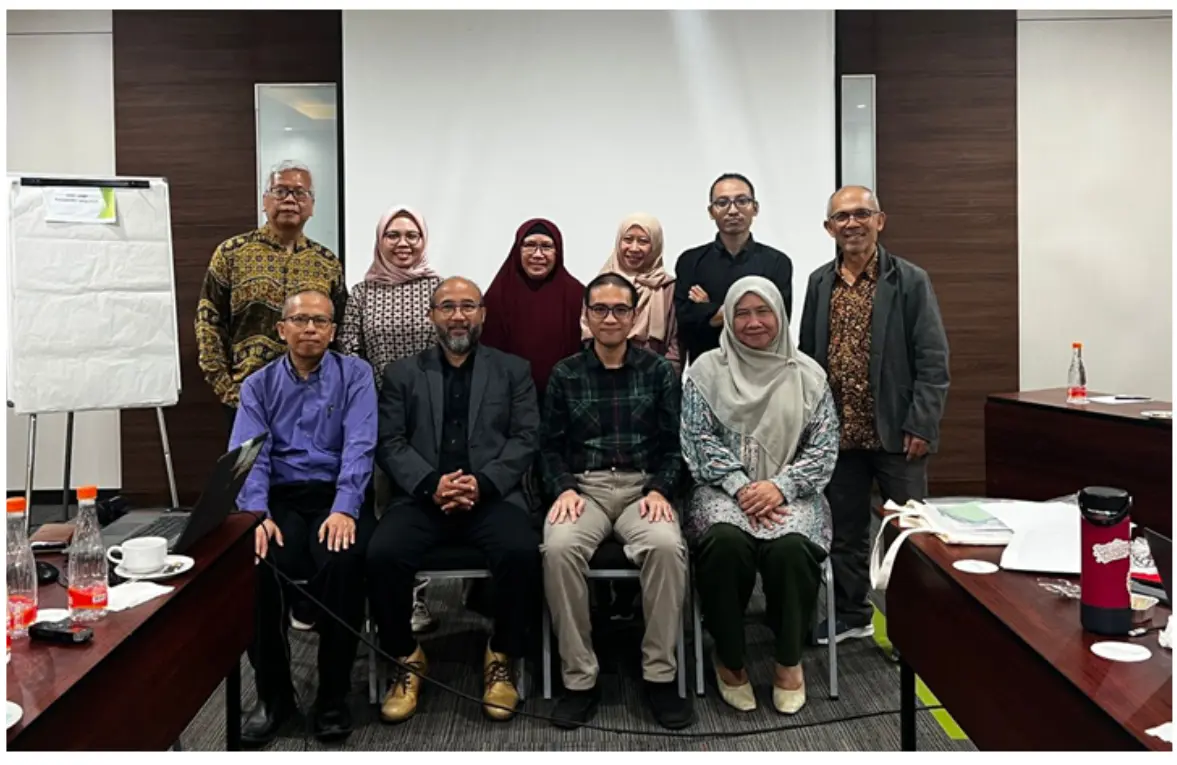
Tangerang Selatan — Universitas Terbuka (UT) has once again affirmed its position as a university always at the forefront of delivering quality education. This was demonstrated through a Focus Group Discussion (FGD) titled “Development of a Digital Translation Laboratory,” held at the UT Central office in Pondok Cabe. The event brought together academics and translation practitioners to jointly formulate an innovative laboratory design that will strengthen the English Literature Study Program.
This move is not limited to academic facility development but is also UT’s strategy to prepare graduates who are relevant to industry needs. Students are expected to master both theory and practical skills using digital tools that have become the global standard in the field of translation.
The FGD featured several key figures, including the Chairman of the Indonesian Translators Association (HPI), Dr. Indra Listyo; Lecturer at Universitas Indonesia, Dr. Doni Jaya; and practitioner and translation bureau owner, Uki Ukanto. All three provided valuable input regarding the role of a digital laboratory as a collaborative space connecting theory, practice, and technology.
In his presentation, Dr. Indra Listyo reminded the audience that professional translators need more than just language skills. “The competence of successful translators does not only depend on linguistic ability but also on extralinguistic skills,” he said. He stressed that mastering technology such as CAT tools and Artificial Intelligence (AI) is crucial, but it must be balanced with professional ethics and project management.
Meanwhile, Dr. Doni Jaya suggested that the digital laboratory could be designed not only to train cognitive aspects but also social skills that are critical in the professional world. “The ability to find clients, negotiate prices, and project management can be learned through simulations in the laboratory,” he revealed.
Echoing this, Uki Ukanto asserted that although translation technology continues to develop, the human role remains vital as the quality controller. According to him, modern translators must master machine translation and CAT tools, as well as possess interpersonal skills and the ability to manage a business.
The discussion involving UT lecturers was dynamic. Various proposals emerged, ranging from the development of cloud-based modules, the creation of interactive glossaries, to the integration of the laboratory into the online curriculum. Furthermore, an idea was raised for students to work on real translation projects through collaboration with industry. All participants agreed that the digital translation laboratory must become a space for innovation that is adaptive to future needs.
The FGD concluded with a commitment to drafting the curriculum, learning modules, and a laboratory prototype. The target is for the laboratory trial to be conducted starting from the next academic year.
This initiative further emphasizes UT’s role as a pioneer of distance education in Indonesia that constantly adapts to the times. The presence of the digital translation laboratory is not just an investment for the English Literature Study Program but also UT’s real contribution to sustainable development.
In line with the Sustainable Development Goals (SDGs), this program supports SDG 4 (Quality Education) by ensuring inclusive and relevant educational access, and SDG 9 (Innovation and Infrastructure) through the development of sustainable digital facilities. Thus, UT not only produces reliable translators but also encourages the creation of human resources capable of competing at the global level.