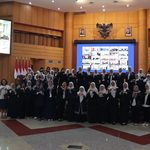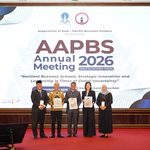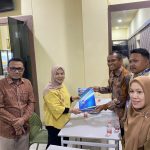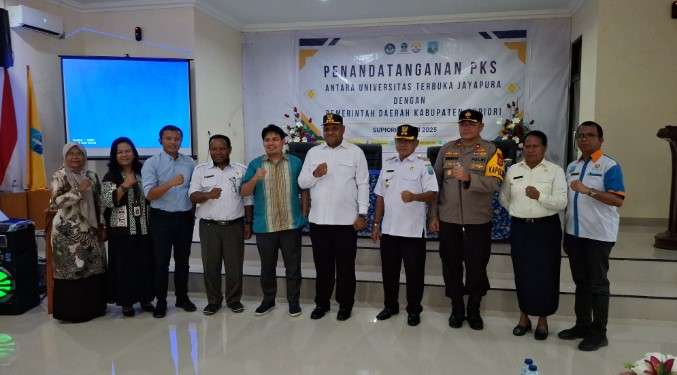

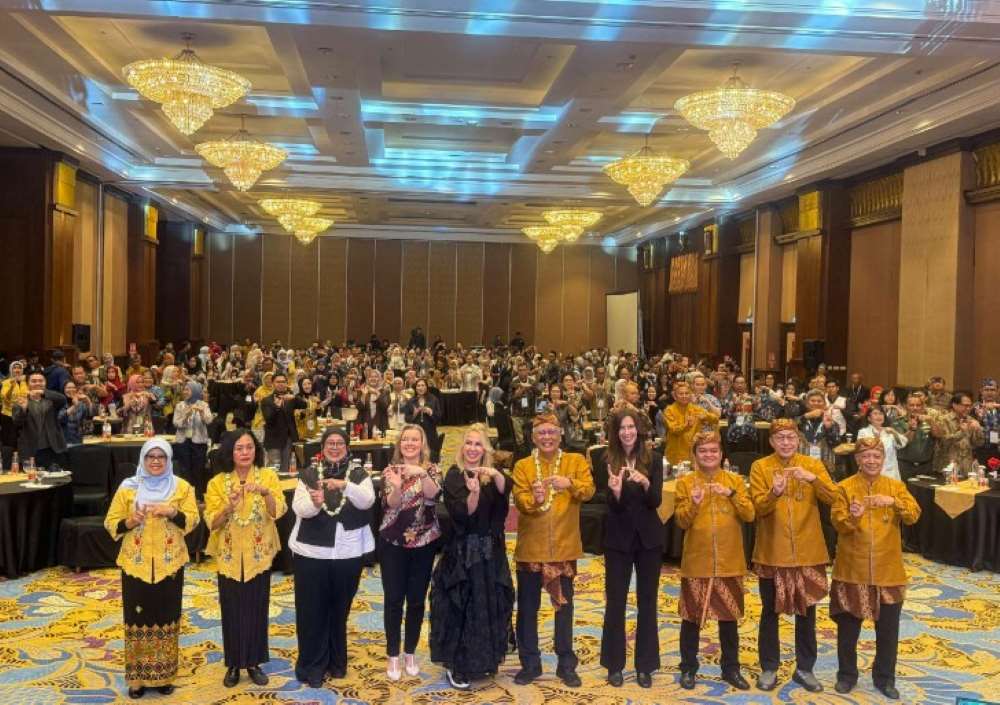
ANDUNG — The future of education cannot rely solely on increasingly advanced technology. More importantly, the challenge is how technology can create meaningful learning experiences, address the needs of new generations, and expand educational opportunities for more people. This idea brought together 106 presenters from 17 countries at The 6th International Conference on Innovation in Open and Distance Learning (INNODEL 2026), organized by Universitas Terbuka (UT) through its Institute for Research and Community Service (Lembaga Penelitian dan Pengabdian kepada Masyarakat – LPPM) on November 4–5, 2026, in Bandung, Jawa Barat. Carrying the theme “HEBRING: High Impact Experiential Learning for Bringing Innovation into New Generations,” this international conference served as a platform for exchanging research findings, ideas, and learning innovations to address the challenges of open and distance education in the era of digital transformation.
The spirit of addressing these challenges was evident from the opening of the conference, officially inaugurated by UT Rector Prof. Dr. Ali Muktiyanto, S.E., M.Si. Approximately 200 participants from various educational institutions, research organizations, the Indonesian Association of Distance Education Professionals (Asosiasi Profesi Pendidikan Jarak Jauh Indonesia – APPJJI), and the business sector attended the event. They represented 17 countries, including Indonesia, Pakistan, Sri Lanka, Taiwan, Thailand, Brazil, Trinidad and Tobago, Malaysia, South Korea, Hong Kong, Japan, Mauritius, the United States, Türkiye, Finland, Palestine, and Australia. This diversity of backgrounds offered more than just an exchange of knowledge, it created opportunities to learn from educational experiences and practices in different parts of the world. This cross-border collaboration also reflects the spirit of SDG 17 on Partnerships for the Goals.
One of the key issues discussed at the meeting was how technological developments can be used to bring learning processes closer to students’ needs. In the main session, Prof. Helen Crompton from Old Dominion University, United States, served as the keynote speaker, sharing perspectives on the use of digital technology in learning innovation and transformation. Developments in artificial intelligence (AI), the emergence of AI tutors, and virtual learning environments based on the metaverse are opening opportunities for the education sector to deliver more interactive and personalized learning experiences.
These ideas were further explored through a panel discussion featuring academics from various countries. They included Prof. Dr. Meltem Huri Baturay from Konya Food & Agriculture University, Türkiye, Dr. Hanna Davis from Tampere University of Applied Sciences, Finland, Prof. Cher Ping Lim from The Education University of Hong Kong, and Prof. Daryono, S.H., M.A., Ph.D. from UT. Participants also had the opportunity to explore the use of technology in greater depth through workshops led by Andre Surya, an Indonesian AI Visual Expert, and Dr. Syahrul Ramadhan, M.Pd. from the National Research and Innovation Agency (Badan Riset dan Inovasi Nasional – BRIN). The presence of these speakers enriched the discussions while bringing together academic perspectives and practical experience in developing contemporary learning approaches.
Although technology was one of the main highlights, INNODEL 2026 conveyed the message that educational innovation goes beyond the use of digital devices. Equally important is how students can experience the learning process firsthand, explore knowledge, and apply it to solve real-world problems. This is the essence of experiential learning, which was the conference’s primary focus. Through this approach, students are encouraged to develop 21st-century skills, ranging from critical thinking, creativity, collaboration, communication, and problem-solving to adaptability. This approach aligns with SDG 4 on Quality Education, particularly in providing high-quality, inclusive learning that remains relevant to the changing times.
For UT, these ideas are closely connected to the institution’s own journey. For more than four decades, UT has been part of efforts to expand public access to higher education, including for those facing limitations related to space, time, or geographical conditions. Through its flexible learning system, UT continues to strive to ensure that educational opportunities reach people from diverse backgrounds. Therefore, the development of technology and student-centered learning has become an important part of maintaining quality while strengthening the inclusiveness of open and distance education.
Throughout its long journey of expanding access to education and introducing learning innovations, UT recognizes that the future of education must continue to evolve without abandoning the principles of openness and inclusivity. Through INNODEL 2026, the various experiences and research findings brought together in Bandung are expected not only to enrich academic insights but also to generate ideas that can be implemented to improve learning quality. This spirit aligns with Open Education for a Better World and the conference slogan, From Experience to Innovation, for a Brighter Future. Ultimately, educational innovation is not merely about discovering new ways to learn, but about ensuring that everyone has equal opportunities to receive quality education and build a better future.