
TANGERANG SELATAN — Research needs to play a greater role in solving problems and formulating policies. Therefore, a multidisciplinary approach must become a fundamental part of research development, ensuring that research outcomes do not remain merely academic outputs but can also guide problem-solving efforts and support science-based policymaking.
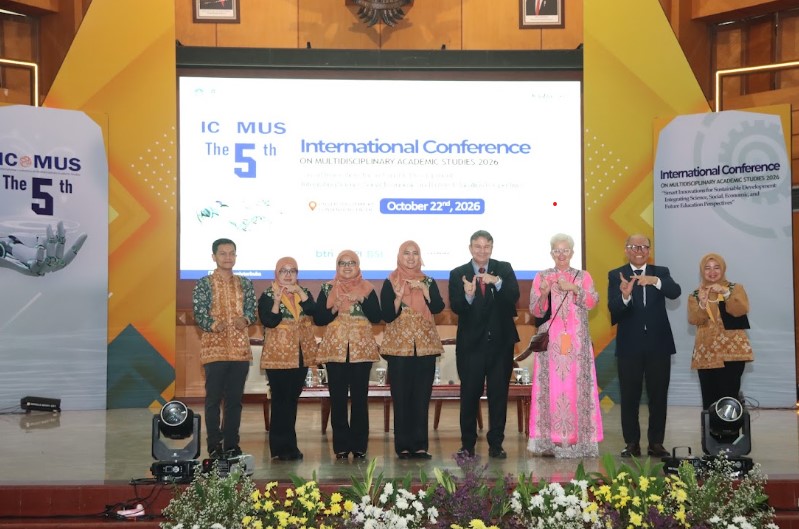
This idea was one of the key messages delivered at the International Conference on Multidisciplinary Studies (ICoMUS) 2026, held at the Universitas Terbuka Convention Center (UTCC) in Pondok Cabe, Tangerang Selatan, on Thursday (October 22, 2026). The forum highlighted cross-disciplinary collaboration as an approach to strengthening the relevance of research in addressing various development challenges.
Director General of Research and Development at Indonesia’s Ministry of Higher Education, Science, and Technology, Dr. Fauzan Adziman, S.T., M.Eng., Ph.D., emphasized that a multidisciplinary approach should be at the heart of academic research development. According to him, research needs to move beyond its role as a cost center and take a strategic position in guiding efforts to address problems.
He explained that a multidisciplinary approach to academic inquiry must serve as the primary foundation for research development. Research should not merely generate knowledge but also function as a strategic think tank that helps guide problem-solving efforts and provides a basis for science-based policymaking. Therefore, the knowledge produced needs to be transferred in ways that generate tangible impact, including in the learning process.
“Knowledge should not merely be presented. Knowledge should not merely be written down. Knowledge needs to be transferred so that it has an impact on the learning process,” he said.
This statement positions multidisciplinary collaboration as more than just cooperation between academic disciplines. Such an approach is necessary to bring together different perspectives and areas of expertise to develop a more comprehensive understanding of problems, formulate alternative solutions, and provide a scientific foundation for decision-making.
This message resonates with the various challenges discussed at ICoMUS 2026, ranging from environmental issues and climate change to technological developments and the needs of future education. The complexity of these issues requires contributions from multiple fields, including science, social sciences, economics, education, and governance. Through cross-disciplinary collaboration and knowledge exchange, research is expected to offer a more comprehensive perspective in developing solutions to various development challenges. These efforts also align with Sustainable Development Goal (SDG) 4 on Quality Education, through the strengthening of knowledge and academic capacity, as well as SDG 17 on Partnerships for the Goals, through enhanced collaboration in support of sustainable development.
Head of the Center for Scientific Research at UT’s Institute for Research and Community Service (LPPM), Dr. Mery Noviyanti, S.Si., M.Pd., highlighted the importance of knowledge exchange and collaboration in responding to challenges that transcend disciplinary boundaries. International academic forums such as ICoMUS provide opportunities for researchers and academics to bring together different perspectives and develop ideas relevant to society’s needs.
Meanwhile, UT Vice Rector for Research, Cooperation, and Business, Dr. Hendrian, S.E., M.Si., emphasized that various global challenges require a multidisciplinary approach.
“We are meeting at a time when the world faces challenges that cannot be overcome by a single academic discipline. Climate change, unequal access to education, and rapid advances in artificial intelligence require new ideas, expertise from various fields, and thoughtful collaboration,” Dr. Hendrian said.
Developments in artificial intelligence further reinforce the need for research that can interpret changes and address real-world problems. Amid technological transformation, problem-solving skills, creativity, and adaptability have become essential future competencies. Cross-disciplinary collaboration can therefore help broaden perspectives in developing responses to these changes.
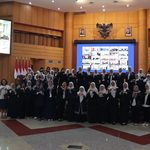
ICoMUS 2026 was held in a hybrid format, with 65 participants attending in person and 36 participating online. Discussions were organized into 10 sessions, comprising six in-person sessions and four virtual sessions, covering four main areas: applied science and environmental conservation, future education and learning, sustainable economics and business, and governance and social transformation.
Ultimately, the central message of ICoMUS 2026 lies in the importance of positioning research as a strategic component of problem-solving. When different academic disciplines work together and research findings serve as a foundation for decision-making, research has greater potential to contribute to science-based policies that address society’s real needs.