
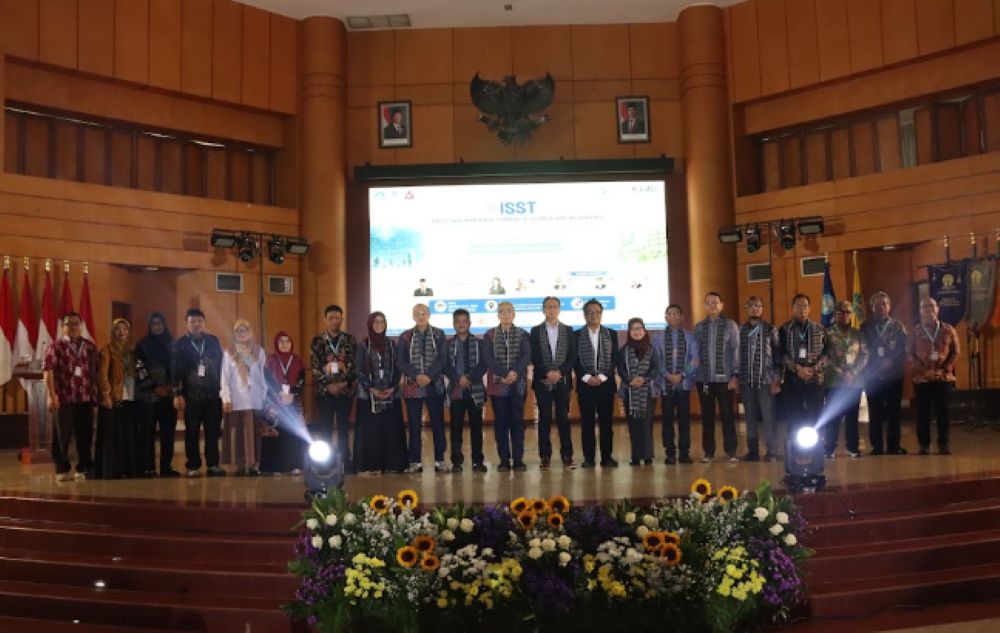
SOUTH TANGERANG – Can Indonesia become a country that creates its own technology rather than merely using it? This question represents one of the major challenges on the journey toward Indonesia Emas 2045. The answer depends not only on technological sophistication, but also on the strength of research, the courage to innovate, and the ability of higher education institutions to transform knowledge into solutions. This spirit was reflected in The 6th International Seminar of Science and Technology (ISST) 2026, organized by Universitas Terbuka (UT) in collaboration with SEMIRATA BKS-PTN Barat on October 12–13, 2026, at the Universitas Terbuka Convention Center (UTCC).
Secretary General of MIPAnet and keynote speaker, Dr. Berry Juliandi, S.Si., M.Si., emphasized that mastery of Science, Technology, Engineering, and Mathematics (STEM) is a crucial foundation for national independence. According to him, investment in science is not merely an expenditure of public funds, but an effort to strengthen technological sovereignty, economic resilience, and public welfare. Strengthening science and technology capacity is also essential to promoting innovation and developing knowledge infrastructure that supports sustainable development, as reflected in SDG 9: Industry, Innovation, and Infrastructure.
This idea becomes increasingly relevant as research faces more complex challenges, ranging from environmental sustainability to natural resource management. Carrying the theme “Advancing Science and Technology for Sustainable Environment and Resource Management,” ISST 2026 brought together academics, researchers, practitioners, and students to explore scientific approaches to addressing these challenges through four subthemes.
The four subthemes covered the development of applied science for sustainable development and environmental challenges, the use of smart technologies for environmental monitoring and sustainable systems, sustainable agriculture and innovations in food industry processing, and spatial planning and environmental management to build resilient communities. This scope brought together various academic disciplines, creating opportunities for researchers to exchange approaches and develop cross-disciplinary solutions.
In line with this spirit of collaboration, UT Rector Prof. Dr. Ali Muktiyanto, S.E., M.Si., stated in his video address that ISST 2026 was part of the celebration of UT’s 42nd Anniversary. The occasion also reinforced UT’s commitment to facilitating knowledge exchange and expanding academic networks at both national and international levels.
This spirit of collaboration is also closely connected to the role of higher education institutions in ensuring that scientific knowledge remains relevant to societal needs. UT Vice Rector for Academic and Student Affairs, Prof. Dr. Rahmat Budiman, S.S., M.Hum., Ph.D., emphasized that universities must not become ivory towers. Research needs to be directed toward generating benefits rather than stopping at academic achievements alone.
“Research is not for promotion, research must create impact,” he said.
This view aligns with the emphasis of Deputy Chair of BKS-PTN Barat for Mathematics and Natural Sciences, Dr. Eng. Heri Satria, S.Si., M.Si., on the importance of cooperation that produces concrete follow-up actions. According to him, higher education institutions need to connect their respective strengths, share resources, and develop research outcomes so they can be applied in practice. Such collaboration is one manifestation of SDG 17: Partnerships for the Goals, given that sustainable development challenges require the exchange of knowledge, resources, and expertise among various stakeholders.
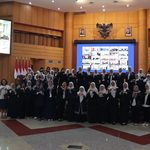
The broad scope of this exchange was reflected in the participation of attendees from five countries: Indonesia, Malaysia, Pakistan, Algeria, and Singapore, comprising 117 presenters and 186 non-presenting participants. Four international speakers also participated, representing Australia, Japan, the United States, and Thailand. Their contributions to the plenary sessions further enriched the perspectives brought to the forum.
Student participation was also an important part of this scientific event. A total of 31 research posters were selected as finalists in the Student Research Poster Competition across four subthemes. Their works were exhibited throughout the event alongside research presentations by academics. This participation also supports SDG 4: Quality Education, particularly by strengthening learning, competency development, and an academic culture that encourages students to contribute to the advancement of scientific knowledge.
Meanwhile, the SEMIRATA BKS-PTN Barat meeting in Mathematics and Natural Sciences brought together 113 participants from 20 higher education institutions to strengthen coordination and inter-university cooperation, including discussions on research downstreaming and academic quality assurance.
Through ISST and SEMIRATA 2026, UT is encouraging the development of an open, collaborative, and sustainability-oriented research ecosystem. These efforts bring together educational development, innovation, environmental awareness, and cross-institutional partnerships in a series of scientific activities. Ultimately, Indonesia’s scientific progress will be determined not only by new discoveries, but also by the ability to connect knowledge, bring expertise together, and transform ideas into solutions that benefit society.