MAJENE — Piles of plastic bottles, spoons, straws, and used biscuit tins may look like items ready to be thrown away. However, in the hands of teachers and parents of early childhood education (PAUD) students in Desa Bonde, Kabupaten Majene, Sulawesi Barat, these objects have been transformed into musical instruments that can bring the learning environment to life.
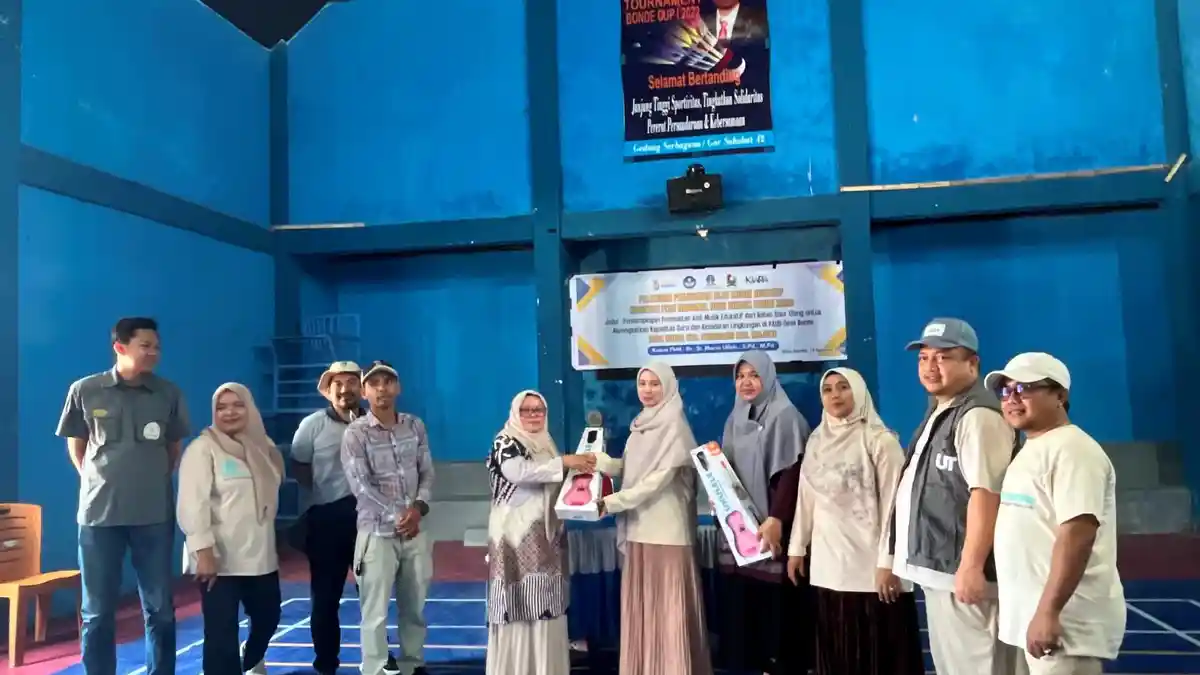
A total of 40 teachers and parents took part in a training session on making musical instruments from recycled materials initiated by Dr. St. Maria Ulfah, a lecturer in the Early Childhood Education Teacher Education Study Program (PGPAUD) at Universitas Terbuka (UT), who also served as the team leader. The activity was part of the National Community Service Program (PKM), designed to address the need for creative PAUD learning that is also closely connected to everyday life.
During the one-day training, participants were invited to make several simple musical instruments, including shakers, castanets, flutes, and drums. The materials used were also easy to find in the surrounding environment, showing that creativity does not always have to come with expensive learning equipment.
Maria Ulfah said the activity aimed to enhance teachers’ creativity in teaching while also fostering environmental awareness from an early age.
“This program was designed in response to two important and interconnected issues in Early Childhood Education (PAUD), namely the limited capacity of teachers to develop creative, affordable, and contextual learning media,” Maria said.
The approach used in the program also ensured that participants did not simply attend, listen, and return home with new knowledge. The training was designed to be participatory. Teachers and parents not only received materials but were directly involved in creating and developing learning media from used materials.
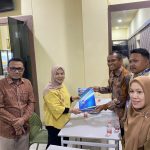
The PKM team did not stop at the training session. It also distributed guidebooks so that the knowledge gained could continue to be applied after the program ended. This step is also expected to reduce dependence on relatively expensive commercial teaching aids, particularly for PAUD institutions with limited resources.
Furthermore, Maria hopes the activity will bring about changes that extend beyond the training room. Teachers are expected to become more confident in creating learning materials, parents to become more involved in the learning process, and children to begin understanding that objects considered useless can also serve new purposes.
“The expected long-term impact is the creation of a more creative, independent, and environmentally conscious PAUD learning ecosystem, as well as the development of 3R values (Reduce, Reuse, Recycle) in children from an early age,” Maria said.
The initiative is in line with the Sustainable Development Goals (SDGs), particularly SDG 4 on Quality Education and SDG 12 on Responsible Consumption and Production. The program demonstrates that education and environmental awareness can come together through simple activities: giving teachers space to be creative while introducing children to the concept of reusing materials from an early age.
For young children, learning does not always have to begin with something new. Sometimes, the most meaningful lessons can emerge from an old object that is given the opportunity to have a second life.