
Every time a boat leaves the pier of Untung Jawa Island, Thousand Islands, a hope goes with it: to return with enough fish to support the family. But for the fishermen on the small island, the sea is not only about the catch of the day. The sea is a living space that must continue to provide while also offering opportunities for them to grow.
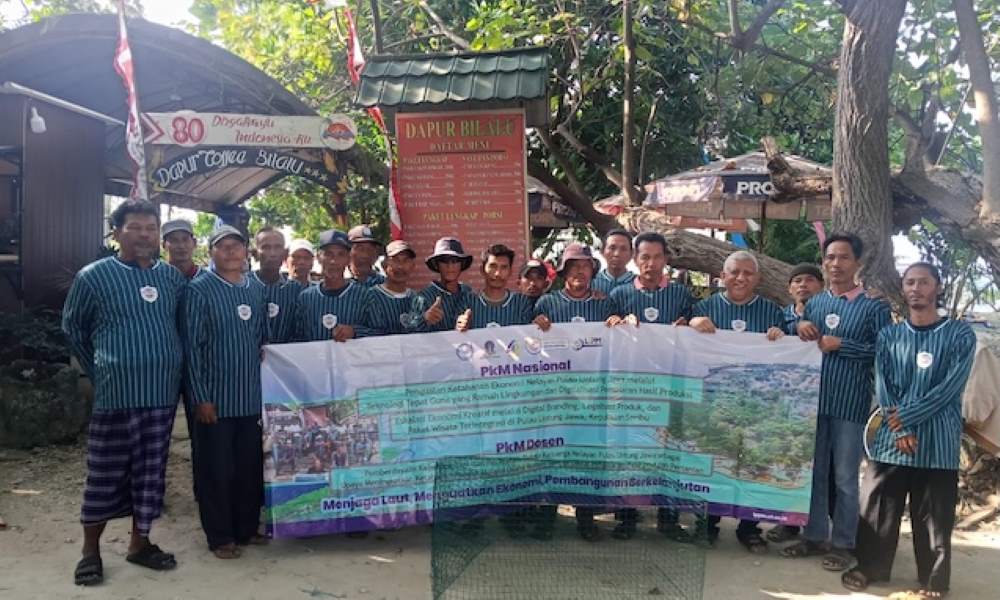
That perspective is being strengthened through a Community Service Program (Pengabdian kepada Masyarakat – PkM) conducted by Universitas Terbuka (UT). Going beyond helping fishermen catch fish, the program also promotes the use of environmentally friendly appropriate technology while opening up economic opportunities through digital marketing.
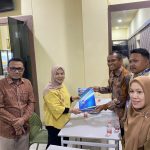
One form of support was the provision of fish traps, known as bubu, to 20 fishermen. This simple technology operates passively and, when used and positioned properly, can support more selective fishing practices. The results have begun to be felt. Suryadi, a community leader representing the fishermen’s group, shared his experience when nine bubu traps were retrieved on Saturday (8 August 2026), after spending three days on the seabed.
“Thankfully, from the nine traps, we caught around 40 kilograms of fish. There were grouper, rabbitfish, trevally, and ayam-ayam. The average price at the fishermen’s level is around Rp50,000 per kilogram,” Suryadi said.
However, the bubu is not simply a fishing tool that is placed in the sea and left there. Knowledge also plays an important role in determining the catch. Fishermen need to read the currents, determine coordinates, and understand the characteristics of the seabed before deciding where to place the traps.
The bubu is usually placed at a depth of around 12–25 meters and left without bait. Choosing the wrong location can mean that no fish enter the trap.
“If the placement is not right, the fish will not enter. So it still requires knowledge and skills developed through years of experience at sea,” Suryadi said.
Based on this experience, the UT Community Service Program then expanded the discussion to a broader question: how can the sea not only produce fish but also provide other sources of income for coastal communities?
One answer lies in the tourism sector. Located relatively close to the urban area of Jakarta, Untung Jawa Island has the potential to continue developing as a marine tourism destination. Local fishermen are also familiar with accompanying tourists who want to experience fishing at sea.
Trips with fishermen, setting and retrieving bubu traps, fishing with families, enjoying the catch, and directly experiencing the lives of coastal communities can all be packaged as valuable tourism experiences.
To ensure that these opportunities do not remain merely potential, the fishermen also received assistance in digital marketing and promotion. They were encouraged to use mobile phones, photographs, short videos, social media, and simple storytelling to introduce their activities to prospective tourists.
In the digital space, what is being offered is ultimately not just fish. It is also the experience of going to sea, the friendliness of local residents, the beauty of the island, and the stories of a community whose lives depend on the sea while striving to preserve it.
That is where empowerment finds its meaning. The bubu helps fishermen develop their fishing practices, while digital technology opens up broader opportunities to promote the potential of marine tourism. From there, hopes emerge that community income sources can become more diverse without abandoning efforts to protect the sea as a source of life.
For the fishermen of Untung Jawa Island, a healthy sea is not simply a sea that can still provide fish today. A healthy sea is one that allows them to live, work, and maintain hope for many years to come.