
BOGOR — For village residents, public services are actually quite simple. They do not need to know who holds which position, how the organizational structure works, or who is supposed to follow up on an issue. They simply want anytime to come with a problem and go home with a solution.
The challenge is that providing such services requires more than simply improving the technical abilities of government officials. The way they speak, listen, understand residents’ needs, and respond to messages through digital channels also determines whether a service feels helpful or instead leaves residents even more confused.
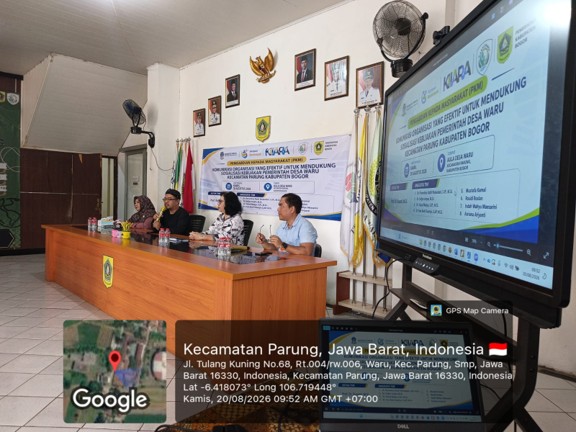
This awareness prompted the Doctoral Study Program in Public Administration (Prodi DAP) at Universitas Terbuka (UT) to strengthen the human resource (HR) capacity of Desa Waru, Kecamatan Parung, Kabupaten Bogor, through a National Scheme–HR Capacity Development Community Service Program (PkM) on Thursday (August 20, 2026).
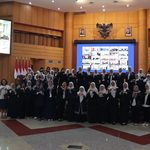
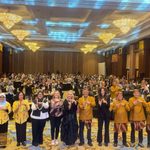
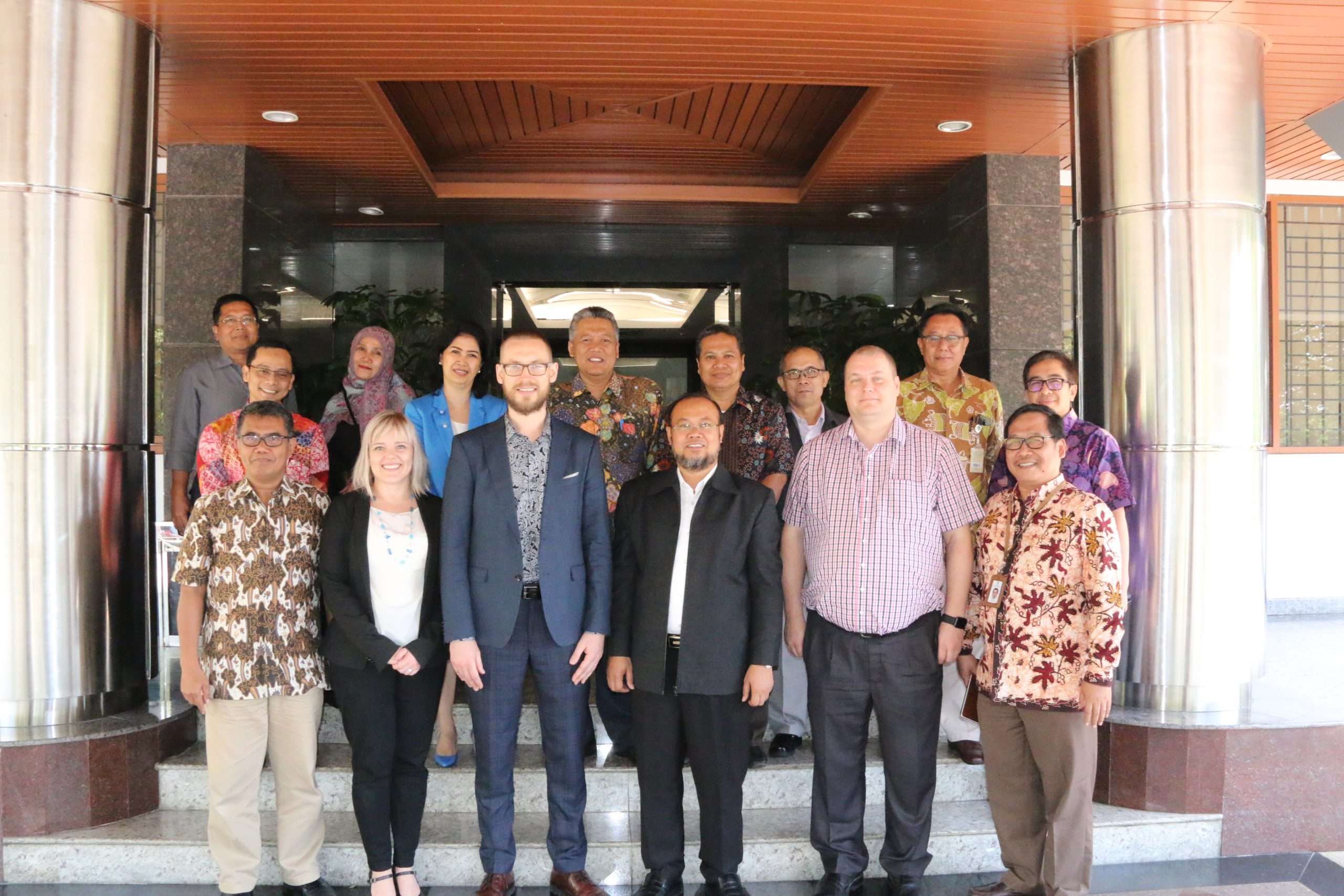
Carrying the theme “Effective Organizational Communication to Support the Socialization of Desa Waru Government Policies, Kecamatan Parung, Kabupaten Bogor,” the activity went beyond simply delivering materials. Around 50 participants consisting of village officials and staff, RW heads, RT representatives, youth organization members, PKK representatives, LPM representatives, and BUMDes representatives were invited to practice building effective communication in everyday public service situations.
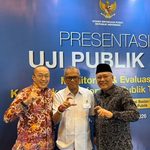
Head of the PkM Team from UT’s DAP Study Program, Prof. Dr. Susanti, M.Si., viewed public service as an issue that begins with the people providing the service. According to her, excellent service does not mean officials must always follow residents’ demands, but rather that they must be able to consistently, accurately, and humanely deliver the services they have promised.
Therefore, participants were equipped not only with the right attitudes, but also with skills and product knowledge. They practiced active listening, developing empathy, solving problems, making decisions, managing time, and communicating through face-to-face interactions, telephone calls, email, written communication, and social media.
Another important message was that the boundary between offline and digital public services is becoming increasingly blurred. When residents contact the government through social media or other communication channels, the response they receive remains a representation of the organization.
“Residents do not know our organizational structure. They only know one thing: whether their problem is solved or not,” was the key message emphasized during the activity.
This understanding was then expanded through a session titled “Public Speaking in Effective Organizational Communication,” delivered by Dr. F. Ratih Wulandari, S.IP., M.Si. She explained that public speaking is not merely the ability to speak, but the art of transferring understanding from the speaker’s mind to the audience in a complete, honest, and motivating way.
In the field, communication challenges can take simple forms: nervousness, disorganized messages, overly formal language, limited eye contact, and fear of facing question-and-answer sessions. Therefore, participants were encouraged to build communication around clear and structured messages, delivered convincingly and with an audience-oriented approach.
The training then moved from theory to practice. Participants were divided into four groups to discuss issues, complete worksheets, conduct simulations, and present their results. The session, guided by Dr. Faizal Madya, M.Si., and Dr. Ivan Budi Susetyo, M.Si., provided participants with an opportunity to directly test how to deliver messages and handle communication situations.
For UT, strengthening this capacity is part of a partnership that has been ongoing since 2019. Since 2025, Desa Waru has also served as a partner village of UT’s Graduate School. The Secretary of Desa Waru, Syamsudin said the seven-year partnership had provided tangible benefits, ranging from improving village archives to changing officials’ mindsets toward public service.
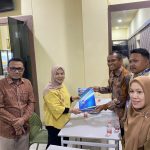
Prof. Dr. Susanti hopes the partnership will continue and encourage new innovations in public services and governance in Desa Waru. During the activity, the PkM Team also symbolically handed over a grant and a draft pocketbook to receive input from village representatives.
Ultimately, building a strong village does not always begin with big things. Sometimes, change starts with the way a government official greets a resident, listens to a complaint, explains a policy, and makes sure the resident does not go home with the same unanswered question.
That is where human resource development becomes more than just training. It becomes an investment in building more humane public services, responsive institutions, and communities that have greater trust in their government.