
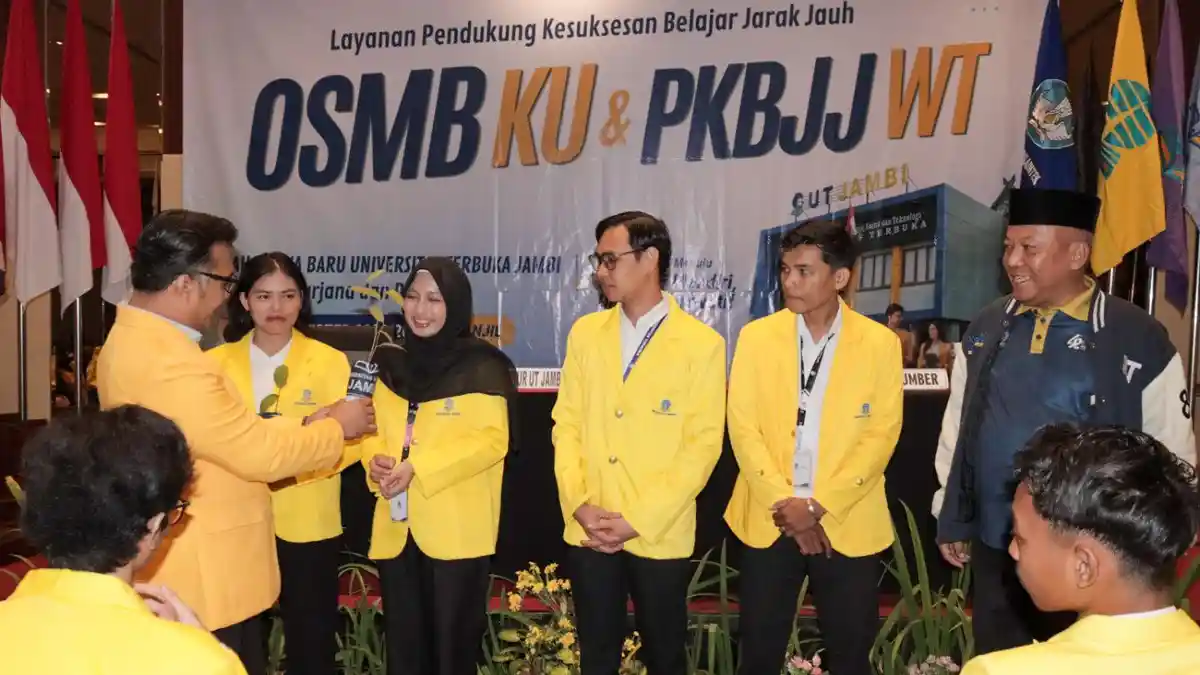
Starting a journey as a university student does not always have to begin with sitting in a classroom every day. At Universitas Terbuka (UT) Jambi, new students are introduced to a learning system that can adapt to their activities, while also being encouraged to develop simple habits to care for the environment.
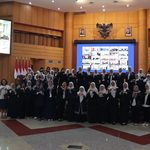
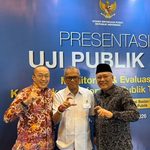
This was reflected in the New Student Study Orientation (OSMB), along with the Distance Learning Skills Training (PKBJJ), held by UT Jambi at Hotel Aston Jambi on Sunday (August 23, 2026). During the event, UT Jambi prepared 390 tree seedlings through the One Student-One Tree program.
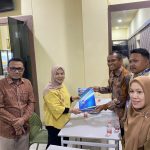
Initiated by the UT Alumni Association (IKA UT) in collaboration with UT, the program is part of efforts to promote the Green University spirit. The tree seedlings can be planted within the UT environment or at other designated locations, including being taken by students to be planted around their homes.
Amid the introduction to the distance learning system, the activity served as a reminder that being a university student is not only about pursuing good grades and completing one’s studies. It also involves a responsibility to contribute to the surrounding environment.
Meanwhile, OSMB provided an opportunity for new students to understand how the learning process at UT works. They received guidance on learning strategies, academic planning, reading techniques, and preparation for examinations.
Director of UT Jambi Rahmaddian, S.E., M.M., said the activity is routinely held every semester to help new students become familiar with UT and its learning system.
“Activities like this are part of our routine every new semester because new students need to be introduced to UT, what UT is, and how its learning system works,” Rahmaddian said.
The learning strategy session was delivered by Jasrial, a UT Central lecturer and internal auditor at UT Headquarters. According to him, understanding effective learning methods is important from the beginning because UT students come from various study programs and backgrounds.
“The material covers how to learn quickly and effectively, how to read properly, how to plan their studies, and the steps they need to take to successfully complete their examinations,” Jasrial said.
Students can also choose how to manage their study load through the Semester Package System (SIPAS) or the non-SIPAS scheme. For students who want to take a number of credits according to their individual needs, the non-SIPAS scheme allows them to determine their own pace of study.
“If they want to finish faster, they can choose non-SIPAS. They simply choose how many credits to take. So, they can decide whether they want to study faster or more gradually,” he said.
An illustration of this flexibility was also shared by UT alumna Ratu Munawaroh. The prominent woman from Jambi, who completed her studies at UT in 2025, attended the event to share her experience and motivate the new students.
According to Ratu, education remains an important foundation for facing various challenges in the future. She also experienced firsthand the benefits of UT’s distance learning system, particularly for people who need to divide their time between education and work.
“UT is indeed a solution for anyone who wants to continue upgrading their knowledge but has limited time, mostly because of work,” she said.
The books and course materials she received as a student are even still kept and used as references today. Although she encountered network difficulties when staying in certain areas, UT’s flexible system helped her continue her education.
“I think this is an answer for everyone, not just Gen Z,” Ratu said.
This experience is now also being experienced by Zahra, a new UT Jambi student who works at a law office. After receiving a scholarship from her workplace on the condition that she continue her education while contributing to the office, Zahra chose UT because its study schedule can be adjusted to her work.
“That’s why I chose UT because it is flexible. I can work while studying,” Zahra said.
She has also prepared plans for after completing her education, namely becoming an advocate or continuing her studies to a master’s degree in law.
Rahmaddian emphasized that flexibility is one of UT’s key advantages. According to him, UT is not simply an online university, but a higher education institution that implements a distance learning system without limitations of space and time.
“UT is not an online university. UT is a university with a distance learning system. Distance learning means without limitations of space and time,” he said.
UT Jambi students are spread across regencies, districts, and villages. UT is also open to graduates of senior high school or equivalent programs, including Package C, as well as people of various ages and employment backgrounds. To support learning, UT Jambi partners with several universities and institutions to provide tutors.
Ultimately, the 390 tree seedlings presented during OSMB were not merely an addition to the event. Each seedling carried a simple message: education and environmental awareness can grow together. Through one student and one tree, UT Jambi seeks to cultivate a habit whose benefits will not only be felt today, but also by future generations.
This spirit aligns with SDG 4 (Quality Education) through inclusive and flexible access to education, as well as SDG 13 (Climate Action) and SDG 15 (Life on Land) through reforestation efforts. After all, education is not only about changing an individual’s life, but also about how the knowledge gained can bring meaningful change to the environment and society.