
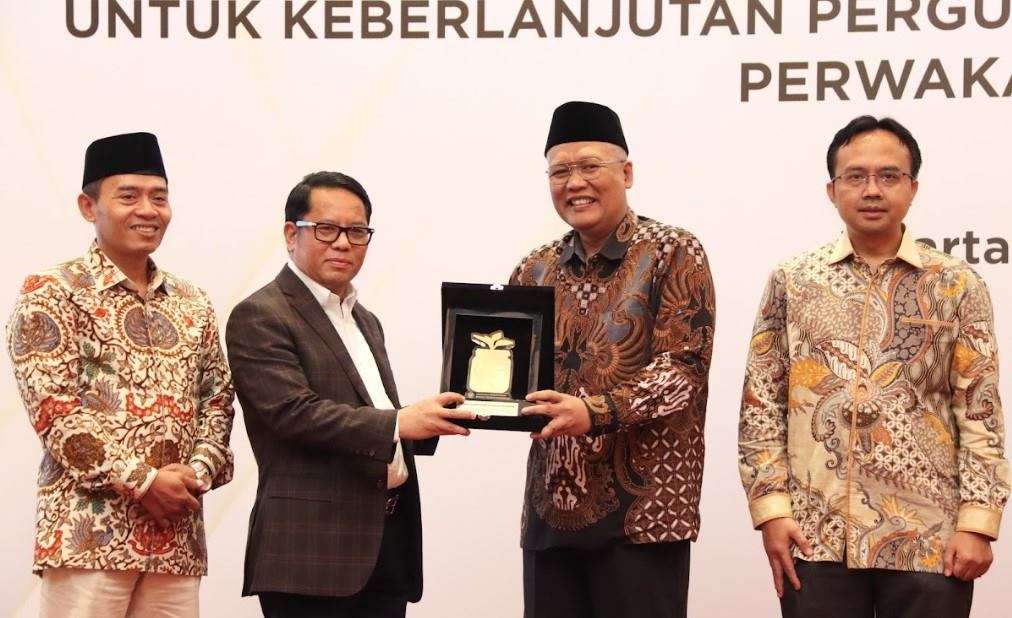
Jakarta, September 30, 2025 – The tangible steps taken by Universitas Terbuka (UT) to strengthen its role as a university contributing to national waqf (endowment) efforts have yielded proud results. This was evidenced by UT receiving the Award for Contribution to Advancing National Waqf through the Placement of University Endowment Funds.
The award was presented at the National Seminar and Discussion Forum on the Management of University Endowment Funds using the Cash Waqf Scheme, organized by the Indonesian Waqf Board (BWI) in Jakarta on Tuesday (September 30, 2025). The event marked a critical moment that affirmed the strategic role of universities in strengthening the national waqf ecosystem and supporting the sustainability of education through Islamic financial instruments.
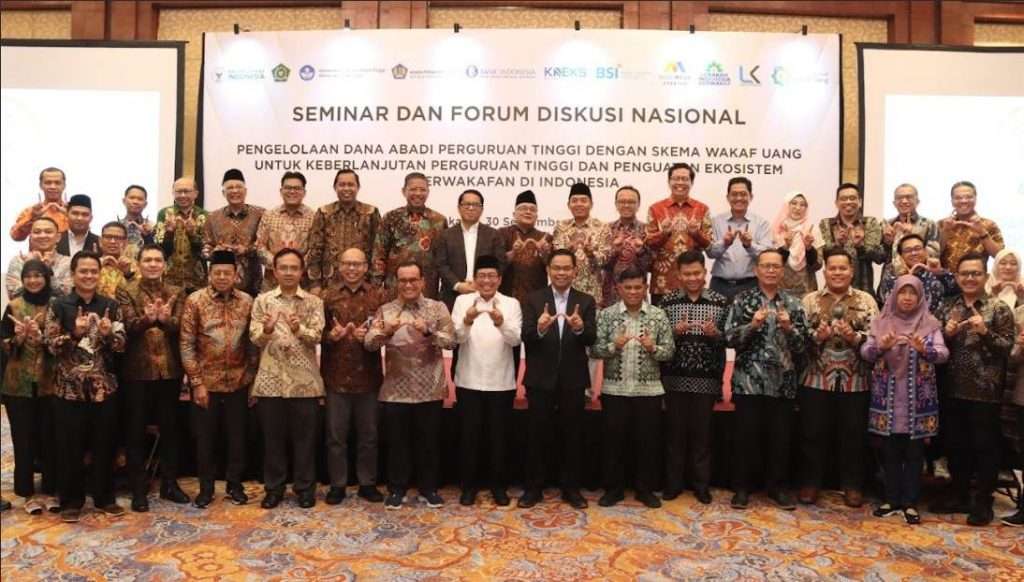
UT was one of the recipients, alongside Universitas Padjadjaran, Universitas Negeri Padang, Telkom University, and Universitas Brawijaya. These five universities were recognized for successfully placing their endowment funds into productive waqf instruments, the returns of which can be utilized for the development of education, research, and community empowerment.
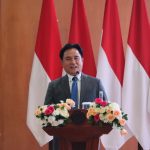
The Chairman of the Indonesian Waqf Board (BWI), Prof. Dr. Phil. H. Kamaruddin Amin, M.A., expressed high appreciation for UT’s commitment to supporting the productive waqf movement in Indonesia. “Universitas Terbuka has shown a very high commitment and contribution to advancing waqf in Indonesia. I believe UT’s support will impact the nation’s children, and the benefits will return to Universitas Terbuka, perhaps for students, scholarships, and so on. I think this is very impactful for advancing waqf in Indonesia,” he stated.
According to him, UT’s decision to place its endowment funds in Cash Waqf Linked Sukuk (CWLS) does not only strengthen the university’s finances but also provides tangible social benefits to the wider community.
The Rector of UT, Prof. Dr. Ali Muktiyanto, S.E., M.Si., noted that the award is a form of recognition of UT’s concern for achieving equitable access to higher education in Indonesia.
“UT received a very prestigious award from the Indonesian Waqf Board. This is a recognition that UT truly cares about being actively involved in waqf in Indonesia. We know that UT students, or a portion of our students, are in hard-to-reach areas. With this waqf cooperation with BWI, we will continue to enhance efforts to make a real contribution and provide the widest possible opportunity for the Indonesian public everywhere, especially those constrained by economic issues, to enjoy quality higher education at UT,” Prof. Ali revealed.
Meanwhile, the Chairman of the Nazhir (Waqf Manager) Institution of BWI and Chairman of the event committee, M. Ali Yusuf, deemed the award a symbol of the synergy between the education sector and Islamic social finance institutions.
“The Waqf Board, through Cash Waqf, also wants to contribute to the joint efforts of higher education, including UT, to advance or provide wider access to quality education for the public. The award serves as an impetus and encouragement for the collaborative efforts and synergy between UT and the Indonesian Waqf Board to develop quality higher education while also supporting the national waqf ecosystem,” he added.
Through this recognition, UT asserts its role as a university that focuses not only on distance learning innovation but is also committed to building educational sustainability based on productive waqf. UT’s action exemplifies how higher education institutions can take an active role in building an inclusive, competitive, and impactful education system for the nation’s progress (SDG 4).