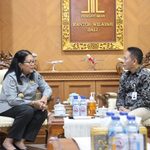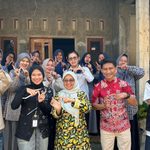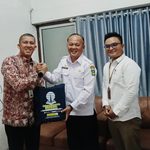

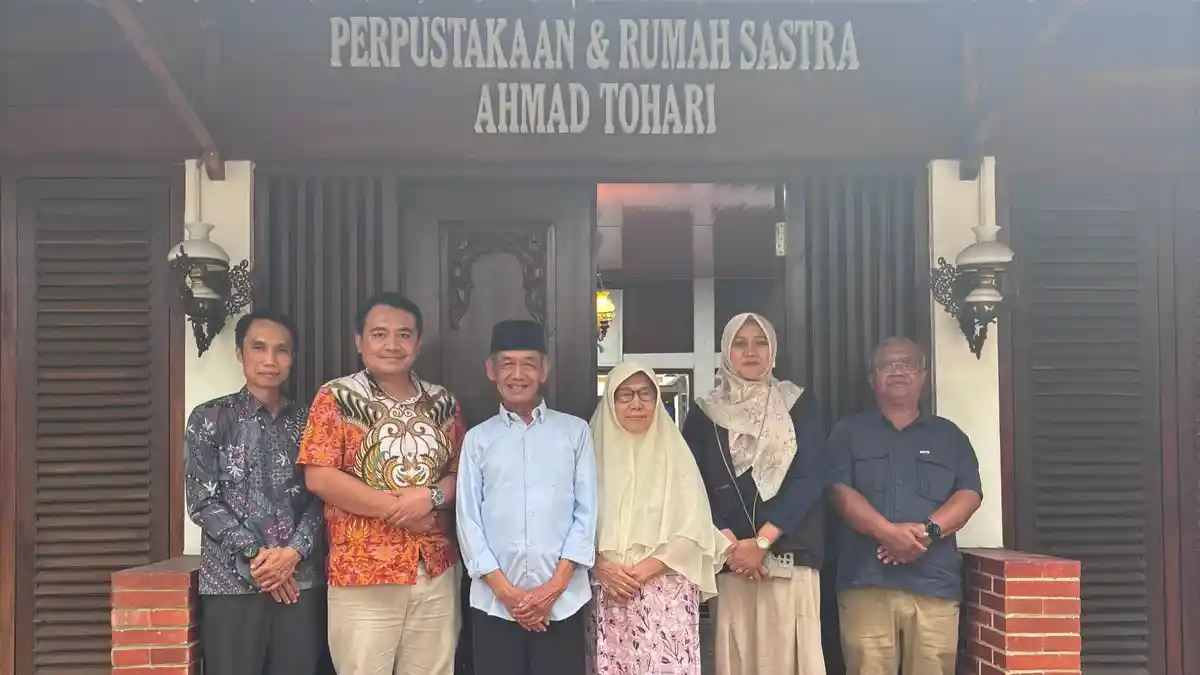
BANYUMAS – A house in Jatilawang, Banyumas, became a meeting point for academics, literature, history, and culture. There, the Director and a number of lecturers from Universitas Terbuka (UT) Purwokerto, together with lecturers from Universitas Islam Negeri (UIN) Syarif Hidayatullah Jakarta, paid a visit to Indonesian writer and cultural figure Ahmad Tohari.
The visit was conducted as part of research on the figure of R.M. Margono. However, the meeting developed into a dialogue to explore further Ahmad Tohari’s ideas, life journey, and contributions to preserving and documenting Indonesia’s socio-cultural dynamics through writing.
For the Indonesian literary fields, the name Ahmad Tohari is certainly no stranger. His works have crossed geographical and linguistic boundaries. One of his best-known works, Ronggeng Dukuh Paruk, has demonstrated how a story rooted in the lives of local communities can find readers on the international stage.
The novel has been translated and published in several foreign languages, including English, Dutch, Japanese, and German. Its story was later adapted for the big screen through the film Sang Penari, allowing the ideas and cultural values conveyed by Ahmad Tohari to reach a wider audience.
Ahmad Tohari’s legacy is not only preserved through fiction. He has also actively conveyed cultural ideas through various writings in mass media and frequently appeared as a speaker in cultural discussions and seminars. This role reflects his contribution as a public intellectual whose activities extend beyond writing to building dialogue with society.
Interestingly, before becoming widely known as a novelist, Ahmad Tohari had extensive experience in journalism. He once worked as an editorial staff member at several Jakarta-based media outlets, such as the Harian Merdeka, Majalah Keluarga, and Majalah Amanah. His journalistic experience also shaped his sensitivity in examining various social and cultural issues, which later appeared extensively in his works.
Amid the conversation, attention was also given to reading culture among the younger generation. A reading culture is considered important for developing critical thinking skills, creativity, and young people’s interest in literature and culture.
Therefore, rebuilding a reading culture requires collective involvement. Efforts can be made through continuously improving literacy in both formal and non-formal education settings, encouraging young people to write as a means of practicing thinking and expressing ideas, and expanding their involvement in literary activities, such as book discussions, literacy communities, and cultural forums.
The visit by UT Purwokerto and UIN Syarif Hidayatullah Jakarta ultimately demonstrated that higher education institutions have an important role in ensuring that knowledge, history, and culture do not remain merely records of the past. Research on R.M. Margono is expected to enrich the historical and cultural knowledge of Banyumas while connecting it with major ideas that have emerged from the same region, including Ahmad Tohari’s ideas.
This is because the legacy of a figure is not always preserved in books or archives. It also lives on through conversations, research, and generations willing to reopen old pages to discover new meanings. From Banyumas, that legacy continues to be read, studied, and passed on through encounters between academia and culture.
This effort is in line with SDG 4 on Quality Education and SDG 11, particularly the spirit of preserving and strengthening cultural heritage so that it can continue to be studied by future generations.