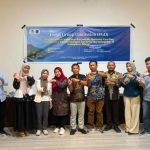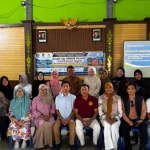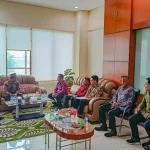

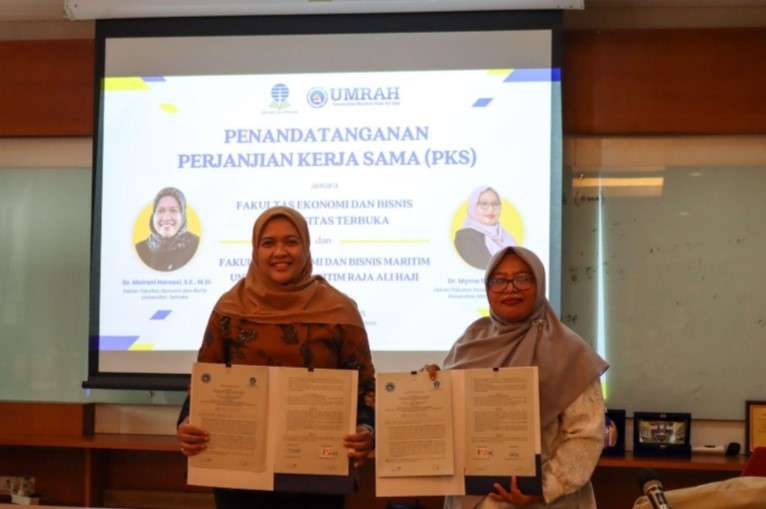
South Tangerang, September 24, 2025 – The Faculty of Economics and Business at Universitas Terbuka (FEB UT) received a visit from a delegation from the Faculty of Economics and Maritime Business at Universitas Maritim Raja Ali Haji (FEBM UMRAH) to sign a Memorandum of Agreement (PKS). The event took place in the FEB UT Meeting Room at the Universitas Terbuka Headquarters in South Tangerang. The UMRAH delegation was led by the Dean of FEBM, Dr. Myrna Sofia, S.E., M.Si., along with other leaders and lecturers, including Indra Firdiyansyah, S.E., M.Si. (Vice Dean I), Fradya Randa, S.E., M.E. (Lecturer), and Putra Kirana, S.E., M.Si. (General Head). From UT, the attendees included the Dean of FEB UT, Dr. Meirani Harsasi, S.E., M.Si., accompanied by the Vice Dean for Cooperation and Student Affairs, Olivia Idrus, S.E., M.Sc., as well as Heads of Study Programs and lecturers within FEB UT.
In her remarks, Dr. Meirani Harsasi expressed her appreciation for the UMRAH delegation’s visit and emphasized that this collaboration opens up broad opportunities for the development of the Tri Dharma of Higher Education (the three pillars of higher education: teaching, research, and community service). She explained that FEB UT currently manages seven distance learning-based study programs (Development Economics, Islamic Economics, Management, Tourism, Accounting, Public Financial Accounting, and Entrepreneurship) which require more than 6,000 online learning tutors. The distance learning system allows anyone to access higher education without limitations of age, cost, distance, or time. According to her, this cooperation must lead to tangible implementation, ranging from the provision of tutors, joint research, to community service programs that involve various parties, including UT Batam and international collaborations.
The Dean of FEBM UMRAH, Dr. Myrna Sofia, in her remarks, emphasized that UMRAH’s vision is to make all of its Tri Dharma maritime-based, in accordance with the geographical characteristics of the Riau Islands. She stated that FEBM UMRAH even has a compulsory Maritime Economics course as a distinctive feature of the university. The cooperation with UT is considered very relevant to strengthen academics, research, international publications, and public lectures. With the support of research funds for Scopus publications, she hopes that the collaboration with UT lecturers can help build the academic track record of UMRAH lecturers. “Our visit today is not just for the signing, but to ensure that this cooperation is truly implemented,” she asserted.
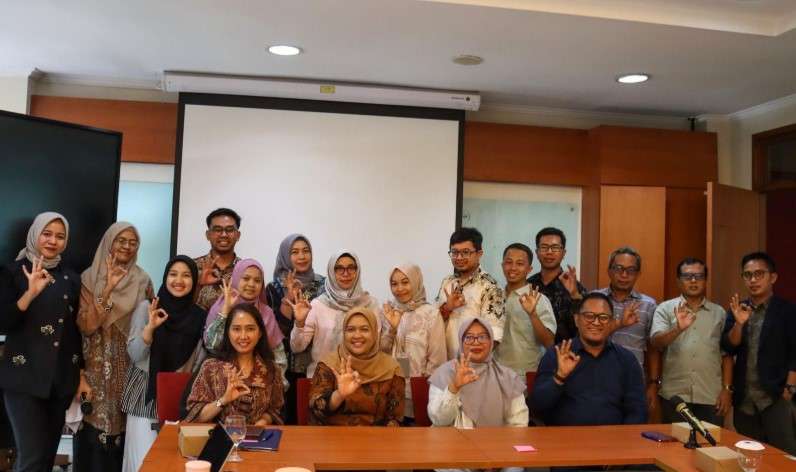
The Vice Dean III of FEB UT, Olivia Idrus, S.E., M.Sc., also gave a presentation on UT’s distance learning system, which currently reaches more than 766,000 active students, including 7,400 foreign students. She emphasized the importance of resource sharing collaboration, especially in the provision of tutors and digital learning support. With various digital facilities, from online registration to a digital library and e-learning via online tutorials (Tuton), UT opens up great opportunities for academic cooperation with various universities in Indonesia and internationally.
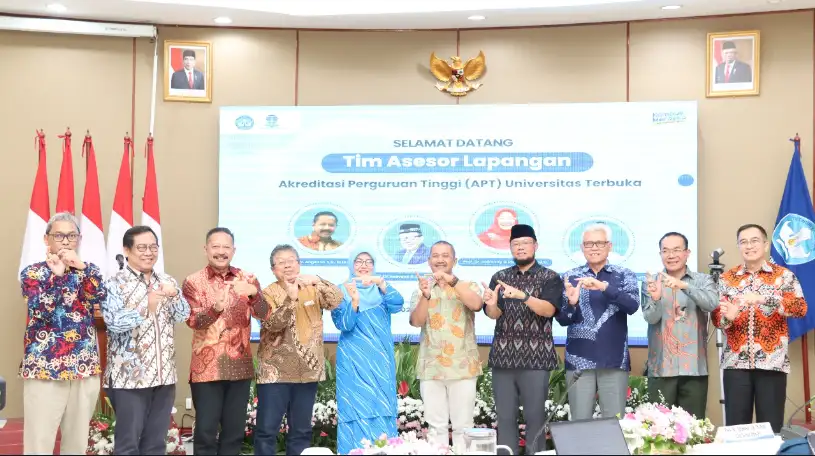
The main event was marked by the signing of the PKS by both deans, followed by the exchange of souvenirs and a group photo session. A warm and collaborative spirit colored this meeting, marking the first step of a strategic synergy between FEB UT and FEBM UMRAH in strengthening academic capacity, research, and community service. This cooperation is expected to have a positive impact on the development of the nation’s human resources and expand the contributions of both universities in answering the challenges of higher education in the digital era.
This collaboration is also a testament to Universitas Terbuka’s commitment to supporting the achievement of the Sustainable Development Goals (SDGs), especially SDG 4 (Quality Education) through the expansion of inclusive and flexible distance higher education, SDG 9 (Innovation and Infrastructure) through the strengthening of the digital learning and collaborative research ecosystem, and SDG 17 (Partnerships for the Goals) through synergy between universities. With the vision of “Innovation Without Limits, Realizing Quality Education,” UT continues to show its role as a state university that is open to anyone, anytime, and anywhere, while also strengthening its reputation as an Impactful Campus.