
South Tangerang, July 24, 2025 – Universitas Terbuka (UT) has once again affirmed its position as a pioneer in Distance Higher Education (PTJJ), committed to the transformation of sustainable higher education through a strategic collaboration with UI GreenMetric (UIGM). The latest assessment results show a significant jump in UT’s GreenMetric score, rising from 55% in 2023 to 79% in 2024. This achievement is tangible evidence that UT has successfully integrated sustainability principles into various aspects of campus management, from infrastructure and learning systems to academic culture.
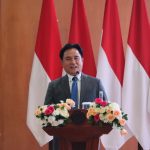
Representing the Rector of UT, the Vice Rector for Finance, Resources, and General Affairs, Prof. Dr. Ali Muktiyanto, S.E., M.Si., emphasized in his speech that UT’s characteristics as an open and distance learning institution are not a hindrance but rather a strength in leading the green campus transformation in Indonesia.
“As the largest open and distance learning university in Indonesia, UT faces unique challenges. However, our commitment to sustainability never wanes. We integrate green campus principles into all aspects of campus management,” stated Prof. Ali.
Several concrete steps have been taken by UT, including the construction of a campus gate based on renewable energy, the use of energy-efficient building designs with natural lighting and ventilation, and the integration of sustainability principles into budgeting and procurement systems. Other initiatives include strengthening the UT Green University roadmap and developing an environmentally conscious culture among the academic community.
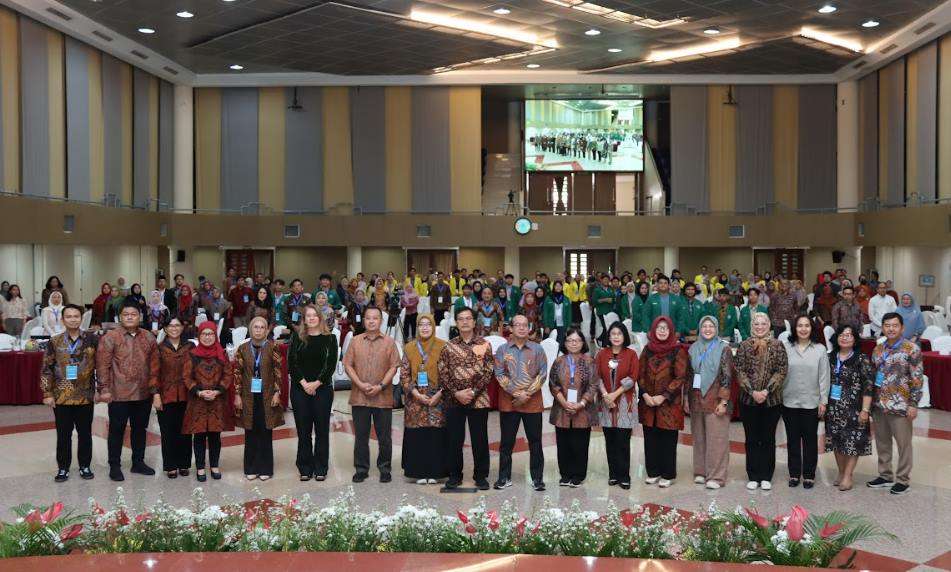
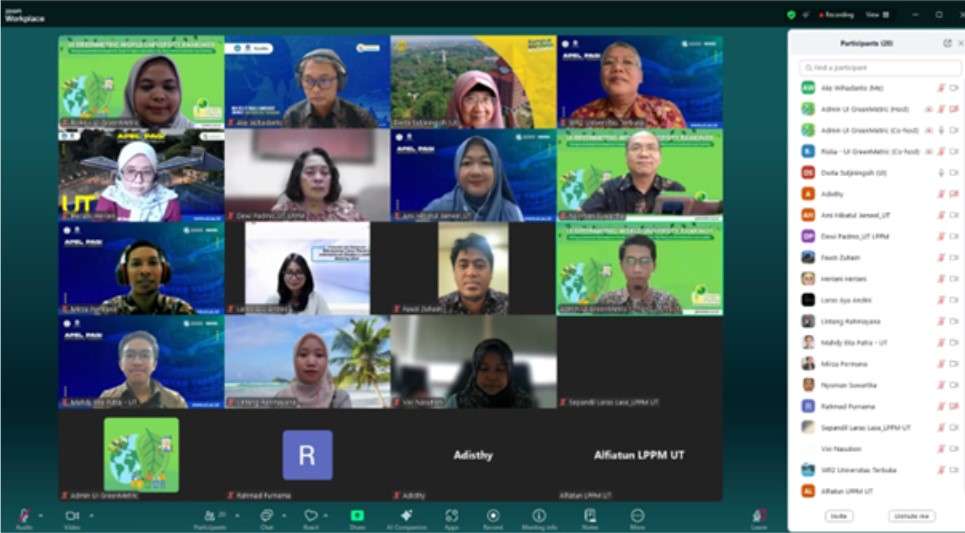
In the evaluation session, Prof. Dr. Ing. Ir. Dwita Sutjiningsih, Dipl. HE from UI GreenMetric provided constructive input to enrich UT’s future steps, such as strengthening green dashboard features aligned with SDG indicators. She emphasized the importance of refining data evidence, both qualitatively and quantitatively, and ensuring clear documentation for each sustainability indicator. UT welcomed these recommendations and is determined to strengthen the recording and reporting of environmental activities to be more structured, transparent, and measurable.
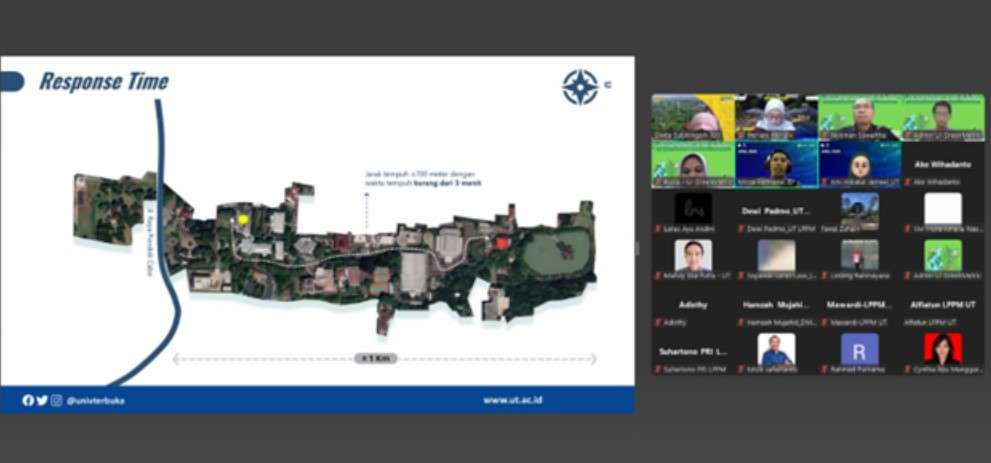
For the energy indicator, UT is developing the use of biodiesel-based diesel generators and solar panel installations. However, the calculation of energy production from these sources still requires refinement, such as assumptions for annual usage duration and measurable kilowatt-hour output. Clarity of location (central campus or also regional campuses) is important in determining the final score.
Furthermore, Prof. Dr. Ing. Ir. Dwita Sutjiningsih, Dipl. HE also recommended that UT strengthen information regarding smart buildings, develop strategies for utilizing environmentally friendly electric vehicles (ZEV), and enhance green dashboard features equivalent to SDGs. In relation to emission reduction (C7), UT was asked to map emissions across three scopes: direct emissions (scope 1), indirect emissions from purchased energy (scope 2), and other emissions in the value chain (scope 3). UT welcomed this challenge by formulating concrete steps to reduce its carbon footprint.
On the aspects of water and waste management, such as WS 5 and WR 2, UT was encouraged to add information on hazardous waste and laundry treatment, as well as water balance during the dry season through the addition of rainwater harvesting tanks.
Meanwhile, for the education and collaboration indicator (ED), UT will strengthen program documentation, such as startup initiatives and community service (pengmas) activities that have been actively carried out. A digital dashboard will be developed to record green indicator features, equivalent to SDGs Sharing Best Practice.
Sharing best practices from other universities also served as an inspiration. Through a presentation by Dr. Nyoman Suwartha, ST., MT., MAgr., UT learned from the experiences of UI, BINUS, UII, and Universitas Syah Kuala in building green campus ecosystems. Some initiatives ready to be adapted by UT include:
- Enhancing facilities such as disability-friendly restrooms, lactation rooms, CCTV, security systems, and open labs.
- Developing smart classrooms to be part of smart buildings.
- Reducing parking areas as an incentive for low-emission mobility.
- Utilizing campus areas for national activities, such as culinary festivals, cycling events, and more.
- Campus regulations and policies that support the continuous optimization of GreenMetric indicators.
UT will also strengthen its comprehensive system for recording, reporting, and archiving all environmental activities—from schedules, monitoring, evaluation, outputs, to responsible parties. For example, in waste management, UT will develop a standardized reporting scheme: waste quantity, processing time, output volume, and the structure of the implementing team.
“With input and guidance from UI GreenMetric, UT is ready to move further, more strategically, and more impactfully in leading the green campus transformation based on distance education at national and global levels,” concluded Prof. Ali.
All these steps demonstrate that UT is not only committed to the Green University concept on paper but is truly bringing it to life in practice. With the guidance of UI GreenMetric, UT looks to the future with a more strategic and impactful vision, leading the transformation of green campuses based on distance education, not only nationally but also globally.