
Tangerang Selatan, 2025 – Universitas Terbuka (UT) continues to affirm its commitment as a higher education institution that upholds clean, transparent, and accountable governance. In this era of digitalization and bureaucratic reform, UT, as a State University (PTN) based on Open and Distance Higher Education (PTTJJ), stands as a pioneer in implementing an efficient, integrity-driven, technology-based, and regulation-compliant procurement of goods and services (PBJ) system.
This commitment aligns with Presidential Regulation No. 17 of 2023 concerning the acceleration of digital transformation in government procurement of goods and services. This regulation aims to increase efficiency, transparency, and accountability in procurement through the utilization of digital technology.
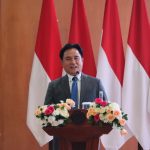
The Rector of UT, Dr. Mohamad Yunus, S.S., M.A., emphasized that the transparent and accountable management of educational services and procurement of goods and services (PBJ) at UT is in accordance with the mandates of Law of the Republic of Indonesia No. 12 of 2012 and Presidential Regulation No. 17 of 2023. “It is hoped that this management approach will not only improve the quality of educational services but also strengthen public trust in higher education institutions in Indonesia,” said Dr. Mohamad Yunus.
Since the leadership of Prof. Ojat Darojat, M.Bus., Ph.D. (Rector 2017–2025), UT has consistently been recorded as the first PTN to achieve 100% compliance in LHKPN reporting among all PTNs in Indonesia. As is known, the submission of LHKPN (Report of State Officials’ Assets) by state officials who are required to report for state universities (PTN) is done periodically once a year for the assets owned by PTN leaders, treasury officials, and procurement managers for goods/services as of December 31st and submitted to the Corruption Eradication Commission (KPK) no later than March 31st of the following year.
For the 2024 reporting period, UT once again became the first PTN to complete 100% LHKPN reporting on February 1, 2025, earlier than the March 31, 2025, deadline. This is a manifestation of the culture of public accountability that has been consistently built in accordance with Law of the Republic of Indonesia No. 12 of 2012 concerning Higher Education.
It is worth noting that during Prof. Ojat’s leadership, he was highly concerned with financial and procurement operations, which were coordinated by Prof. Ali Muktiyanto, M.Si., Vice Rector for Finance, HR, and General Affairs, to continuously maintain a culture of transparency and accountability, preventing corruption, collusion, and nepotism (KKN). Prof. Ojat, together with Prof. Ali Muktiyanto, oversaw the program to increase transparency in PBJ, which is now further strengthened through the implementation of the digital PROMISE (Procurement Management Information System) system. By prioritizing the principles of Good Corporate Governance (GCG), UT ensures that all procurement processes run according to the best industry standards, free from practices of corruption, collusion, and nepotism (KKN).
Commitment to Good Corporate Governance (GCG)
As an educational institution that manages state budgets, UT implements the principles of Good Corporate Governance (GCG) in every aspect of its governance, including PBJ. Some key principles implemented include:
Full Transparency – Information related to procurement is open to the public, ensuring no deviations in the process.
High Accountability – Every decision in procurement has a legal basis and can be accounted for, minimizing loopholes for corrupt or collusive practices.
Responsibility – Budget and procurement management are in accordance with regulations and academic and operational needs.
Independence – The procurement process is carried out without intervention from parties with conflicts of interest.
Fairness – All providers of goods and services get equal opportunities or can compete fairly with an open system in the procurement process.
Efficiency and Effectiveness – Reducing the potential for irregularities and accelerating administrative processes.
“UT not only ensures efficient and transparent procurement but also makes it part of an organizational culture that upholds ethics and good governance,” said Prof. Ali Muktiyanto, author of the article Control Combating Corruption: A Governance Model from Indonesians’ Perspective published in the Scopus Q1 indexed journal, JOURNAL OF SOUTHWEST JIAOTONG UNIVERSITY Vol. 54 No. 5, Oct. 2019.
He also affirmed that in 2023, UT received an Unmodified Opinion (WTM) for its 2022 financial statements from the Public Accounting Firm (KAP) Tjahjo, Machdjud Modopuro & Rekan. Even more proudly, in its first year after becoming a PTNBH (State University with Legal Entity Status), UT’s 2023 PTNBH Financial Statements immediately received an Unqualified Opinion (WTP) from KAP Heliantono & Rekan, presented at the KAP Audit Exit Meeting in 2024 held on Monday, May 27, 2024. This achievement demonstrates that UT has implemented good financial governance principles, including in PBJ.
Strict Internal Control System
To strengthen integrity in PBJ, UT also implements a strict internal control system with several strategic steps, including:
Formation of an Internal Supervisory Team – This team is tasked with ensuring that every stage of procurement runs according to rules and is free from conflicts of interest.
Regular Audits – The procurement process is supervised through a periodically conducted audit system to increase effectiveness and efficiency.
Data-Based Monitoring – Utilization of digital technology to ensure that every transaction and decision is well-documented.
Prof. Ali Muktiyanto emphasized that this internal control system serves as the main bulwark in maintaining the integrity of the procurement process at UT. “With strict and system-based supervision, UT ensures that every fund managed is optimally used to support academic activities and better educational services,” he said.
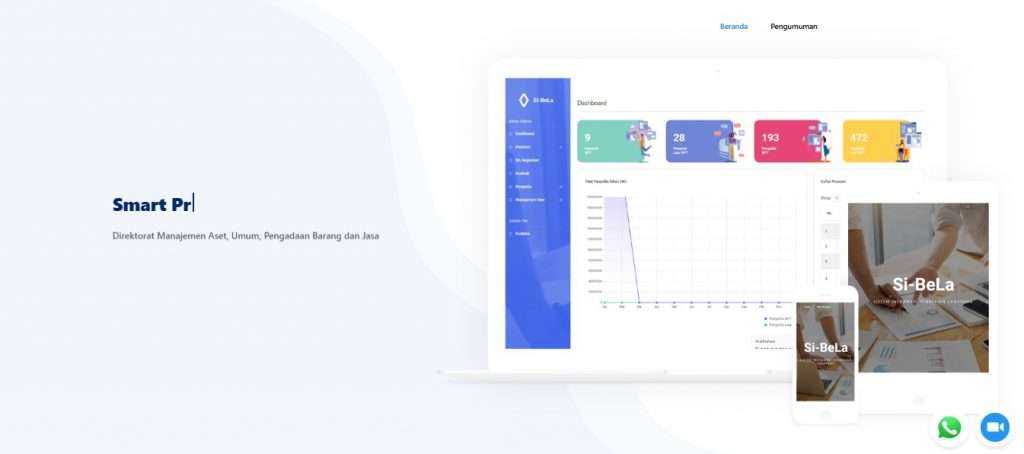
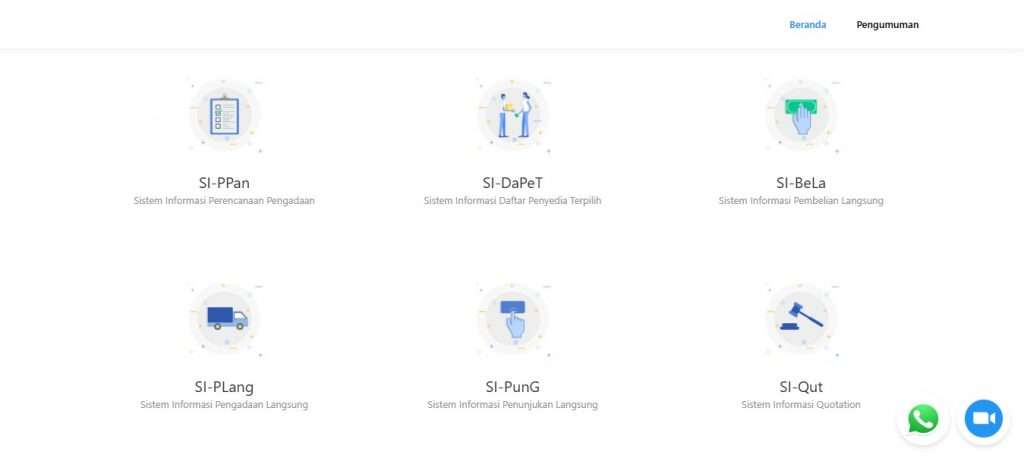
PROMISE: A Digital Transparency Fortress in UT’s Procurement
As a tangible manifestation of good governance implementation, UT applies PROMISE, a digital system designed to secure the entire PBJ process to run efficiently, transparently, and accountably.
Advantages of PROMISE in UT’s procurement:
Process Digitalization – All procurement stages are electronically documented to prevent corruption and irregularities.
Efficiency and Effectiveness – Processes are faster, simpler, and minimize the risk of administrative errors.
Open Access for the Public – The public and relevant parties can monitor the procurement process in real-time.
Fair Competition – All vendors or providers of goods/services have equal opportunities based on established criteria.
“With PROMISE, the procurement of goods and services at UT becomes more structured, efficient, and free from potential irregularities. This system ensures that UT remains a trusted institution in managing state budgets,” said Prof. Ali Muktiyanto.
As emphasized by the Director of Asset Management, General, Goods and Services Procurement (DMAUPBJ) UT, Adrian Sutawijaya, S.E., M.Si., UT asserts that there has never been any fraud or wasteful spending of the Fixed Asset Investment Budget for Buildings and Constructions. He also explained the stages in PBJ at UT, which are:
Analysis and evaluation of PBJ needs
PBJ planning
PBJ preparation through providers
Selection of providers, and
Contract execution and handover of work results.
“Every stage of PBJ at UT highly upholds the principles of good governance to avoid PBJ fraud. So, we ensure that UT manages the procurement process clearly and correctly,” stated Adrian Sutawijaya.
UT as a Role Model for Clean and Transparent University Governance
Dr. Hendrian, S.E., M.Si., Head of the Internal Control Office (KPI), stated that UT’s achievement in reporting 100% LHKPN, supported by a strict internal control system and the implementation of PROMISE, makes UT a role model in clean and professional university governance.
“We want UT to be an example that educational institutions can be managed with high principles of transparency and accountability. This is not just about compliance with rules, but also about creating an academic environment with integrity and professionalism,” concluded Dr. Hendrian.
Through these strategic steps, UT further strengthens its position as a pioneer of clean, transparent, and efficient university governance, while ensuring that managed public funds truly provide optimal benefits for education and the wider community.