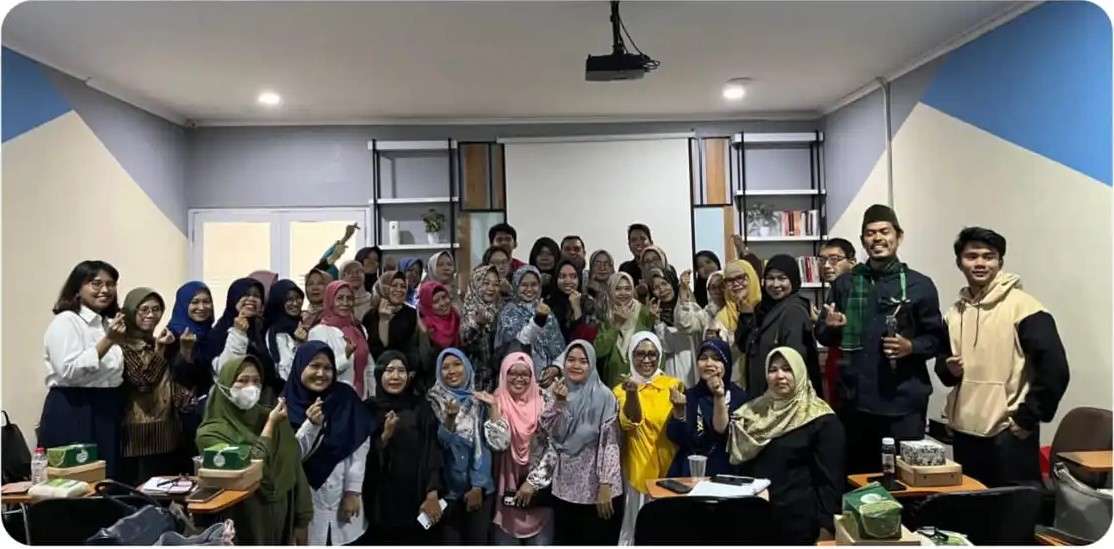

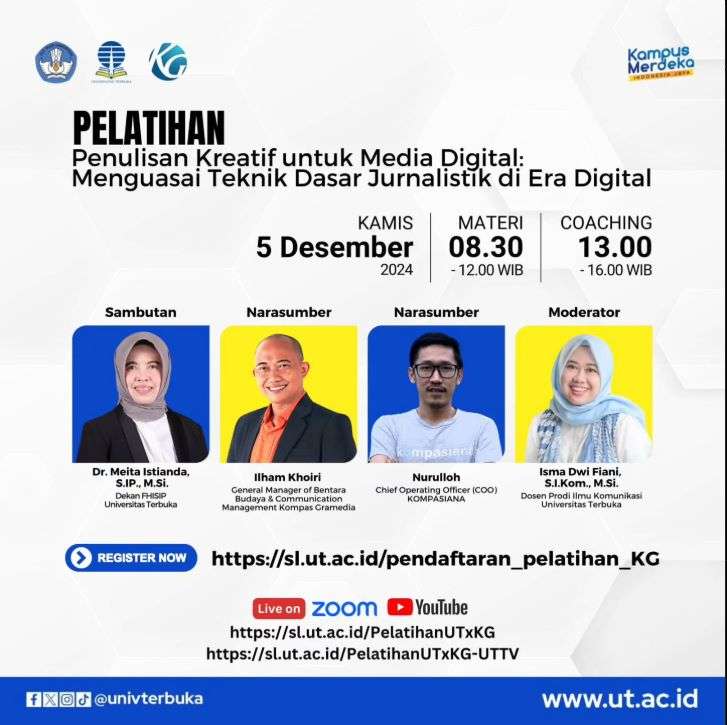
Digitalization has covered almost every sector possible, including journalism. The ability to write is not merely a way of expression, but also a key to deliver information with effectiveness and appeal. Realizing this importance, Universitas Terbuka (UT) collaborated with Kompas Gramedia holding the event “Creative Training for Digital Media: Conquering Basic Journalism Techniques in the Digital Era”. The training that was held online on December 5th, 2024, is open to the public.
This training aims to give knowledge and practical skills of journalism, while improving writing skills in a more competitive digital world. With interactive and applicable approaches, this training becomes a platform for the participants to dive deeper into the art of writing, from discovering ideas to creating appealing content. This event also provides an opportunity for the younger generation to contribute in the world of media through creative writings.
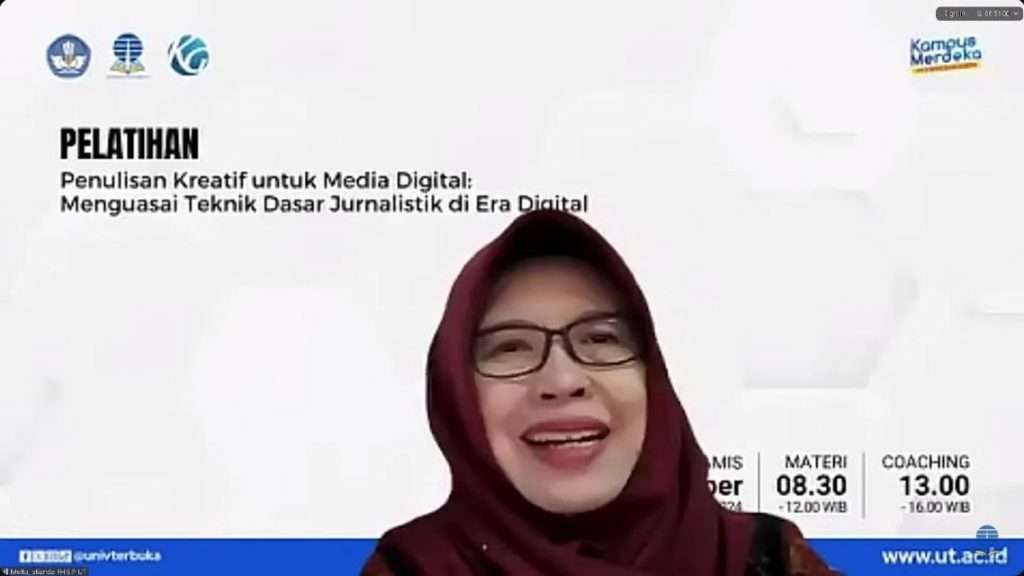
The event began with a welcome speech by the Dean of the Faculty of Law, Social Sciences, and Political Science (FHISIP) at Universitas Terbuka (UT), Dr. Meita Istianda, S.IP., M.Si., who officially opened the training session. In her speech, she emphasized the importance of digital literacy and the ability to craft creative, informative, and accurate writing, including the skill of highlighting positive aspects, especially in the digital era. Dr. Meita underlined that this training is highly beneficial for students and reflects UT’s commitment to equipping its students with relevant skills to leverage technological advancements.
“As a pioneer of ODL in Indonesia, UT is committed to preparing its students with skills that are relevant to compete and adapt to technological changes and job market demands,” she stated.
She further added that the collaboration with Kompas Gramedia and Kompasiana aims to provide foundational knowledge in journalism as well as best practices in business and industry (DUDI), particularly in creative writing. This program is expected to provide insights on how to create informative and meaningful content. Additionally, students were trained to publish their works on digital platforms like Kompasiana. “This collaboration deserves appreciation because it not only enhances students’ writing skills but also gives them opportunities to become agents of change,” Dr. Meita concluded.
The training program featured competent speakers in their fields: Ilham Khoiri, General Manager of Bentara Budaya & Communication Management at Kompas Gramedia, and Nurulloh, Chief Operating Officer (COO) of Kompasiana. Both shared valuable experiences and insights into the world of digital journalism with the participants. The event was moderated by Isma Dwi Fiani, S.I.Kom., M.Si., a lecturer in the Communication Study Program at Universitas Terbuka.
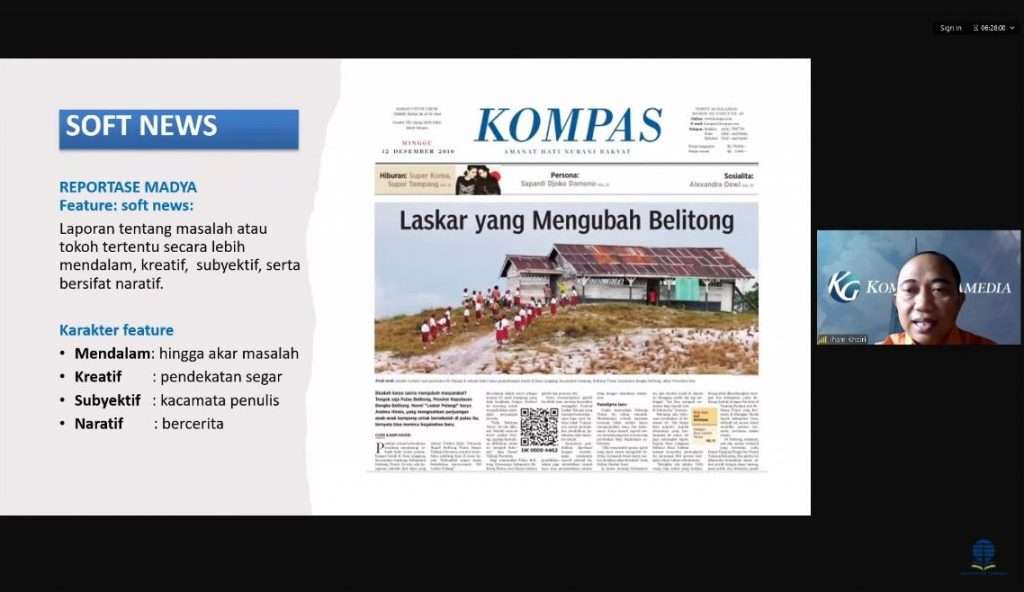
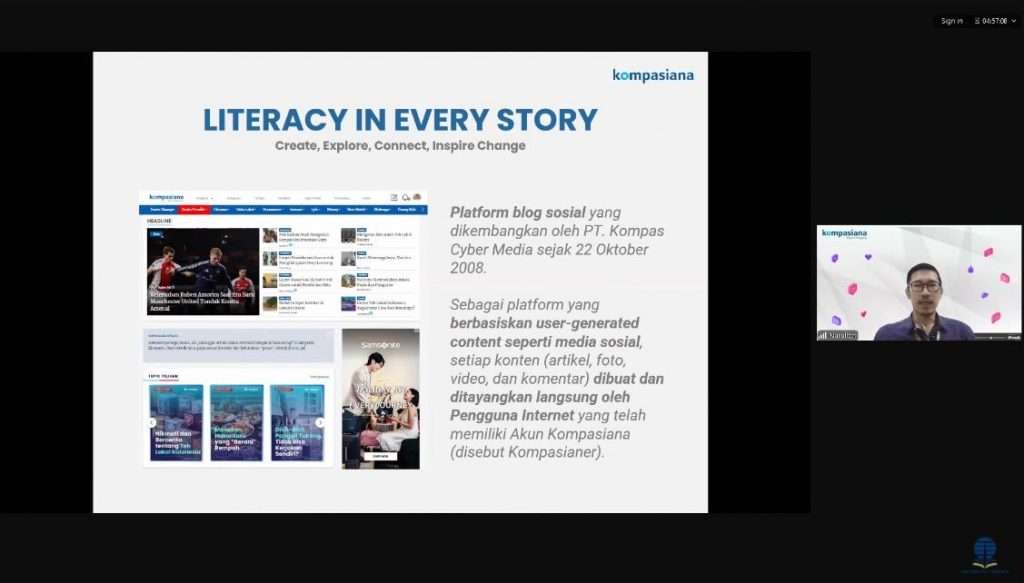
Ilham Khoiri presented material covering various aspects of news writing, such as types of news, elements of news, news values, sources for writing, the process of article writing, language guidelines, and principles of effective news writing. Meanwhile, Nurulloh delivered a session focusing on the practice of creating content and writing news for Kompasiana, a social blog platform based on user-generated content, similar to social media. The session was followed by a coaching session where participants were given the opportunity to directly apply what they had learned using the provided platform.
The Creative Writing for Digital Media training program, organized by Universitas Terbuka (UT) in collaboration with Kompas Gramedia, demonstrated that partnerships between academia and industry can have a tangible impact. Beyond being just an event, this training served as a stepping stone for participants to master the art of writing in an ever-evolving digital era. With in-depth insights and hands-on experience from experts, participants are now better equipped to create high-quality, relevant, and engaging content in the digital world.
This collaboration highlights UT’s commitment to continuously providing its students with skills relevant to the modern world. Moreover, the training serves as concrete evidence that, with the right synergy, a new generation of creative, competitive, and highly skilled writers can emerge to meet the challenges of the digital age.