
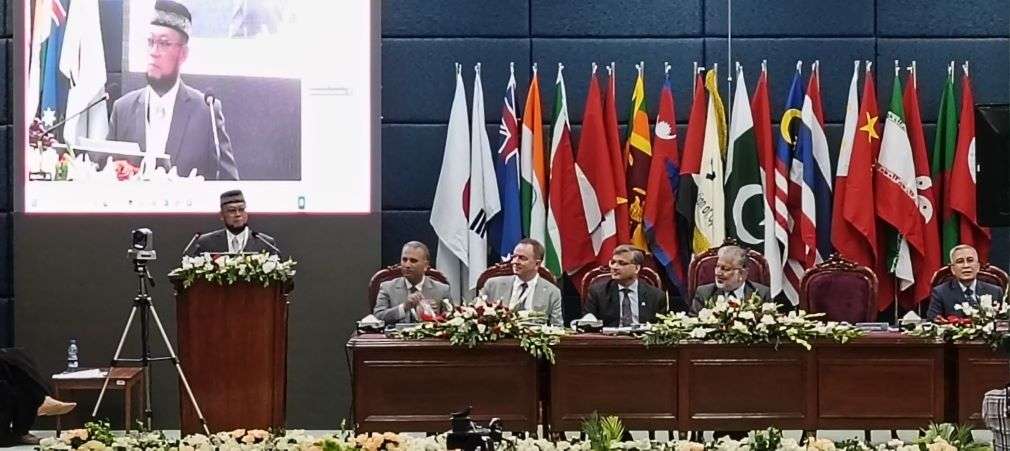
Islamabad, October 15, 2024 – The 37th Annual Conference of the Asian Association of Open Universities (AAOU), with the theme “Expanding Horizons: Innovation in Open and Distance Learning,” officially commenced today in Islamabad, Pakistan, with a solemn opening session. This international conference has attracted lecturers, researchers, experts, and policymakers from across Asia and beyond. The AAOU Conference 2024 received over 300 abstracts and featured more than 100 presentations from 14 different countries.
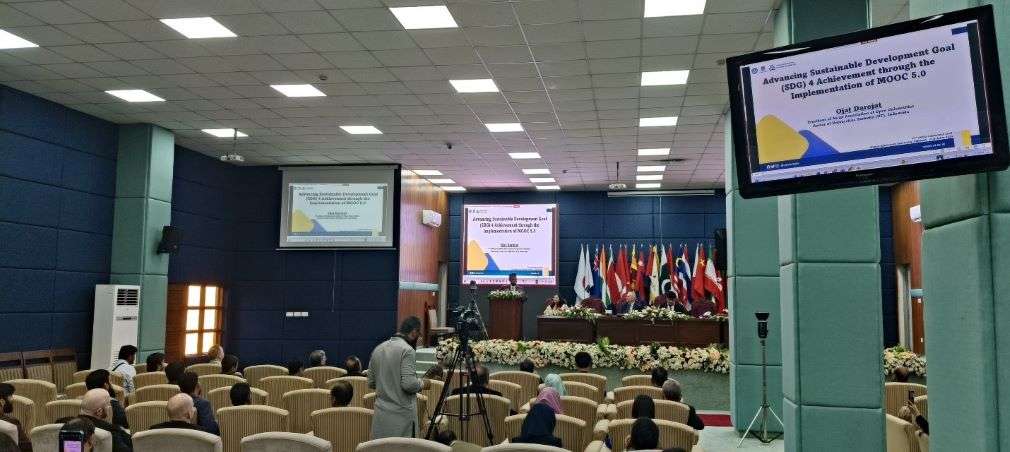
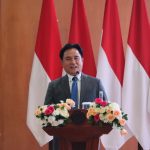
Prof. Ojat Darojat, M.Bus., Ph.D., President of AAOU and Rector of Universitas Terbuka (UT), delivered the opening remarks. In his speech, he warmly welcomed all international and local participants. He emphasized the importance of this conference in advancing open and distance education (ODL) throughout Asia. He also noted that Universitas Terbuka sent a delegation of 27 people, making it the only AAOU member university with the largest representation at the event.
The first keynote speaker, Prof. Dr. Peter Scott, President and CEO of Commonwealth of Learning (COL), Canada, discussed the future of online and distance learning, focusing on how innovation and technology can bridge the educational gap in underserved communities. His speech emphasized global collaboration in the ODL field, highlighting AAOU’s crucial role in achieving this goal.
Following this, Prof. Dr. Mukhtar Ahmed, Chairman of Pakistan’s Higher Education Commission (HEC), delivered a keynote as an honorary guest. He shared Pakistan’s progress in expanding access to higher education through distance learning and praised AAOU’s efforts in promoting cross-border academic collaboration.
A symbolic moment occurred when Prof. Dr. Nasir Mahmood, Rector of Allama Iqbal Open University (AIOU), presented the conference souvenirs to the honorary guests. This underscored the strong partnership between AAOU and educational institutions in Pakistan. Dr. Zahid Majeed, AIOU’s Conference Coordinator, provided a brief overview of the conference agenda, which included thematic discussions on the future of education in the digital era.
One of the main highlights was the official launch of the AAOU Accreditation Service, an initiative aimed at improving the quality assurance processes in open universities across Asia. Prof. Ojat led the launch ceremony, marking a significant milestone in AAOU’s commitment to promoting excellence in open and distance education.
The morning session continued with a speech from Prof. Dr. Nasir Mahmood, who expressed his gratitude to all participants and emphasized the importance of collaboration in addressing educational challenges in the region.
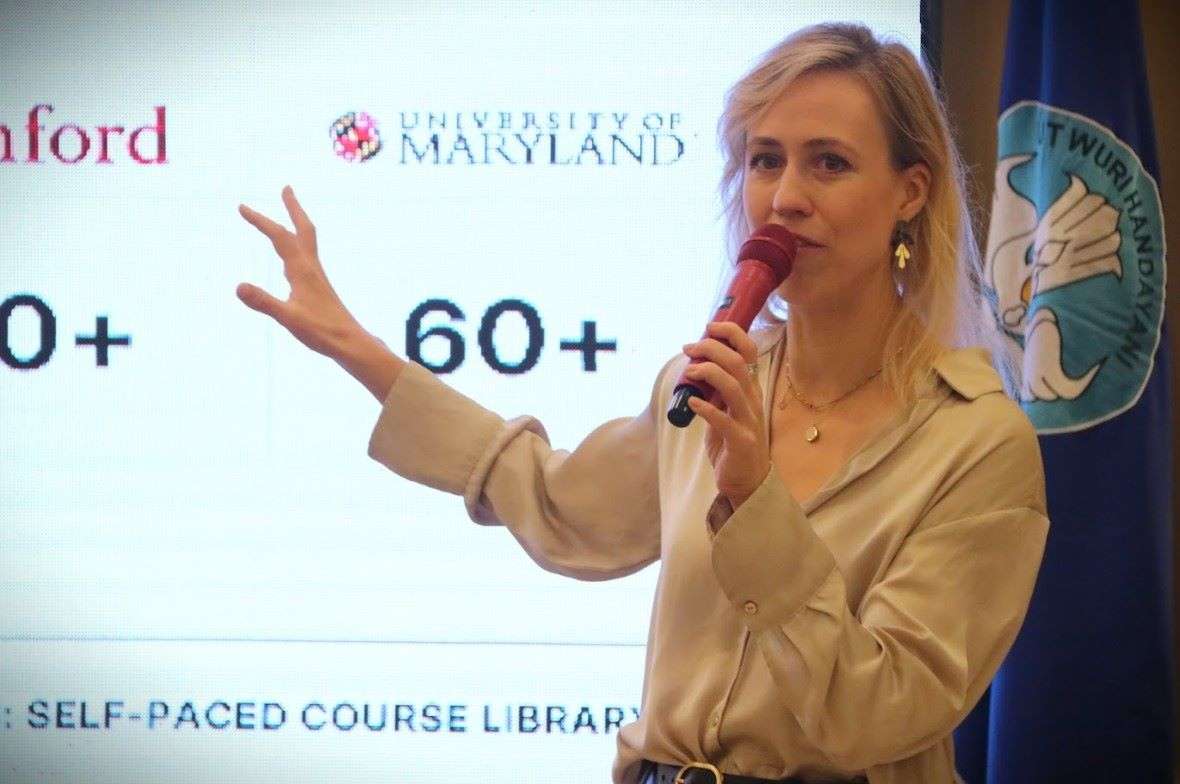
In the afternoon, Prof. Ojat gave his presentation as one of the keynote speakers. He highlighted the progress of Sustainable Development Goal (SDG) 4 through the implementation of Massive Open Online Courses (MOOCs) 5.0, where advanced technology integration must be accompanied by attention to humanism, ethics, and holistic development of learners. Following Prof. Ojat’s presentation, Prof. Paul Prinsloo delivered a lecture on the risks and potential of AI in open and distance learning.
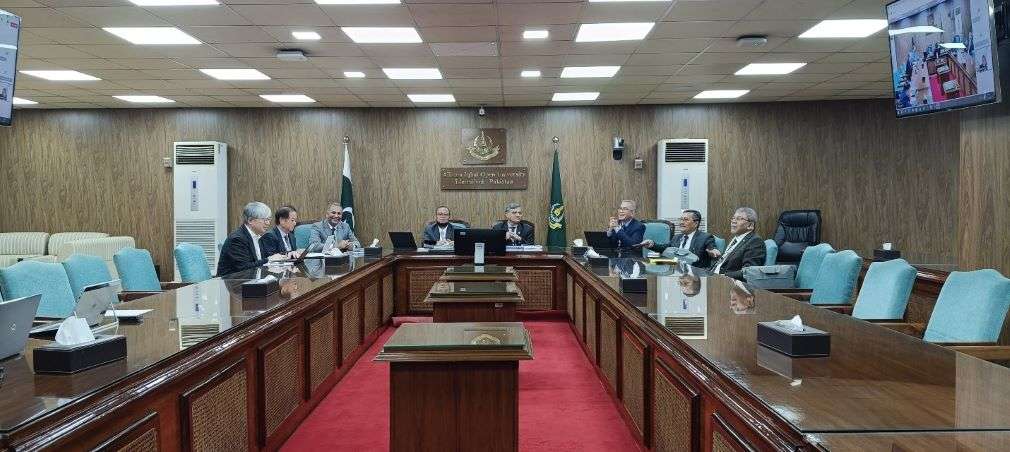
Later in the day, AAOU held a hybrid Executive Committee Meeting, chaired by the AAOU President and moderated by AAOU Secretary General Dr. Rahmat Budiman, with representatives from member institutions including Open University Malaysia, Open University of Japan, Allama Iqbal Open University, Universitas Terbuka, University of the Philippines Open University, Wawasan Open University, Hong Kong Metropolitan University, and Korea National Open University. This meeting discussed 16 agendas, ranging from updates on previous initiatives and membership issues to awards and new initiatives planned for the upcoming year.
With a spirit of collaboration and synergy, this international conference, running until October 17, 2024, aims to strengthen networks between educational institutions. Additionally, it is expected that the conference will serve as a strategic step in improving the quality of open education worldwide, providing an opportunity for sharing knowledge, experiences, and innovations among institutions, lecturers, researchers, experts, and policymakers to enhance both individual and institutional competencies, especially in the field of open and distance learning.