
The year 2024 has been a remarkable year for Universitas Terbuka (UT). Since its establishment 40 years ago, UT has remained committed to the government’s mandate to provide the broadest access to higher education for the Indonesian people. Ensuring access to higher education, of course, is not only focused on quantity but also consistently guarantees the quality of education in accordance with established standards.
In line with this, UT continues to fully commit and create impact in improving the quality and services. One proof of the quality of UT’s implementation of Open and Distance Learning (ODL) is reflected in its Higher Education Accreditation (APT) ranking. The APT ranking is crucial as it is a guarantee of the quality of higher education provided by UT and will undoubtedly be one of the considerations for prospective students in choosing UT as their place of study. The APT rating is measured by various indicators, including educational curriculum, educational infrastructure standards, academic governance systems, the quality of human resources, and the achievement of the Tri Dharma of Higher Education.
This reaccreditation was prompted by the expiration of UT’s APT accreditation on June 18, 2024. In response, UT had prepared accreditation documents and a self-evaluation report (LED) since 2022, and were submitted six months before the accreditation expiry date, which was on December 18, 2023. This accreditation process used a specific ODL accreditation instrument with seven standards. These aspects include Vision, Mission, Goals and Objectives, Governance and Cooperation, Students, Human Resources, Finance and Infrastructure, Education, Research, Community Service, and Outcomes. The UT APT reaccreditation process consisted of two stages: Sufficiency Assessment and Field Assessment.
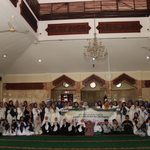
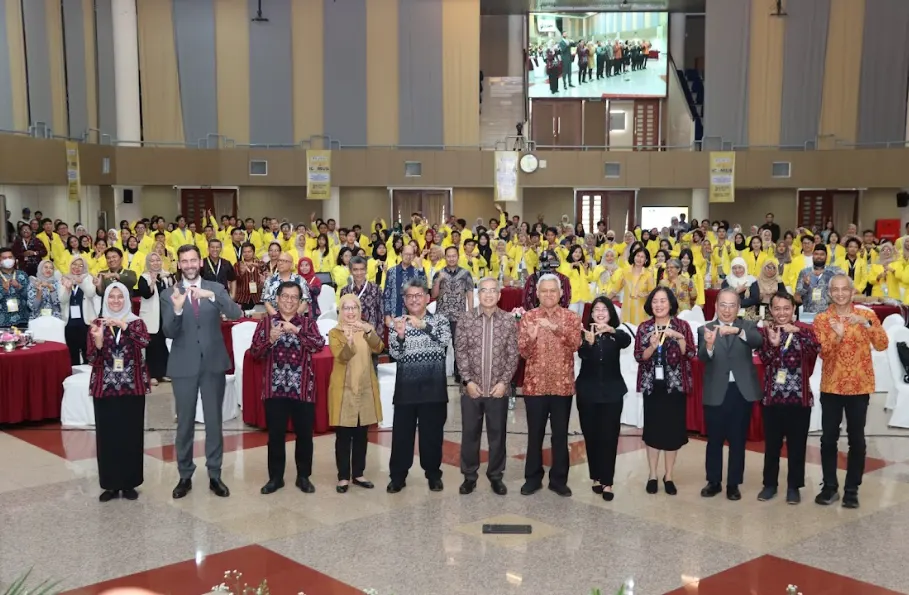
After meeting the requirements of the Sufficiency Assessment, on Thursday, May 16, 2024, the UT APT Field Assessment was conducted in a hybrid format. The UT APT Field Assessment was held in person at the Auditorium of the Faculty of Science and Technology (FST), UT Headquarters, and online via Zoom Meeting. Naturally, this Field Assessment process involved all elements of UT’s academic community, starting with a presentation by the Rector of UT, Prof. Ojat Darojat, M.Bus., Ph.D. The Rector also emphasized that the quality of the ODL process is maintained with certification from the International Council for Open and Distance Education (ICDE) and operationalized through strategic milestones from 2021 to 2035: Stage I (2021-2025) towards Cyber University Network Integration, Stage II (2026-2030) towards a Digital Education Ecosystem, and Stage III (2031-2035) towards a Robust Digital Ecosystem. The session also included discussions between the assessors and in-person attendees, addressing issues such as UT’s solutions to various challenges in maintaining quality, operational programs stemming from UT’s Strategic Plan, and major UT programs after transitioning to a state university with legal entity status (PTN-BH) from its previous Public Service Agency Financial Management (PK-BLU) status. Following the discussions between the Assessor Team and UT leadership, the data synchronization stage continued with interviews between Field Assessors and lecturers, staff, graduates’ users, students, alumni, and partners. This was followed by the crucial part of the process: reading the Minutes by the Assessor Team and discussing the results of the Minutes between the Assessor Team, UT leadership, and the Accreditation Team.
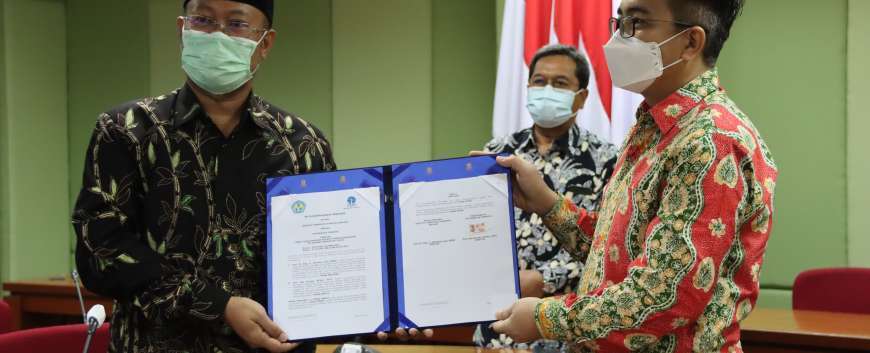
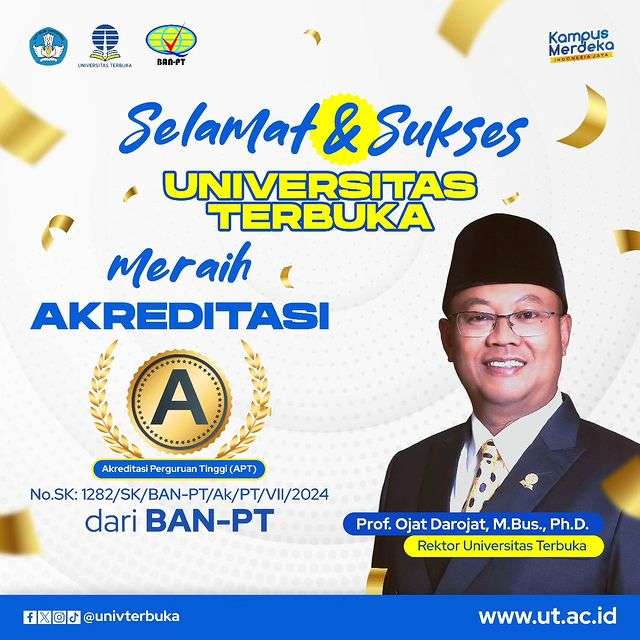
After undergoing the assessment process, based on Decree No. SK: 1282/SK/BAN-PT/Ak/PT/VII/2024, BAN PT declared that UT received:
Higher Education Accreditation (APT) with an A Rating
which was established on July 2, 2024. The Rector of UT, Prof. Ojat, expressed his gratitude for UT’s achievement, “Alhamdulillah, through a very long struggle, hard work, and commitment from all leadership and staff, on July 2, 2024, UT received an ‘A’ rating for Higher Education Accreditation (APT) from the National Accreditation Board – Higher Education (BAN-PT),” he said. He also extended his profound gratitude and appreciation to the entire UT family and all related parties who contributed to this highest achievement.
Achieving this result was certainly not easy for UT, as there were many aspects that UT had to maximize to achieve this outcome. Concrete improvements in UT’s quality can be seen in the many educational services that have been enhanced, from registration, LPKBJJ, tutorials, to exams. Similarly, in terms of research and community service, the number of publications by lecturers has increased, both in quantity and quality.
The increase in UT’s accreditation to an A rating is tangible evidence that UT consistently ensures the quality of its higher education, as quality assurance for higher education is a requirement regulated by various government regulations. UT has a quality assurance system (Simintas) consisting of 12 areas (Policy and Planning; Internal Management; Resources; Marketing, Promotion, Admissions and Registration; Students and Student Profiles; Program Development; Course Development; Infrastructure, Media, and Learning Resources; Learning and Learning Support Services; Assessment and Learning Achievement Evaluation; Research and Community Service; and Cooperation) and quality policies containing 150 statements of best practices in the implementation of PJJ. This Simintas serves as a guide for all UT business processes and is implemented by all units, both at UT’s Central and Regional offices. In the Internal Quality Assurance System (SPMI), UT conducts regular Internal Quality Assessments (AMI) for all study programs in faculties and Distance Learning Management Assessments (MPJJ) for all UT regions. For the External Quality Assurance System (SPME), UT undertakes the accreditation process for institutions and study programs and certification for institutions, information security management, libraries, and archiving. Through Simintas, both internally and externally, the quality of the higher education services provided by UT can be assured. This outstanding result is certainly due to the hard work and collaboration of all the academic community and stakeholders at UT. The hope is that with UT’s current accreditation, UT will continue to lead and be trusted in providing PTJJ, consistently expanding its reach to the public for higher education, achieving world-class quality education, and bringing benefits to the broader community. As expressed by the Vice Rector for Academic Affairs, Dr. Mohamad Yunus, S.S., M.A., “UT will move towards what was recommended by the BAN PT assessors during the field assessment. Insha’Allah, UT will be even better and prouder in the future,” he said.