
Universitas Terbuka (UT), the only Legal Entity State University (LE-SU) that has long implemented distance learning with flexibility and affordability in terms of location, time, and cost, continues to make strides in the field of education. Known for its extensive access to higher education across the country and internationally, UT now serves more than half a million students, most of whom are young (Gen Z and Millennials). UT’s role in providing accessible higher education through technology-based distance learning methods has become a benchmark for other universities in Indonesia.
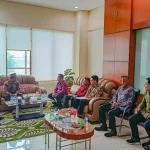
On this occasion, UT welcomed a visit from Binus University regarding the development and quality management of multimedia learning materials. The event was held in the Operation Room on the Ground Floor of the Biro Building, UT Central Office, Pondok Cabe (May 30, 2024). The delegation from Binus University included Stephen Wahyudi Santoso, BSE., MSIST., CBDMP (President of Binus Higher Education), Prof. Dr. Ir. Harjanto Prabowo, M.M. (VP of Binus Higher Education and Director of Binus Online), Dr. Nelly, S.Kom. M.M., CSCA (Rector of BINUS University), among others.
The event began with a welcome speech by UT’s Vice-Rector for Institutional Development and Partnerships, Rahmat Budiman, M.Hum., Ph.D. He welcomed Binus University’s visit to exchange knowledge and experiences in managing business processes and learning methods. He emphasized that both Binus and UT share characteristics, especially in delivering online higher education. Rahmat highlighted UT’s ongoing efforts to improve access to higher education through distance learning methods to support the government’s goal of enhancing human resources for national development.
The event continued with remarks from the Rector of Binus University, explaining the purpose of their visit. He noted the significant developments at UT and expressed Binus’ interest in benchmarking the development of learning material production, multimedia, and digital content. He concluded by thanking UT for the warm welcome.
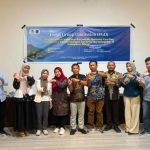
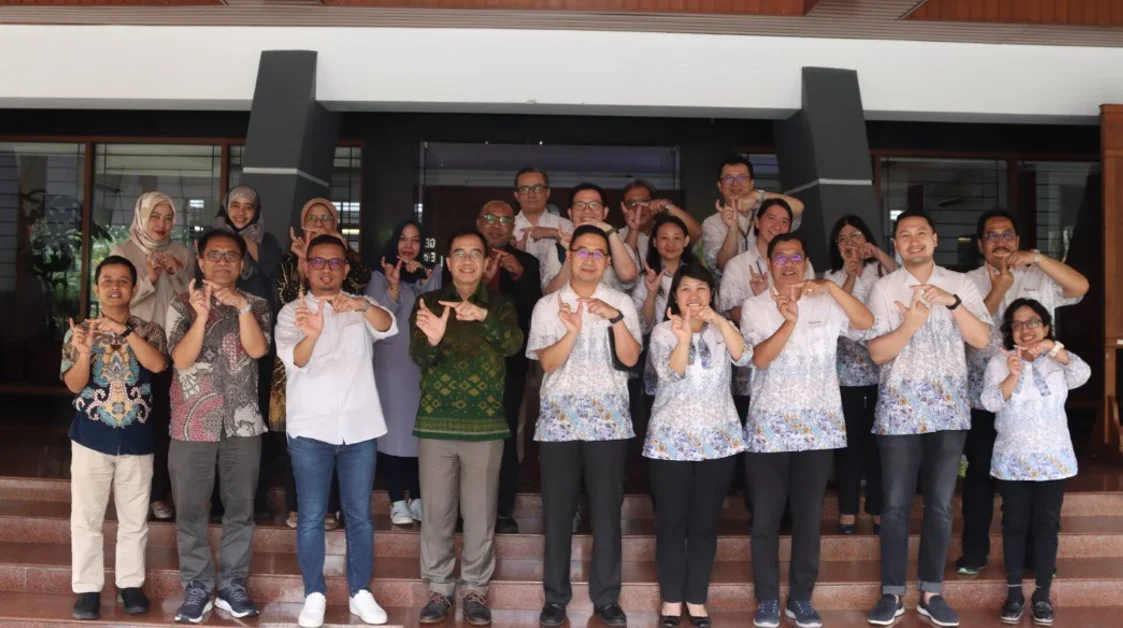
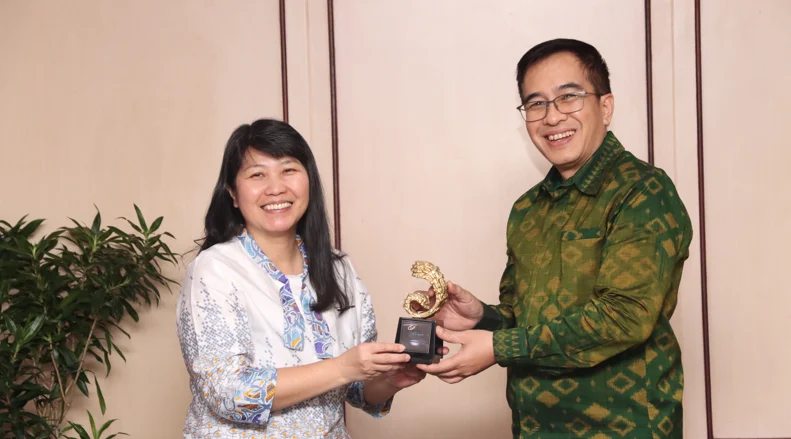
Before proceeding, there was an exchange of souvenirs between Binus and UT, followed by a group photo session. The event continued with presentations by UT’s Acting Director of Marketing and Partnerships, Ali Tarigan, S.E., on digital content development, and by the Head of the Center for Multimedia Learning Materials Production, Drs. Jamaludin, M.Si., represented by Candra Wibawa, S.Sn., M.Ds., on multimedia learning materials production at UT. The Head of the Center for Open and Distance Education Research and Innovation, Prof. Daryono, S.H., M.A., Ph.D., also spoke about research-based learning innovations as part of UT’s current distance learning development.
Candra and Prof. Daryono highlighted UT’s use of interactive learning materials in both printed A4 format and digital formats like EPub and SCORM compliance with the Open Access Initiative (OAI). Prof. Daryono further explained UT’s development of learning based on Emerging Digital Technologies, enabling immersive learning experiences through AR/VR/XR and the Metaverse, enhancing student engagement and learning experience.
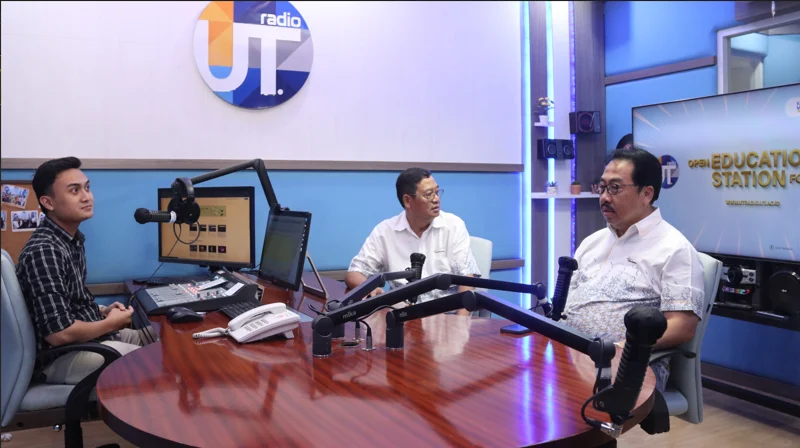
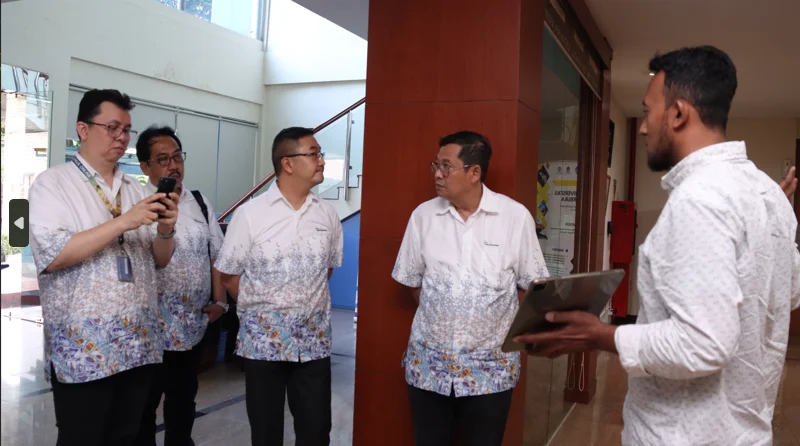
The Q&A session was particularly engaging, with several enthusiastic questions from Binus University representatives. The event concluded with a head office tour to the Center for Multimedia Development and the Center for Learning Materials Management Unit.
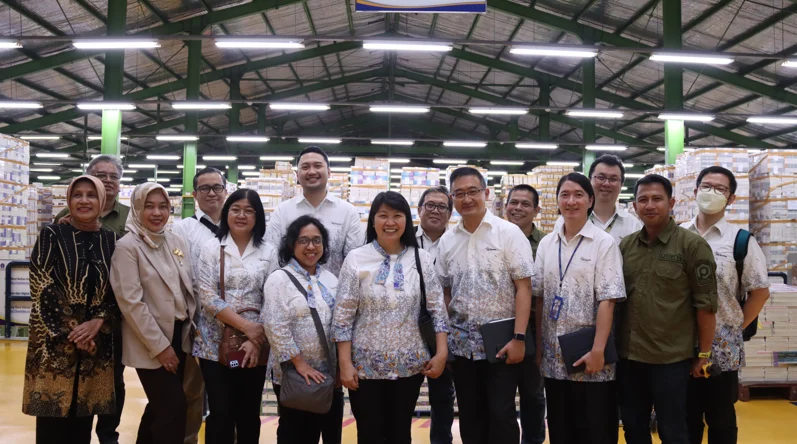
Overall, UT welcomed Binus University’s efforts to exchange knowledge and experiences and to build a closer relationship in technology-based higher education services. This collaboration is expected to be the beginning of broader and sustainable cooperation between the two universities, aimed at creating more comprehensive and ongoing joint programs in the future. It can be concluded that in developing university business processes, efforts are required to build relationships with prospective and current students, understand their needs, and provide relevant solutions. Therefore, integrating proficient customer service into university governance strategies and ensuring it is supported by the latest technology is crucial.