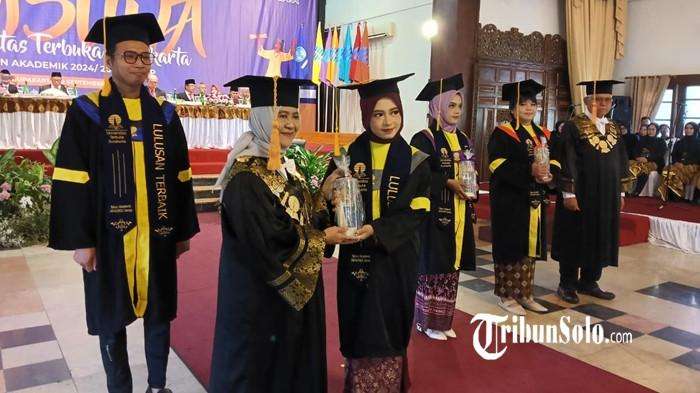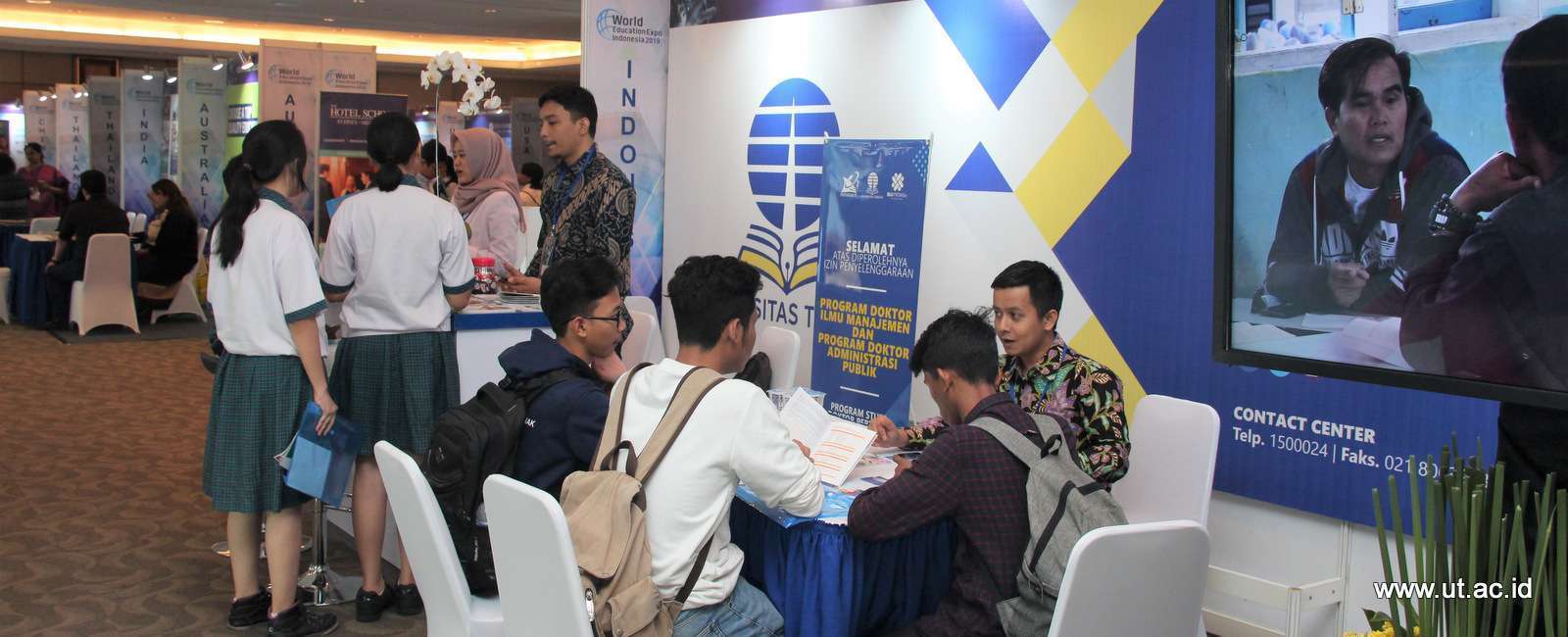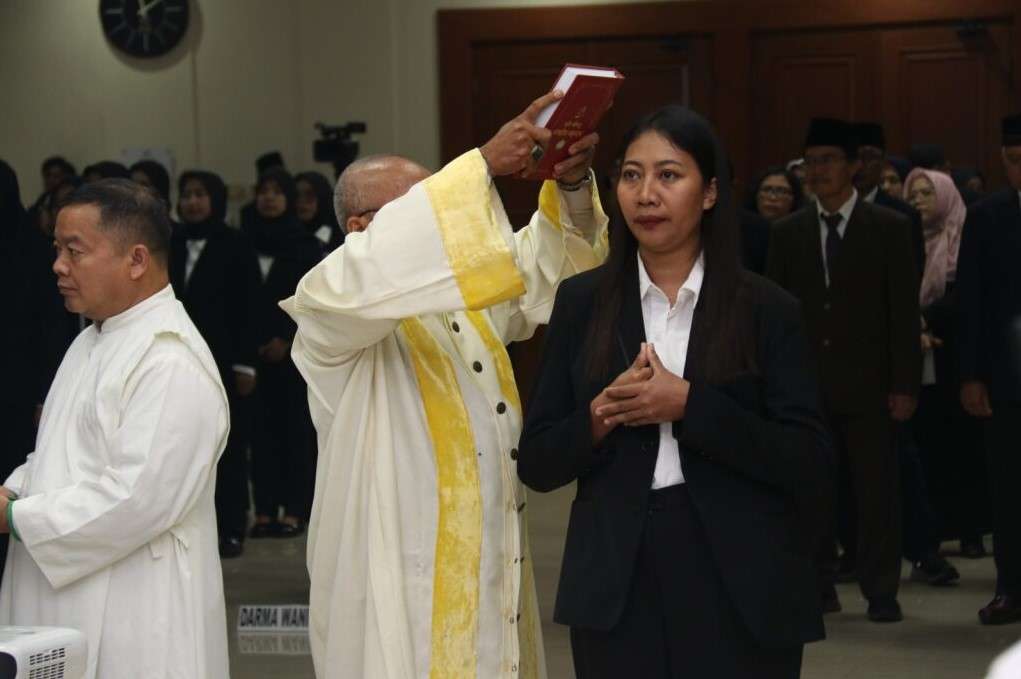

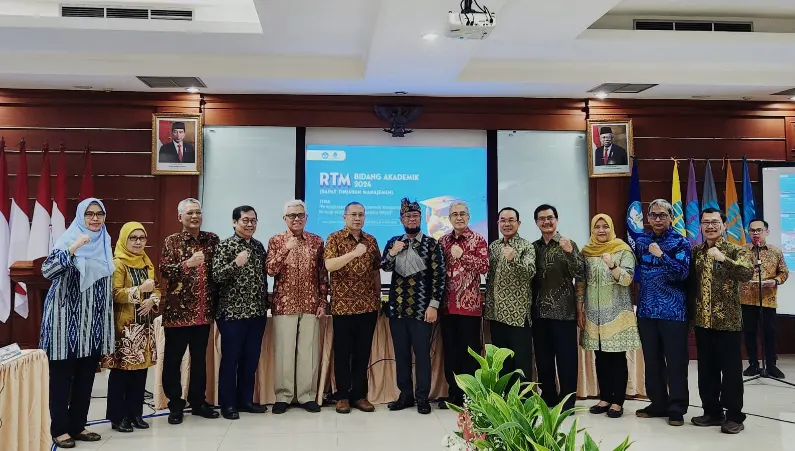
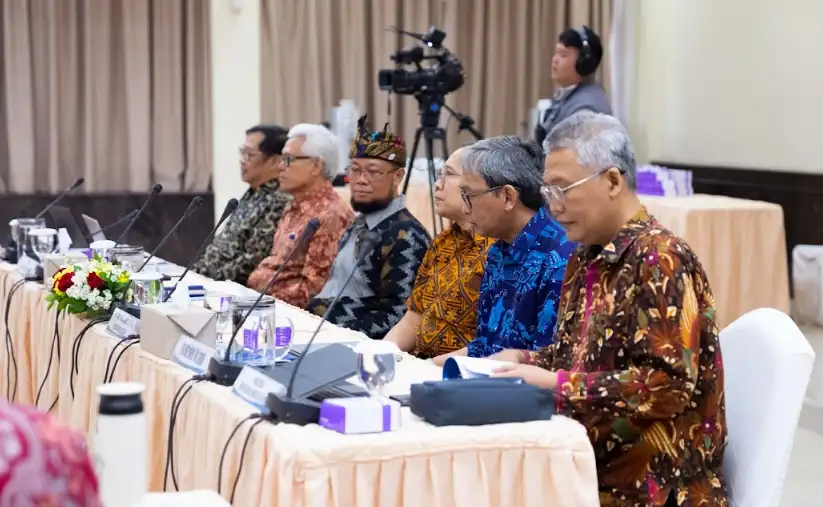
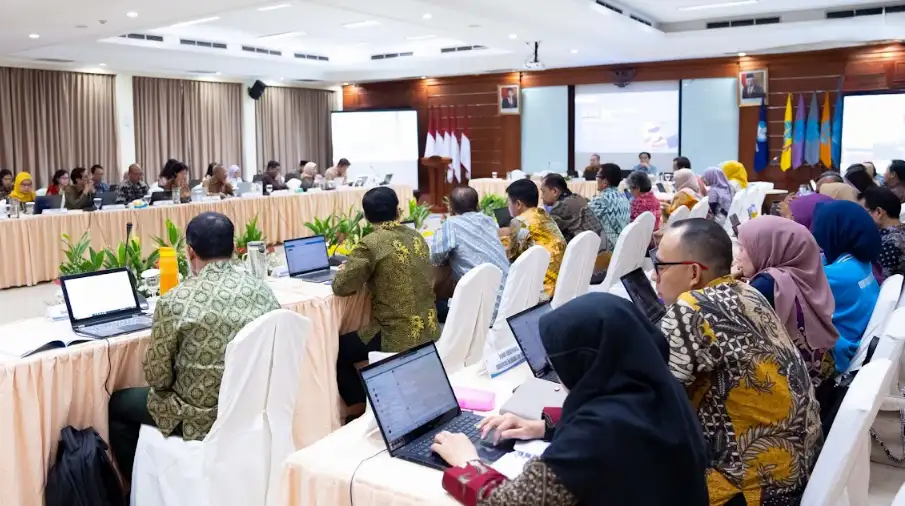
In an effort to enhance the quality of educational services and ensure the effective implementation of academic management, Universitas Terbuka (UT) held its annual Academic Management Review Meeting from May 6 to 8, 2024, in a hybrid format. The entire UT leadership attended the meeting, coordinated by the UT Kantor Penjaminan Mutu/KPM (Quality Assurance Office). The event took place at the Quality Assurance Building, UT Central Office, attended by UT Central leaders, while the online was attended by UT Regional Directors and Coordinators/Managers, Central Office Managers, Chairs of Faculty Senate Academic, Chairs of Departments, faculty staff, Faculty Academic Subsection Chairs, and Quality Control Team leaders.
In his report, Prof. Dr. Mohammad Imam Farisi, M.Pd., Head of the Quality Assurance Office, stated that this meeting was conducted to evaluate the effectiveness of academic management implementation and to formulate follow-up actions to find effective solutions in achieving academic quality, thus enhancing UT’s capacity and capability towards becoming a World-Class University (WCU).
The Rector of UT, in his opening remarks, emphasized that as the leading institution in distance education, UT is committed to continuously improving its service quality to support learning activities and produce high-quality graduates. UT is making various efforts, including evaluations, quality improvements, and enhancements in student service management systems. He noted that the annual management review meeting has been held since UT established its quality assurance unit.
The Rector highlighted that the 2024 Academic Management Review Meeting theme is “Enhancing Competitive Academic Culture Towards a World-Class University (WCU).” This theme aligns with UT’s status upgrade from PKU-BLU to PTN-BH (State University of the Legal Agency), constraining a more competitive academic culture to achieve a higher quality and autonomous institution. Becoming a World-Class University is a mandate UT must fulfill in line with its vision and mission. UT leaders are encouraged to prepare study programs for international recognition, which is crucial for guaranteeing the quality of a world-class institution.
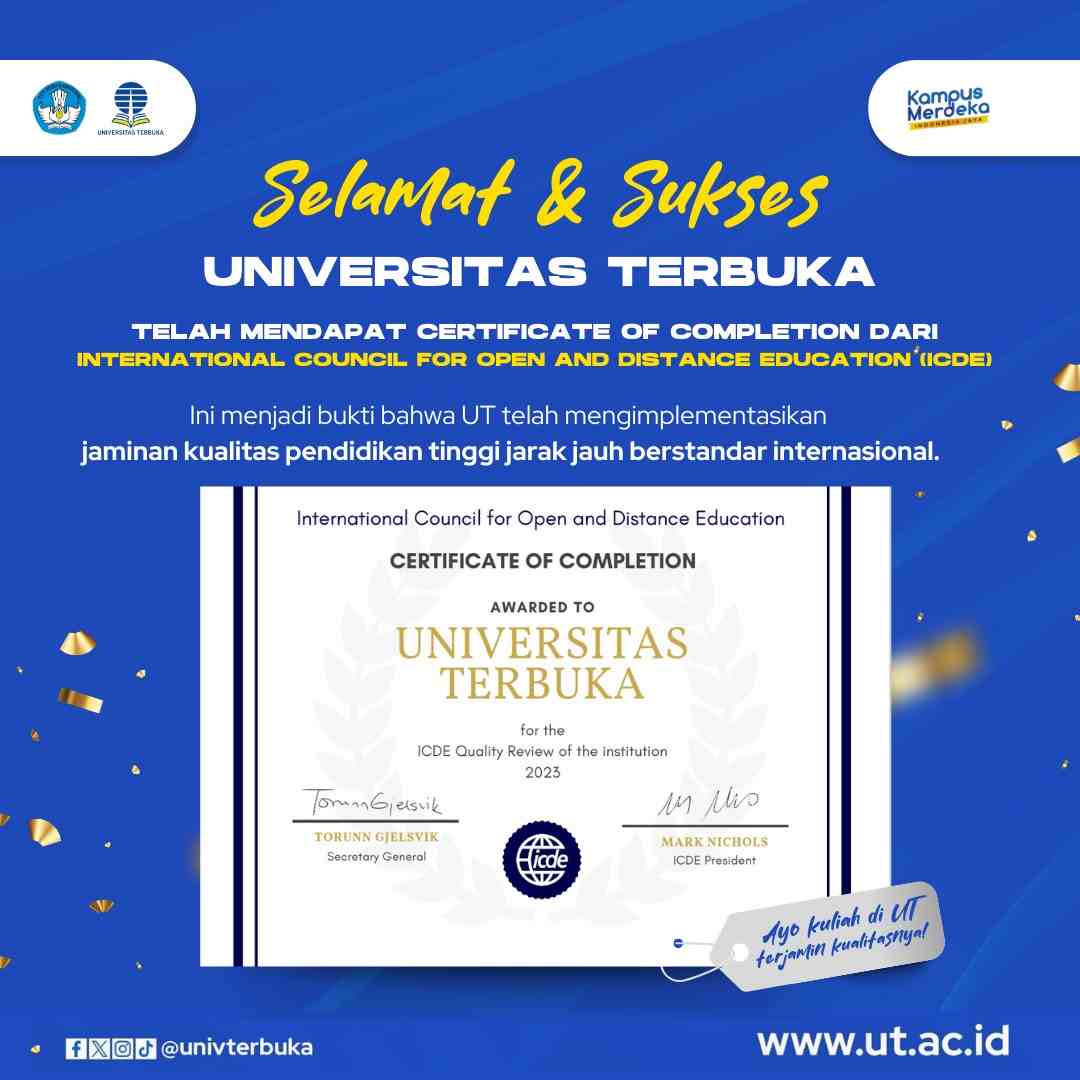
He proudly mentioned that in 2023, UT received its fifth quality certification from the International Council for Open and Distance Education (ICDE). In 2024, four undergraduate programs—Law, Accounting, Development Economics, and Management—also received International Accreditation from FIBAA (Foundation for International Business Administration Accreditation), demonstrating UT’s adherence to global quality standards in open and distance learning.
UT continues to develop and improve its quality assurance system under national and international higher education quality standards. Quality culture is a vital variable for enhancing competitive and high-quality education delivery. Thus, quality culture must be a commitment among all UT academic members to implement a quality assurance system, empowering all potential assets and maintaining UT’s position as the market leader in Indonesia’s open and distance higher education. The success is evident in the increasing student enrollment over the past five years, showcasing UT’s growing recognition and acceptance by the public.
Prof. Ojat emphasized that the Academic Management Review Meeting is integral to the internal quality system, maintained by fostering an academic culture. He added that UT continually makes improvements through its academic programs. Maintaining academic integrity through an appropriate internal quality system ensures UT’s distance education reputation and helps achieve higher education gross participation rates in Indonesia. He asserted that academic commitment and integrity would further enhance UT’s quality, making it a preferred choice among the public. UT is now a strategic player in higher education, gaining broader recognition through the dedication of its staff.
Key points discussed on the first day of the 2024 Academic RTM included: 1) Directions and Policies of Higher Education in Indonesia towards WCU by Dr. Lukman, S.T., M.Hum. (Director of Institutional Affairs, Directorate General of Higher Education); 2) International Accreditation in the Perspective of Permendikbudristek Number 53 of 2023 by Prof. Dr. Ir. Tjokorde Walmiki Samadhi, ST, MT (Executive Board, BAN-PT); 3) Enhancing Competitive Academic Culture Towards WCU by Prof. Ojat Darojat, M. Bus., Ph.D. (Rector of UT); 4) Academic Policy, UT Transformation Towards WCU by Dr. Mohamad Yunus, S.S., M.A. (Vice Rector for Academic Affairs); 5) Directions and Policies in Finance, Resources, and General Affairs Towards UT WCU by Prof. Dr. Ali Muktiyanto, S.E., M.Si. (Vice-Rector for Finance, Resources, and General Affairs); 6) Directions and Policies in Information Systems and Student Affairs by Prof. Dr. Paken Pandiangan, S.Si., M.Si. (Vice-Rector for Information Systems and Student Affairs); 7) Directions and Policies in Research, Innovation, Cooperation, and Business: UT Becoming a World-Class Distance Education Institution by Rahmat Budiman, S.S., M.Hum., Ph.D. (Vice-Rector for Research, Innovation, Cooperation, and Business); 8) Why Recognition as a World-Class University is Important for Higher Education? by Dr. Vivi Indra Amelia Nasution, S.I.P., M.A. (Chair of the EQUITY Team, UT).
In his presentation, Dr. Lukman highlighted UT’s inclusion among the 21 state universities with PTN-BH status, reflecting its status among Indonesia’s major universities. UT needs to enhance its academic authority by developing international recognition departments as a quality assurance measure of a world-class institution.
In the afternoon session, UT leaders presented various topics. The Rector emphasized the importance of all UT leaders and staff engaging in intensive communication with UT students as part of developing customer intimacy. The Vice Rector for Academic Affairs outlined UT’s academic policies towards becoming a World-Class University, aligning strategies with the Directorate General of Higher Education’s emphasis on strengthening innovation in Tri Dharma Perguruan Tinggi. The Vice Rector for Finance, Resources, and General Affairs discussed policies in finance and resources, including the management of an Endowment Fund for sustainable development in education, research support, and infrastructure projects. The Vice Rector for Information Systems and Student Affairs presented on various system enhancements, including features like Learning Material Tracking, MyUT Single Sign On Applications for lecturers, My UT management (launched in September 2024), Outdoor Wifi, System Security, and policies on student and alumni engagement. The Vice-Rector for Research, Innovation, Cooperation, and Business noted the rising student numbers, aiming for one million students by 2025.
The second day covered topics such as:
1) Strengthening Academic Culture and Reputation Towards WCU: Universitas Airlangga’s Experience by Prof. Dr. Mohammad Nasih S.E., M.T., Ak.; 2) Road Map to Achieving WUR by the Dean of the Faculty of Economics and Business, UT; 3) Improving Performance Quality Towards Global Reputation by Acting Dean of FHISIP UT; 4) Strengthening FKIP Programs Towards WCU by the Dean of FKIP; 5) Strengthening Faculty Programs Towards WCU; 6) Strengthening Graduate School Programs to Support UT as a WCU by Prof. Maman Rumanta, Director of Graduate School; 7) Research and Community Service Policies to Support WCU by Dr. Etty Puji Lestari, S.E., M.Si. (Head of Scientific Research Center, LPPM); 8) Internationalization of UT’s Website by Ali Tarigan, S.E. (Director of Marketing and Cooperation/DPKS UT); 9) Innovation in Academic Administration Services by Firmansyah, S.Kom., M.M. (Director of Academic Administration and Graduation/DAAK); 10) Directions and Policies of the Information Systems Directorate: Innovation Programs Supporting WCU by Deni Rudiana Aprizal, S.Kom. (Head of Information Systems Development Sub-Directorate).
On the third day, the discussions included: 1) Senate Academic Policy and Program Towards WCU by Prof. Dr. Hanif Nurcholis, M.SI. (Chair of the Academic Senate, UT); 2) Realizing Quality Tutorials Towards WCU through Innovation and Collaboration (Universitas Terbuka Purwokerto); 3) Numpang UTM Registration to UT Bogor, Student Information System by Director of UT Bogor; 4) Recommendations from the 2023 Hybrid Academic Management Review Meeting; 5) Faculty/SPs Target Achievements for 2023: Results of the 2023 Academic AMI and International Accreditation of Study Programs by Head of the Quality Assurance Office.
The series of activities in the 2024 Academic Management Review Meeting aimed to reform UT under the new PTNBH structure, striving to enhance academic authority through improved service quality. Achieving these goals requires thorough planning, program development, and a shared commitment, attitude, and integrity among all UT leaders and members. It is hoped that the Academic Management Review Meeting and similar meetings will not be mere ceremonial activities but platforms for building shared perspectives, goals, work direction, rhythm, and solutions for UT’s continuous improvement.
TAG RTM, WCU,