
Universitas Terbuka (UT) is strengthening its business process governance as good corporate governance (GCG), particularly since transitioning to the Legal Entity State University (PTNBH) status, following the issuance of Government Regulation (Peraturan Pemerintah – PP) No. 39 on October 20, 2022. After becoming a PTNBH, UT has broader autonomy, both in managing academic and non-academic areas, including finances.
The autonomy of PTNBH in Indonesia holds significant meaning in the context of university management and operations, including financial management and asset autonomy, internal decision-making autonomy, acquiring PTNBH perpetual funds, and enhancing academic reputation. Through PTNBH autonomy, UT has greater flexibility and bigger responsibilities. One of these is UT’s aim to enhance the quality of Tri Dharma Perguruan Tinggi, and accelerate innovation processes to meet industry and societal needs, in line with the government mandate for UT as an Open and Distance Higher Education Institution (Perguruan Tinggi Terbuka dan Jarak Jauh – PTTJJ), providing educational access to the entire population under the motto “Open Higher Education Open To All.”
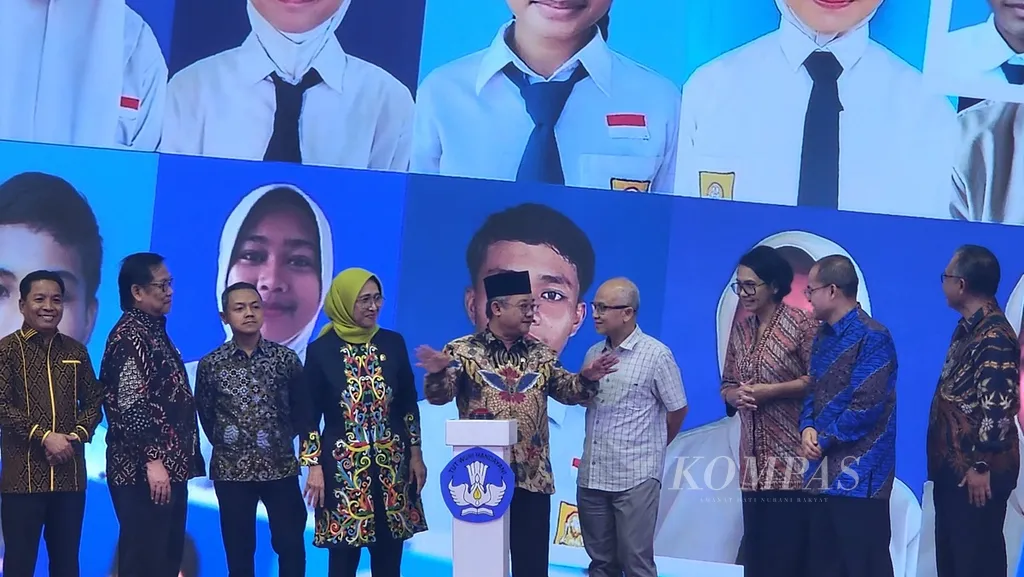
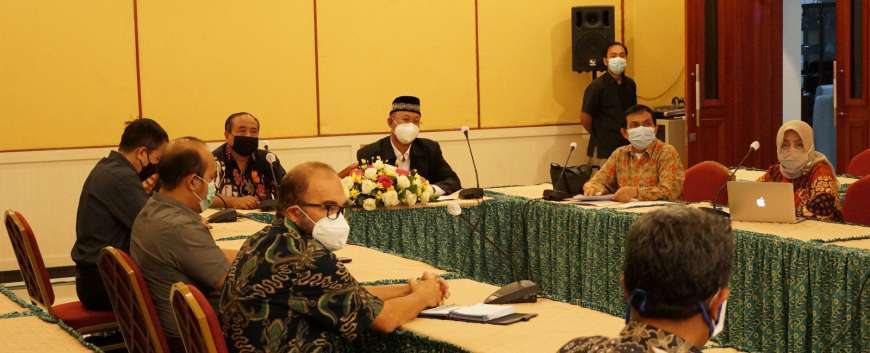
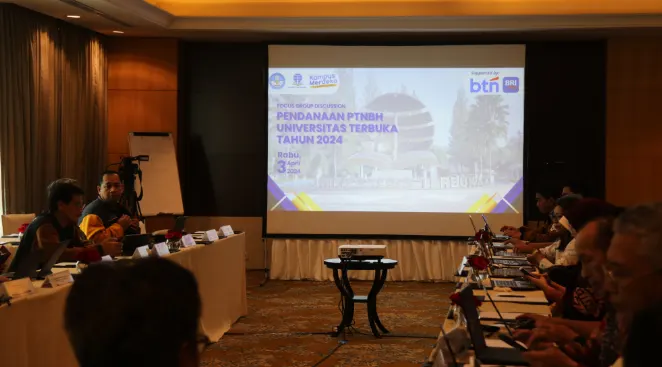
In response, UT held a Hybrid Forum Group Discussion (FGD) on Wednesday, April 3, 2024, at Hotel Mulia Senayan, Jakarta Pusat. The event was attended by Prof. Ainun Na’im, Ph.D., Chairman of the Board of Trustees (MWA) of UT, Syahrul, S.E., M.Si., Budget Section Head for Youth and Education at the Directorate General of Budget, Ministry of Finance, Prof. Drs. Ojat Darojat, M.Bus., Ph.D., UT Rector, Prof. Dr. Chanif Nurcholis, M.Si., Chairman of UT Academic Senate, Prof. Dr. Paulina Pannen, M.Ls., MWA UT Member, and Dr. Vivi Indra Amelia Nst, S.I.P., M.A., UT Advisor for Development Towards a World Class University. Additionally, the event was attended online by all UT Central management and several UT Regional Directors, Audit Committees, and KPI Members.
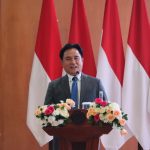
The event began with opening remarks by the MC, followed by speeches from Prof. Drs. Ojat Darojat, M.Bus., Ph.D., UT Rector, and an introduction to the discussion by Prof. Dr. Ali Muktiyanto, S.E., M.Si., UT Vice Rector for Finance, Resources, and General Affairs.
Moreover, each speaker delivered presentations on their respective topics. There were six speakers who presented topics according to their expertise:
Prof. Drs. Ojat Darojat, M.Bus., Ph.D., UT Rector, presented on Strengthening PTNBH Funding for Open and Distance Higher Education. The presentation emphasized the importance of developing the capacity and quality of distance education and innovative funding strategies to sustain UT as a PTNBH PTTJJ.
Prof. Dr. Chanif Nurcholis, M.Si., UT Academic Senate Chairman, discussed PTNBH Funding to Support Academic Policies and Academic Product Downstreaming. The presentation focused on optimizing PTNBH funding to support academic policy implementation and academic products downstream, which can enhance PTNBH PTTJJ funding growth. In addition, he also explained the role of the Academic Senate in academic policy at UT, including one of which was to prepare and approve a plan to change the UT Statute together with the Rector and the Board of Trustees (MWA).
Prof. Dr. Paulina Pannen, M.Ls., UT MWA Member, shared insights on Business Strategies in Distance Education Institutions to Strengthen PTNBH Funding. The presentation highlighted the development and diversification of distance education products and services in efforts to strengthen PTNBH PTTJJ funding. He also emphasized that currently UT has become PTNBH and of course the entire academic community needs to change, starting from mindset, and behaviour, as well as new culture and ways of working. ‘Previously we had to wait for orders, now we have to be assertive, we look for them ourselves,’ he said. Apart from that, he also added that UT needs to diversify the services available at UT, and of course, this needs to be supported by several factors, one of which is building trust.
Dr. Vivi Indra Amelia Nst, S.I.P., M.A., UT Advisor for Development Towards a World Class University, discussed the Optimization of Permanent University Fund (DAPT) as a PTNBH Funding Source. The presentation outlined strategies for utilizing and developing DAPT as a buffer and fundraising mechanism for PTNBH PTTJJ funding.
Prof. Ainun Na’im, Ph.D., Chairman of the MWA of Universitas Terbuka, presented on Funding Strategy and Governance for PTNBH in Open and Distance Higher Education Institutions (PTTJJ). The presentation addressed PTNBH funding governance models for PTTJJ and strategies for developing new funding sources for PTNBH PTTJJ.
Syahrul, S.E., M.Si., Budget Section Head for Youth and Education at the Directorate General of Budget, Ministry of Finance of the Republic of Indonesia, discussed Policy Directions for PTNBH Funding for State Universities. The presentation covered the policy basis for PTNBH funding allocation and strategies to increase PTNBH PTTJJ funding allocations through APBN.
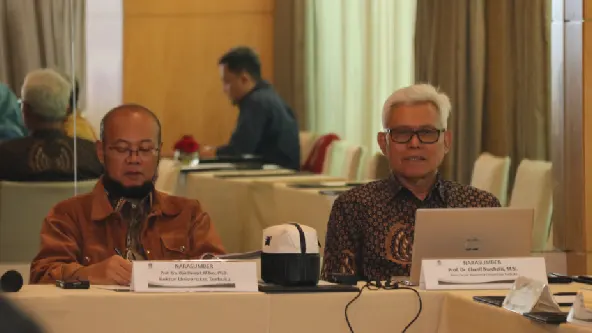
Following the presentations, a question-and-answer (QnA) session moderated by Bambang Hariyanto took place. The session provided valuable feedback and suggestions to strengthen UT’s financial independence as a PTNBH. This is both a challenge and an opportunity for UT so that UT can always build and develop its institutions to be better.
Although Universitas Terbuka (UT) has become a Legal Entity State University (PTNBH), it remains committed to the mandate provided by the government to expand access to higher education for all citizens and reach underserved areas. With the expert input presented during the FGD, UT is determined to leverage all its resources to deliver optimal benefits. If this goal is achieved, Prof. Ojat Darojat suggests that UT could even reduce tuition fees, making higher education more accessible to a broader population. He added, “We strive to give Indonesians the opportunity to pursue higher education regardless of their locations. For instance, the tuition fee per credit hour starts at around 36,000 IDR, the most affordable rate among state universities or PTNBHs.” Prof. Darojat also mentioned that if UT’s student population reaches 750,000 or even 1,000,000, the cost of education would become even more affordable, attracting more people to study at UT.
Achieving this requires transformation in various aspects. Prof. Ainun stated that UT can transform from a mechanistic organization following procedures to an organic, innovative one, eventually becoming an intelligent campus.
Additionally, Prof. Paulina highlighted the need to strengthen UT’s resources and peripheral areas so that UT remains a financially stable and solid PTNBH while upholding its vision of being an affordable state university. She further added, “UT strives tirelessly to promote all the resources it possesses. We have doctoral programs, and esteemed professors, all of whom should contribute to society according to their expertise. While this might not immediately generate income for UT, its tangible contributions and established networks will ultimately benefit the university. In essence, when we help others, they will, in turn, help UT.”
Through this event, UT received input on PTNBH funding models aligned with its characteristics as an Open and Distance Higher Education Institution (PTTJJ). It is hoped that through these models, UT will become increasingly solid and resilient as a PTNBH, providing higher education services to all layers of Indonesian society, wherever they may be.